
Every delayed aircraft delivery, every failed inspection, every compliance violation can trace its roots back to the same fundamental issue: work orders that have lost their connection to reality. When production teams rely on outdated spreadsheets, handwritten notes scattered across shared drives, and disconnected systems that never talk to each other, they lose control of the very processes that determine success or failure.
In aerospace manufacturing and MRO operations, work order management serves as the critical operational discipline that coordinates every aspect of production—from initial planning through final quality verification. Without accurate, connected work orders, even the most experienced teams find themselves fighting fires instead of building aircraft.
What Is Work Order Management in Aerospace Operations
Work order management is the systematic coordination of production steps, routing, inspection points, materials, and labor across manufacturing and MRO operations. More than administrative paperwork, it functions as the single source of truth that links planning decisions to execution reality, traceability requirements to quality outcomes, and individual tasks to overall production schedules.

In aerospace environments, work orders move through complex networks—from engineering design changes through fabrication and assembly, across multiple shifts and specialist teams, and often extending into supplier facilities where critical components are manufactured or repaired. Each step requires precise coordination: the right parts must arrive at the correct workstation, qualified technicians must have access to current work instructions, inspection points must be executed according to specification, and all activities must be documented for regulatory compliance.
The connection between work orders and regulatory compliance requirements makes aerospace operations uniquely demanding. When an aircraft component undergoes maintenance or repair work, regulatory bodies require complete traceability: proof that maintenance was performed according to approved procedures, that all required inspections were conducted and passed, and that materials used were appropriately sourced and configured. This evidence exists in the work order record—or it doesn’t exist at all.
Consider what happens when a critical flight control component requires replacement during routine maintenance. The work order must coordinate multiple teams: supply chain personnel who source and stage the replacement part, maintenance technicians who perform the installation, quality inspectors who verify the work meets specification, and documentation specialists who ensure all paperwork supports future audit requirements. If any piece of this coordination fails, the entire maintenance window can be compromised.
How Work Orders Coordinate Complex Aerospace Operations
Effective work order management in aerospace operations orchestrates five critical coordination functions that determine whether production flows smoothly or stalls in confusion and delays.
Routing specifications guide parts and assemblies through multiple production stations with clear operation sequences. In aircraft manufacturing, a wing assembly might require thirty distinct operations across fifteen work centers, each with specific setup requirements, specialized tooling, and qualified labor. The work order routing ensures that work flows in the correct sequence—structural assembly before systems installation, systems installation before final inspection—and that each operation has the resources required for completion.
Integration of inspection points and quality checks ensures that quality verification occurs at the right moments in the production sequence. Critical inspection points—such as torque verification after fastener installation or dimensional checks after machining operations—must be performed before subsequent work can proceed. The work order management process embeds these quality gates directly into the production workflow, preventing technicians from inadvertently bypassing required inspections.
Coordination of materials, tooling, and specialized labor across different teams and shifts prevents the common scenario where work stalls because required resources are unavailable or allocated elsewhere. When a work order is created, the system must automatically reserve required parts, schedule specialized equipment, and assign qualified personnel. This coordination becomes especially critical in MRO environments where multiple aircraft may be in various stages of maintenance simultaneously, competing for the same limited resources.
Real-time tracking of configuration changes, engineering updates, and revision control throughout production ensures that all teams work from current, approved information. In aerospace manufacturing, engineering changes occur frequently—sometimes driven by customer requirements, sometimes by suppliers, sometimes by internal quality findings. The work order management system must capture these changes, distribute updates to affected teams, and maintain version control to prevent confusion between old and new requirements.
Linking work orders to traceability requirements for critical components and safety documentation creates the audit trail that regulatory bodies require. Every material used, every test performed, every inspection result must be recorded against the specific work order that authorized the activity. This traceability enables rapid response to service issues: if a component fails in the field, engineers can quickly identify all aircraft that received similar components and determine whether additional inspections or corrections are required.
Why Traditional Work Order Management Falls Short
Organizations that attempt to manage aerospace production using spreadsheets, shared drives, PDFs, handwritten notes, and disconnected ERP/MES systems encounter predictable failures that directly compromise scheduling, quality, and compliance.
Version control issues and outdated information plague operations when work orders exist in multiple formats across disconnected systems. A supervisor updates a routing sequence in a shared spreadsheet, but the technician on the floor continues working from a printed PDF that reflects the earlier version. An engineering change notice gets distributed via email, but the work instruction attached to the physical work order never gets updated. When auditors later investigate a quality issue, they discover that the team performed work according to the information they had, but that information was wrong.
Impact of handwritten notes and disconnected systems on production visibility creates operational blind spots that prevent effective management. A quality inspector discovers a dimensional non-conformance and writes a note in the margin of a printed work order, but this information never gets captured in any digital system. A maintenance technician completes a repair and records labor time on a separate timesheet system that doesn’t communicate with the work order tracking database. Supervisors attempting to assess overall production status must manually gather information from multiple sources, often receiving conflicting or incomplete data.
Missing status updates and unclear routing instructions cause work to stall while teams wait for clarification or authorization. A work order shows “In Progress” status, but provides no indication of which specific operation is underway or whether the work is proceeding normally. When the next team arrives to begin their portion of the work, they discover that critical prerequisite steps have not been completed, but the work order provides no clear indication of what remains to be done or who is responsible for completion.
Incomplete inspection records create compliance exposures that may not surface until months or years later. An inspector performs a required torque verification but records the results in a personal logbook rather than on the official work order. When the aircraft undergoes its next scheduled maintenance, the maintenance team cannot locate evidence that the previous inspection was performed. They must either assume the inspection occurred without documentation, or repeat the inspection—possibly requiring disassembly of components that have been in service.
Disconnected systems preventing real-time visibility for supervisors and engineers eliminate the ability to identify and resolve issues before they cascade. A work order shows as “Assigned” in the scheduling system, but the assigned technician called in sick and the replacement technician cannot locate the required materials. Without real-time status updates, supervisors don’t realize the work has not begun until the scheduled completion time has passed.
When work orders become scattered across multiple platforms and formats, organizations lose process control. Production managers cannot answer basic questions: Which work orders are behind schedule? Which jobs are waiting for materials? Which technicians are available for urgent assignments? This opacity prevents proactive problem-solving and creates reactive firefighting cultures where issues compound before becoming visible.
Core Elements of Effective Work Order Management
Successful work order management in aerospace operations requires five fundamental capabilities that transform production coordination from reactive crisis management to proactive process control.
Centralized routing definition with clear operation sequences and inspection requirements ensures that every team understands not just what work to perform, but when and how to perform it. Routing specifications must be detailed enough that a qualified technician unfamiliar with the specific asset can execute the work without excessive clarification. This includes setup requirements, specialized tooling needs, safety precautions, and quality acceptance criteria for each operation step.
Real-time status tracking and progress visibility across all production steps enables supervisors and engineers to identify issues while they can still be resolved efficiently. Status updates must be granular enough to distinguish between “work assigned,” “work in progress,” “awaiting inspection,” and “ready for next operation.” This visibility allows management to reallocate resources, adjust priorities, or escalate issues before they impact delivery schedules.
Integrated materials management linking parts availability to production scheduling prevents the common failure mode where work begins only to discover that required materials are not available. The work order management system must automatically reserve parts when work is scheduled, provide advance warning when materials are back-ordered, and integrate with procurement systems to trigger purchase actions for missing components.
Quality control integration ensuring inspection data flows directly into work order records eliminates the transcription errors and data gaps that occur when quality information is captured separately from production tracking. Technicians and inspectors must be able to record test results, dimensional measurements, and inspection outcomes directly against the work order, creating an immediate audit trail and enabling rapid identification of quality trends.
Revision control maintaining accurate work instructions and configuration management ensures that all teams work from current, approved information. When engineering changes occur, the system must automatically update affected work orders, notify relevant teams, and maintain version history for audit purposes. This prevents the scenario where some technicians work to old specifications while others work to new ones, creating configuration mismatches that may not be discovered until final assembly or customer delivery.
Work Order Types in Aerospace Manufacturing
Aerospace operations typically require four distinct types of work orders, each with specific coordination and documentation requirements.
Production work orders for new part manufacturing include complete routing and inspection sequences for components that are being built from raw materials or purchased parts. These work orders coordinate the full spectrum of manufacturing activities: machining operations with specific feeds and speeds, assembly sequences with torque specifications, and inspection requirements with dimensional tolerances. The work order must link to current engineering drawings, specify required materials with part numbers and revision levels, and identify critical characteristics that require special inspection attention.
Repair work orders for MRO activities address components that require restoration to serviceable condition. Unlike production work orders that follow predictable sequences, repair work orders must accommodate variability in asset condition and scope of work required. These work orders include specialized inspection and testing requirements to assess the extent of damage, engineering evaluation to determine repair feasibility, and post-repair testing to verify that the component meets original performance specifications.
Modification work orders for engineering changes and configuration updates coordinate the implementation of design changes or customer-specific requirements. These work orders must carefully manage the transition from old configuration to new configuration, ensuring that partially completed parts are brought to the correct final state and that all documentation reflects the correct as-built configuration.
Quality investigation work orders for non-conformance resolution and corrective actions address situations where products fail to meet specification or where process improvements are required. These work orders coordinate root cause analysis activities, corrective action implementation, and verification that the corrections have been effective.
Operational Benefits of Unified Work Order Management
Organizations that implement comprehensive work order management systems typically achieve measurable improvements across multiple operational dimensions that directly impact competitive performance.
Reduced lead times through improved scheduling accuracy and resource coordination eliminate the delays that occur when work stalls for missing materials, unavailable tooling, or unclear instructions. When all resource requirements are clearly defined and automatically coordinated, work flows smoothly from one operation to the next without the pause-and-restart cycles that characterize poorly managed operations.
Enhanced quality outcomes via integrated inspection tracking and data capture prevent the quality escapes that occur when inspection requirements are unclear, inspection results are not recorded, or inspection data is not available for trend analysis. Real-time capture of quality data enables immediate identification of process variations that might otherwise go undetected until customer delivery or field service issues emerge.
Improved on-time delivery performance through real-time production visibility enables management to identify and resolve bottlenecks before they impact customer commitments. When supervisors can quickly identify which work orders are behind schedule and why, they can reallocate resources, adjust priorities, or implement workarounds that keep production moving.
Streamlined audit trails supporting regulatory compliance and traceability requirements eliminate the forensic investigation that typically occurs when auditors or certification bodies request evidence of work performed. Complete, contemporaneous documentation of work performed, inspections conducted, and materials consumed provides the evidence required for regulatory compliance without requiring additional administrative effort.
Better resource utilization through accurate capacity planning and workload balancing prevents both the idle time that occurs when teams lack assigned work and the overtime that occurs when work unexpectedly concentrates in specific areas. When work order data accurately reflects resource requirements and completion timeframes, supervisors can balance workloads and identify capacity constraints before they become production bottlenecks.

Impact on Manufacturing Efficiency
The operational benefits of unified work order management translate directly to manufacturing efficiency improvements that affect bottom-line performance.
Elimination of production delays caused by missing or outdated work instructions removes the most common source of workflow interruption. When technicians receive complete, current work instructions with all required information clearly specified, they can execute work continuously without stopping to seek clarification or wait for updated information.
Reduction in quality escapes through systematic inspection point management prevents the cost and schedule impact of discovering quality issues during final assembly or after customer delivery. When quality gates are embedded directly in the work order workflow, technicians cannot inadvertently bypass required inspections, and quality trends become visible while corrective action can still be effective.
Faster issue resolution with real-time status visibility and communication capabilities enables management to identify and address problems while they are still localized rather than allowing them to cascade through dependent operations. When a work order stalls, automated alerts notify relevant personnel immediately, enabling rapid response and problem resolution.
Decreased administrative overhead through automated status updates and reporting eliminates the manual data gathering and report generation that consumes significant supervisory and engineering time in traditional paper-based or disconnected digital systems. When status information is captured automatically as work progresses, management reports generate themselves, and exception conditions trigger alerts without manual monitoring.
Best Practices for Aerospace Work Order Management
Implementing effective work order management requires disciplined attention to several foundational practices that ensure consistent process execution and continuous improvement opportunities.
Standardizing work order templates and routing definitions across all product lines ensures that similar work is performed consistently regardless of which team or facility executes it. This standardization includes common terminology, consistent inspection requirements, and standardized resource specification formats. When work orders follow predictable structures, training becomes more efficient, quality becomes more consistent, and knowledge transfer between teams improves.
Implementing real-time status updates that eliminate manual tracking and reporting gaps requires discipline from production teams and integration across systems. Status updates must be captured at the point of work—when operations begin, when inspections are completed, when materials are consumed—rather than being reconstructed later from memory or handwritten notes. This real-time capture provides the visibility required for effective management and creates the audit trail required for compliance.
Integrating inspection requirements directly into work order execution workflows prevents the common failure mode where production work proceeds without required quality verification. Inspection points must be embedded as mandatory gates in the work flow: the system should prevent progression to subsequent operations until required inspections are completed and accepted. This integration ensures that quality is built into the process rather than inspected in at the end.
Establishing clear escalation procedures for production issues and quality non-conformances ensures that problems receive appropriate attention before they impact delivery schedules or customer satisfaction. Escalation triggers must be specific and actionable: work orders that remain in the same status for more than a specified time period, inspection results that fall outside acceptable ranges, or resource conflicts that prevent work from proceeding as scheduled.
Maintaining accurate revision control linking work orders to current engineering documentation prevents the configuration management failures that can create safety issues or certification problems. When engineering changes occur, affected work orders must be automatically updated, and teams must be notified of the changes. Version control must be maintained throughout the work order lifecycle to ensure that auditors can reconstruct exactly which requirements were in effect when specific work was performed.
Supplier Network Coordination
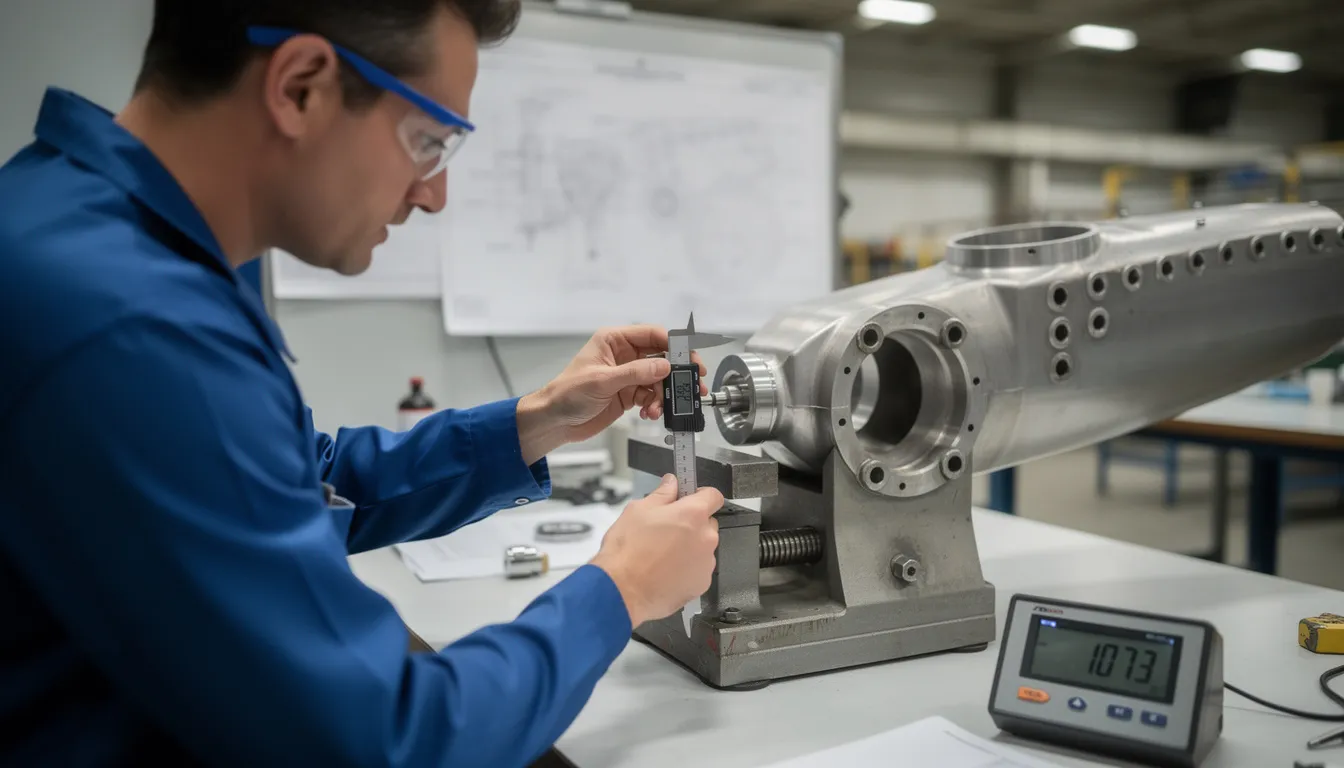
In aerospace manufacturing and MRO operations, work order management must extend beyond facility boundaries to coordinate activities across supplier networks and sub-tier manufacturers.
Extending work order visibility to external suppliers and sub-tier manufacturers ensures that external work progresses according to the same standards and schedules that govern internal operations. Suppliers must have access to current work order information, must provide status updates that integrate with internal tracking systems, and must deliver quality documentation that meets the same audit trail requirements applied to internal work.
Coordinating delivery schedules with internal production work order requirements prevents the inventory buildup and storage costs that occur when supplier deliveries arrive before internal production is ready to consume them, and prevents the production delays that occur when internal operations are ready to proceed but required supplier deliveries have not arrived. Supplier delivery schedules must be linked to internal work order schedules to optimize overall production flow.
Managing supplier quality documentation and inspection data within unified workflow systems ensures that supplier work meets the same quality standards applied to internal operations and that quality data is available for trend analysis and continuous improvement. Suppliers must provide inspection data in formats that integrate with internal quality tracking systems, and supplier quality issues must trigger the same escalation procedures that apply to internal quality problems.
Tracking supplier work orders for critical components requiring traceability documentation ensures that regulatory compliance extends throughout the supply chain. When critical components are manufactured or repaired by suppliers, the traceability chain must remain intact: supplier work orders must link to internal work orders, supplier quality data must integrate with internal quality databases, and supplier documentation must meet the same audit trail requirements that apply to internal work.
How Connect981 Supports Work Order Management
Connect981 provides a unified operations layer that addresses the coordination and visibility challenges inherent in aerospace work order management by connecting digital work instructions with real-time status tracking in a single, integrated platform.
The platform’s integration of routing, quality checks, and documentation eliminates the fragmentation that occurs when these critical functions are managed in separate systems. Work instructions, inspection requirements, quality data capture, and progress tracking all operate within the same workflow environment, ensuring that information remains consistent and accessible to all stakeholders throughout the work order lifecycle.
Real-time visibility capabilities enable supervisors and engineers to monitor progress across multiple work centers without manual data gathering or system-to-system reconciliation. Status updates are captured automatically as work progresses, providing immediate notification of completed operations, quality holds, or resource constraints. This visibility enables proactive management rather than reactive crisis response.
Supplier workflow capabilities extend work order management beyond facility boundaries, providing the same coordination and visibility for supplier activities that the platform provides for internal operations. Suppliers can access current work instructions, provide status updates, and submit quality documentation through the same interface that internal teams use, ensuring consistency and eliminating the communication gaps that typically plague supplier coordination.
Traceability features link work orders to quality data and regulatory compliance requirements, creating complete audit trails that support certification and regulatory oversight. All work performed, inspections conducted, materials consumed, and approvals obtained are recorded against specific work orders, providing the documentation required for regulatory compliance without requiring separate administrative processes.
Automated status updates reduce administrative burden while maintaining accurate production records, eliminating the manual effort required to track work order progress in traditional paper-based or disconnected digital systems. Status information is captured as a natural part of the work execution process rather than as a separate administrative task, ensuring accuracy while minimizing overhead.
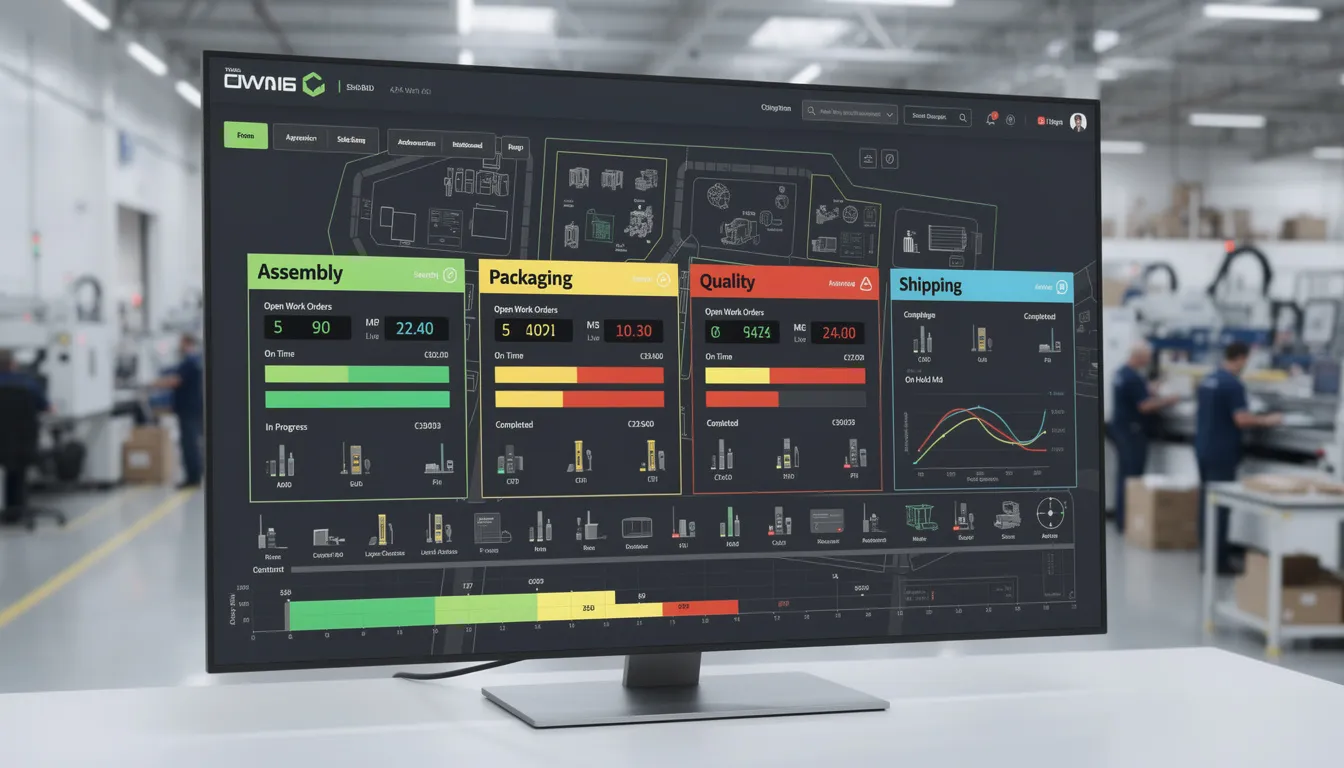
By providing a unified platform where routing, quality checks, and documentation stay aligned, Connect981 enables aerospace operations to achieve the process control and visibility required for consistent on-time delivery and regulatory compliance. The platform eliminates the coordination failures and information gaps that characterize traditional work order management approaches, enabling teams to focus on value-added production activities rather than administrative coordination.
Effective work order management represents a fundamental operational discipline that determines whether aerospace manufacturing and MRO operations achieve their potential or struggle with chronic delays, quality issues, and compliance exposures. Organizations that invest in unified, digital work order management capabilities position themselves to compete successfully in markets where operational excellence determines customer satisfaction and business success.
Frequently asked questions
Work order management is the end-to-end process of planning, issuing, executing, tracking, and closing formal instructions to perform work on assets, products, or facilities. In industrial and regulated environments, it is a core control mechanism that connects planning systems (ERP/MRP), execution (operators and technicians), and compliance requirements (QMS, EHS, regulatory records).
What a work order typically represents
A work order is a structured instruction to perform defined work under controlled conditions. Depending on context, this can include:
- Maintenance work orders: Preventive, predictive, or corrective work on equipment, tooling, or facilities, usually managed in a CMMS or EAM system.
- Production work orders: Discrete manufacturing jobs or batches, usually linked to a routing, bill of materials, and schedule in ERP or MES.
- Calibration and validation work orders: Activities required to keep instruments, equipment, and validated systems in a qualified state.
- Facility and utility work orders: Work on HVAC, compressed air, clean rooms, or other critical infrastructure.
Core elements of work order management
Effective work order management usually covers:
- Creation: Work orders generated from schedules, condition-based triggers, operator requests, CAPA actions, or change controls.
- Planning: Defining scope, steps, required skills, parts and tools, safety and quality checks, and expected duration.
- Scheduling and assignment: Prioritizing work, assigning to technicians or cells, aligning with production windows and downtime constraints.
- Execution and data capture: Recording who did what, when, and how, including measurements, test results, deviations, and approvals.
- Closure and review: Verifying completion, documenting residual risks or follow-up actions, and formally closing with appropriate approvals.
- Traceability and reporting: Linking the work to assets, product lots, nonconformances, and changes, and making the data available for audits and analysis.
How it fits into a brownfield system landscape
In most existing plants, work order management is distributed across multiple systems rather than owned by a single platform:
- ERP/MRP typically creates production work orders, manages costs, and tracks completion status at the order level.
- MES breaks work orders into operations, enforces sequences and process parameters, and captures in-process evidence.
- CMMS/EAM manages maintenance and facility work orders, asset hierarchies, PM schedules, and maintenance histories.
- QMS connects work orders with nonconformances, CAPAs, and change controls, especially in regulated industries.
Because of this, work order management is as much about integration and governance as it is about screens and forms. Attempting to replace all order-related functions with a single new system often fails in regulated, long-lifecycle environments due to validation cost, integration complexity, and downtime risk. Incremental approaches that respect existing ERP, MES, and CMMS roles and integrate cleanly are usually more realistic.
What “good” work order management looks like in regulated operations
In regulated or high-liability environments, work order management must do more than schedule work. It should:
- Support traceability: Every work order should be linkable to specific assets, batches or serial numbers, procedures, and change records, with timestamps and personnel identifiers.
- Enforce approved methods: Work instructions, torque specs, test limits, and acceptance criteria should be tied to controlled documents, with version control and clear effectivity dates.
- Respect validation and change control: Changes to forms, workflows, or integrations that affect data used for release, qualification, or audits must be managed via formal change control and, where applicable, revalidation.
- Handle long asset lifecycles: Records and histories may need to be retained for the life of the product or asset, which can span decades.
- Provide auditable history: Including electronic signatures where required, and a clear record of overrides, deviations, and rework.
Common failure modes and tradeoffs
Typical issues when implementing or improving work order management include:
- Fragmented data: Work order details scattered across ERP, MES, CMMS, spreadsheets, and paper, making it hard to reconstruct what happened for an audit or investigation.
- Unclear system of record: Disputes over whether the “true” status is in ERP, MES, or a local tracker, which undermines trust in metrics and release decisions.
- Overly rigid workflows: Designs that ignore real-world constraints (unplanned downtime, part shortages, emergent safety work) and drive people back to side channels and shadow systems.
- Underestimating integration and validation effort: Especially when pushing work order capabilities into a new platform without accounting for impacts on qualified or validated processes.
- Incomplete execution data: Work orders closed without sufficient detail on actual work done, parts used, or as-found/as-left conditions, which weakens root cause analysis and long-term asset management.
Why it matters
Done well, work order management provides:
- Operational control: Confidence that the right work is being done at the right time with the right methods.
- Evidence for decisions: Reliable histories for maintenance strategies, capacity planning, quality investigations, and audits.
- Risk reduction: Better visibility into overdue maintenance, high-risk assets, recurring issues, and deviations from standard work.
However, these benefits depend heavily on how well work order processes are integrated with existing systems, governed under change control, and adopted by the people doing the work. Technology alone does not guarantee effective work order management.
In most manufacturing and industrial environments, “PO” and “WO” refer to two different but related control mechanisms:
What is a PO (Purchase Order)?
A Purchase Order is a commercial and logistical document used to buy something from an external supplier.
In practice, this connects to supplier and supply chain coordination when teams need to turn the answer into repeatable execution habits.
Typical characteristics:
- Purpose: Authorize and control external spend for materials, components, tooling, services, or outside processing.
- Owner system: Usually created, approved, and tracked in ERP or procurement systems.
- Scope: Line items for parts, materials, services, quantities, prices, delivery terms, and sometimes quality clauses.
- Controls: Budget approvals, supplier selection, contractual terms, and receiving/three-way match with invoices.
- Traceability: In regulated environments, POs may be referenced in receiving inspection records, supplier quality records, and cost traceability, but they do not usually control the technical execution of manufacturing steps.
What is a WO (Work Order)?
A Work Order is an execution instruction to perform work, either in manufacturing or maintenance/repair contexts.
Typical characteristics:
- Purpose: Control and document work performed on a part, assembly, piece of equipment, or facility.
- Owner system: In manufacturing, usually MES or ERP (production module). In maintenance, usually a CMMS or EAM system.
- Scope: Routing or operation steps, required materials, resources, estimated and actual hours, quality checks, and sign-offs.
- Controls: Sequencing of operations, who can perform which work, work instructions, in-process inspections, and status (released, in progress, completed, closed).
- Traceability: In regulated environments, WOs are often key traceability records, linking serial numbers, batches, inspection results, deviations, and rework.
How PO and WO interact in brownfield environments
In practice, POs and WOs coexist and may reference each other, but they typically live in different systems and have different lifecycles.
- Material supply: A WO may consume parts that were purchased on one or more POs. The link is often managed via item numbers and inventory, not directly WO-to-PO.
- Outside processing: A WO operation (for heat treat, coating, NDT, etc.) may require a PO to an external processor. In some systems the WO operation references the PO or vice versa, but this depends heavily on integration design and data discipline.
- Costing: PO costs (materials, outside services) are usually rolled up into the cost of the WO or production order in ERP, but the accuracy of this depends on correct item setup, routing, and backflushing or issuing practices.
- Maintenance work: A maintenance WO may require spare parts, which are procured via PO. The CMMS/EAM may integrate with ERP to check stock and trigger purchase requisitions, but this is often only partially implemented in older plants.
Why the distinction matters in regulated and long-lifecycle environments
Keeping PO and WO roles clearly separated is important for control and compliance:
- Commercial vs technical control: The PO governs who you buy from and on what terms; the WO governs how work is done and documented.
- Traceability: Auditors and customers typically expect work history, inspections, and nonconformances to be traceable via WOs or equivalent production records, not via POs.
- Change control: Changes to suppliers (PO level) and changes to process or routings (WO level) follow different approval paths and validation burdens.
- System coexistence: Trying to use a PO as a surrogate for a WO, or vice versa, usually leads to gaps in traceability, poor cost visibility, and weak process controls, especially in brownfield stacks with legacy ERP and MES.
In summary, a PO is about buying from suppliers, while a WO is about executing and documenting work. They should be linked where appropriate, but they serve distinct roles and should not be treated as interchangeable.
In industrial and manufacturing environments, “WO management” almost always stands for “work order management“.
Work order management covers the processes and systems used to:
In practice, this connects to a connected execution platform when teams need to turn the answer into repeatable execution habits.
- Create and approve work orders (for production, maintenance, rework, quality actions, engineering changes, etc.).
- Schedule and assign work to lines, machines, and operators.
- Issue materials, tools, and instructions linked to each work order.
- Capture actual execution data (times, quantities, scrap, deviations, test results).
- Close work orders with proper traceability and handoff to ERP, MES, QMS, and maintenance systems.
In brownfield plants, work order management usually spans multiple systems (for example, ERP for order creation, MES for execution, a CMMS for maintenance, and a QMS for quality holds and rework). The specific meaning of “WO” in a given report or application can depend on how those systems are configured and integrated, so it is worth confirming locally if you see any ambiguity.
In regulated environments, effective work order management is closely tied to traceability, validation of system changes, and controlled workflows. It does not, by itself, imply compliance or a particular audit outcome; those depend on how the underlying processes and systems are designed, documented, validated, and maintained over time.
In industrial and regulated manufacturing environments, “order management” is usually a cross-functional process, not a single job title. It spans how customer demand is translated into executable, compliant work orders across commercial, planning, operations, quality, and logistics systems.
Core responsibilities of order management
A typical order management function is accountable for:
In practice, this connects to supplier and supply chain coordination when teams need to turn the answer into repeatable execution habits.
- Order capture and validation
- Receiving sales or customer orders through ERP, portals, EDI or manual entry.
- Checking configuration, revisions, regulatory constraints, export controls and contractual requirements.
- Verifying pricing, lead times, MOQs and capacity assumptions with planning.
- Ensuring required technical data and specifications are complete enough for manufacturing and quality.
- Order promise and scheduling coordination
- Working with planning/MRP to generate realistic available-to-promise dates based on material, capacity and qualified routes.
- Aligning sales commitments with actual shop capability, maintenance windows and qualification limits.
- Escalating when customer need dates conflict with constrained or regulated resources.
- Conversion to production and purchase orders
- Triggering or reviewing creation of production orders, work orders and purchase orders in ERP/MES according to the master data and BOMs.
- Checking that routings, special processes and required certifications are correctly reflected before release.
- Ensuring lot/serial tracking and traceability fields are properly defined for regulated products.
- Change, holds and exception handling
- Processing order changes (quantities, dates, configurations) under controlled change procedures.
- Coordinating with engineering change, quality and regulatory when product definitions or standards change mid-order.
- Managing order holds due to credit, quality, export control, missing data or nonconformances.
- Status tracking and communication
- Monitoring order status across ERP, MES, warehouse and shipping systems.
- Providing internal and external visibility on milestones, delays, partials and split shipments.
- Ensuring that customer-facing dates are updated when production schedules or quality issues shift.
- Shipment, documentation and closure
- Coordinating release-to-ship based on quality release, regulatory approvals and export licenses where applicable.
- Ensuring required documentation (certificates, test reports, as-built records, packing lists) is linked to the order.
- Confirming that final quantities, serials and lot genealogies are accurately recorded before financial close.
- Data quality and continuous improvement
- Identifying recurring order errors (wrong configs, missing data, misaligned lead times) and feeding back to master data, sales and planning.
- Helping standardize order entry and change control to reduce rework and misbuild risk.
- Supporting audit and customer inquiries with accurate order history and traceability.
Where order management typically sits
In many plants, order management responsibilities are spread across several roles and teams:
- Customer service / order entry teams manage initial order capture and customer communication.
- Sales operations or commercial operations coordinate demand, quotes and configuration reviews.
- Planning / MRP groups convert orders into schedules and work orders.
- Operations, quality and supply chain handle execution, holds, nonconformances and logistics.
In more mature or higher risk environments, there may be a dedicated order management or sales operations function that orchestrates these handoffs and enforces consistent controls.
Systems and integration dependencies
The specific job description depends strongly on your system landscape and process maturity:
- Brownfield ERP/MES stacks: In mixed or legacy environments, order management often involves manual reconciliation between ERP, MES, QMS, PLM and shipping systems, plus spreadsheet tracking to bridge integration gaps.
- Integration quality: Where ERP and MES are well integrated, order management roles spend more time on exception handling and less on re-keying data. Poor integration drives more clerical and firefighting work.
- Regulatory and customer requirements: Aerospace, medical device, defense and similar sectors require tighter control of revisions, export restrictions, serial tracking and documentation. Order management roles must understand these constraints well enough to avoid noncompliant orders.
- Validation and change control: Any change in order flows, fields or system logic often requires validation and formal change control. Order management teams frequently help define requirements and test order scenarios during system changes.
Tradeoffs and failure modes
Common challenges and tradeoffs in order management include:
- Speed vs control: Pushing orders through quickly without proper checks can create misbuilds, scrap and customer escapes. Overly rigid checks can hurt responsiveness for low-risk products.
- Standardization vs flexibility: Highly standardized order flows reduce errors but may struggle with engineer-to-order or one-off customer requirements.
- System replacement vs coexistence: Attempts to fix order management by fully replacing ERP or MES often run into qualification burden, downtime risk and integration complexity. Incremental improvements, interfaces and better master data are usually more achievable in regulated, long-lifecycle plants.
- Ownership gaps: When no single function owns end-to-end order health, issues fall between sales, planning and operations, leading to late surprises at build or ship time.
How to define an order management job in your plant
If you are writing a job description, the practical steps usually include:
- Clarify which parts of the order lifecycle this role owns vs supports (entry, promise, changes, exceptions, documentation, close).
- List the systems they must use competently (ERP, MES, QMS, PLM, shipping, customer portals, reporting tools).
- Specify accountability for data quality (e.g., correctness of order attributes, revision, routing, traceability fields).
- Define interfaces with planning, production, engineering, quality, finance and customer service.
- Include expectations around support for audits, customer inquiries and continuous improvement of order flows.
The detailed wording should be adapted to your regulatory context, current system landscape and division of responsibilities between commercial, operations and quality teams.
In industrial and regulated manufacturing environments, a work order is a formal, authorized instruction to perform defined work on a product, component, batch, or asset. It is both a planning object and a control record that ties the work to specific materials, documents, people, equipment, and timestamps.
Typical purpose of a work order
A work order is used to:
- Authorize work to be done (production, rework, maintenance, calibration, or inspection).
- Specify what must be done (operations, tasks, or steps).
- Reference how to do it (routes, travelers, work instructions, drawings, specifications).
- Identify which units are affected (serials, lots, batches, assets, locations).
- Capture evidence that it was done (signatures, timestamps, data, measurements, nonconformances).
Common types of work orders in regulated operations
- Production work order (or shop order): to build a defined quantity of a part or assembly, typically created from MRP/ERP and executed in an MES or on paper travelers.
- Rework or repair work order: to perform specific corrective work on nonconforming or returned product, often tied to a deviation or nonconformance record.
- Maintenance work order: to perform preventive or corrective maintenance on equipment, tools, or facilities, commonly managed in a CMMS or EAM system.
- Calibration work order: to perform calibration or verification on gauges and measurement systems, with results feeding back into metrology and quality records.
Key information usually contained in a work order
The exact fields vary by system (ERP, MES, CMMS) and by plant, but most regulated environments include:
- Identifiers: work order number, revision, plant/area, asset or line.
- Scope: part number or asset ID, quantity or specific units, type of work (build, inspect, rework, maintain).
- Linked documents: bill of materials, routing, work instructions, drawings, specifications, permits.
- Schedule & responsibility: required start/finish dates, assigned department or cell, responsible owner.
- Materials & resources: required components, tools, fixtures, test equipment, special processes.
- Execution records: operator or technician identifiers, timestamps, results, measurements, deviations.
- Approvals: electronic or physical signatures for creation, release, completion, and sometimes QA review.
How work orders relate to other systems
In brownfield environments, the work order typically sits at the intersection of multiple systems:
- ERP/MRP often creates production work orders for planning, costing, and inventory control.
- MES or line control systems use the work order to drive execution, data capture, and traceability at the operation level.
- QMS may reference work orders in nonconformance, CAPA, or deviation records, especially for rework and concessions.
- CMMS/EAM manages maintenance and calibration work orders for assets and equipment.
In many plants, these are only partly integrated, so the same work order ID might appear across systems, or separate IDs may need to be cross-referenced manually. How cleanly this works depends on integration quality, master data discipline, and change control.
Constraints and variations
- Naming differs: some sites use job order, shop order, process order, or batch record for similar concepts.
- Granularity varies: a single work order may cover an entire build, a specific operation, or only certain serial numbers or lots.
- Paper vs digital: many regulated plants still rely on paper travelers or mixed paper/digital records, which affects how the work order is created, updated, and archived.
- Regulatory impact: in aerospace, medical, and similar environments, work orders are part of the permanent quality record and must be controlled, versioned, and retained under formal procedures.
Because of these variations, when someone says “work order” in your facility, you usually need to clarify whether they mean a production order, maintenance order, rework order, or the combined traveler and record used on the floor.
A purchase order (PO) and a work order serve different purposes in an industrial operation, even though they sometimes reference the same parts, jobs, or vendors.
What a purchase order (PO) does
A PO is a commercial document issued by your company’s purchasing function, usually from ERP or a procurement system. Its main roles are:
In practice, this connects to supplier and supply chain coordination when teams need to turn the answer into repeatable execution habits.
- Authorize purchase of goods or services from a supplier
- Define commercial terms (price, quantities, delivery dates, Incoterms, payment terms)
- Support receiving, three-way match (PO, delivery, invoice), and financial control
- Provide traceable linkage to approved suppliers and part revisions
Typical content includes part numbers or service descriptions, quantities, unit prices, delivery location, and reference numbers (e.g., RFQ, contract, or project IDs).
What a work order does
A work order is an execution document, usually issued from MES, ERP, CMMS, or a maintenance system. Its main roles are:
- Authorize and schedule work to be done (manufacturing, rework, maintenance, calibration, or service)
- Specify routing, operations, resources, and sometimes detailed work instructions
- Collect actuals: labor, materials consumed, equipment time, and process data
- Support traceability for what was built or serviced, when, and by whom
Work orders may drive:
- Production of finished goods or components
- Internal rework or deviation activity
- Preventive or corrective maintenance, calibration, or qualification work
- Field service or repair jobs
Key differences in a regulated, brownfield environment
- Direction of flow: POs are outward-facing, sent to external suppliers. Work orders are inward-facing, directing internal teams or contracted service providers.
- Commercial vs technical focus: POs manage commercial commitments. Work orders manage technical execution, resource use, and traceability.
- Systems of record: POs live primarily in ERP/procurement. Work orders may originate in ERP, MES, or maintenance systems and often need integration for accurate planning and costing.
- Traceability role: POs help show where materials or services came from and under what terms. Work orders help show how materials were transformed, which equipment and people were involved, and which procedures and revisions were followed.
How POs and work orders interact
In real plants, POs and work orders are often linked, but usually not one-to-one:
- MRP or planning generates planned orders, which become work orders for internal production or purchase requisitions that convert to POs for external buys.
- Work orders consume material that was received under specific POs, so integration is needed to maintain correct inventory, costs, and genealogies.
- Outside processing work may require both a work order (internal routing step) and a PO (to the outside processor). The work order tracks the process; the PO tracks the commercial transaction.
The exact linkage depends heavily on your ERP/MES/CMMS configuration, data discipline, and how rigorously you maintain routings, BOMs, and supplier catalogs.
Common failure modes and tradeoffs
- Blurring roles: Using POs to describe technical work in detail, or using work orders as de facto purchasing documents, can create gaps in audit trails and confusion during investigations or cost reviews.
- Poor integration: If work orders and POs are not synchronized across ERP, MES, and maintenance systems, you can see mismatched inventory, inaccurate standard vs actual cost, and incomplete genealogy.
- Uncontrolled changes: Changing PO contents (quantities, revisions, or suppliers) without updating associated work orders, or vice versa, undermines traceability and can create compliance risk, especially when part revisions or process changes are involved.
- Over-automation risk: Attempts to fully replace existing PO or work order processes with a new single system often fail in long-lifecycle, regulated operations because of validation burden, integration complexity, and downtime risk. Incremental integration and clear system-of-record definitions are usually safer.
Practical way to think about it
- PO: “What are we buying from whom, under what terms?”
- Work order: “What work will we perform, using which resources and materials, and how will we record it?”
Keeping these roles clearly separated, and integrated through your ERP/MES/maintenance stack, is critical for accurate planning, cost control, and defensible traceability in regulated environments.
There is no single universal role that “sends” the work order. In regulated and complex manufacturing, work orders typically originate in planning systems and are dispatched through a defined process rather than by an individual acting alone.
Typical sources of work orders
In most plants, work orders are generated and released from one or more of the following:
In practice, this connects to materials planning and erp integration when teams need to turn the answer into repeatable execution habits.
- ERP / MRP system: Creates and releases production orders based on demand, MRP runs, and planning rules. Common in larger, multi-site organizations.
- MES (Manufacturing Execution System): Receives orders from ERP/MRP, breaks them into operations, and dispatches work to specific lines, cells, or machines.
- Standalone scheduler or planning tool: In brownfield environments, a separate planning or finite-capacity scheduling tool may generate or sequence work orders, which are then pushed to MES or sent as printed packets.
- Manual/planner-driven process: A Production Planner, Master Scheduler, or Production Control role may manually create and release work orders in the system, sometimes supplemented by spreadsheets or email.
Who is responsible for releasing or dispatching them?
The responsible function is usually one of:
- Production Planning / Master Scheduling: Owns work order creation and release timing based on capacity, material, and due dates.
- Production Control / Operations Planning: Manages day-to-day release, holds, and rescheduling of orders.
- MES / Dispatching function: Automatically dispatches work orders and operations to specific work centers or operators once they are released and preconditions are met (materials, tools, approvals).
- Cell or Area Supervisor: In some plants, the supervisor triggers release of work to the floor from a queue of pre-created orders.
In regulated environments, this is usually defined in procedures, with clear role-based permissions inside ERP/MES and audit trails of who created, modified, or released each work order.
Dependencies and constraints in regulated environments
Who can send or release a work order is constrained by:
- Approval and change control: Work orders often reference controlled routings, BOMs, and work instructions. Release typically requires that all referenced documents are approved and current.
- System integration: In a brownfield stack, orders may be created in ERP, transformed by integration middleware, and routed into MES or local systems. Failures or mismatches here can create duplicate or missing orders.
- Validation and traceability: Regulated plants require traceability of who approved what and when. Automated or interface-driven work order release must be validated and logged.
- Material and tooling readiness: Some sites block work order release until inventory, tooling, and NC programs or test sequences are verified as available and correct.
How this coexists with legacy and mixed systems
In many brownfield environments, there is a hybrid model:
- ERP creates a high-level production order.
- MES or a legacy shop-floor system splits this into operations and sends work orders or operation tickets to specific work centers.
- Supervisors or planners may still print, annotate, and manually hand out work orders where terminals are limited or systems are not fully adopted.
Full replacement of legacy work order processes (for example, moving all creation and dispatch into a new MES) can be risky and slow in aerospace-grade or similar environments, due to validation effort, integration debt, and the need to maintain continuity for long-lived programs. Many plants phase in new dispatching tools while keeping ERP as the system of record for work order creation.
What you should define explicitly
To avoid ambiguity and audit issues, your site procedures should clearly answer:
- Which system of record creates the work order (ERP, MES, or other).
- Which roles may create, modify, release, or cancel work orders, and under what conditions.
- How work orders are communicated to operators (screens, printed packets, travelers).
- How changes or rework are controlled, documented, and re-issued without breaking traceability.
Without this clarity, plants often experience misaligned priorities between planning and operations, duplicate orders, or undocumented changes, which are high-risk in regulated audits.