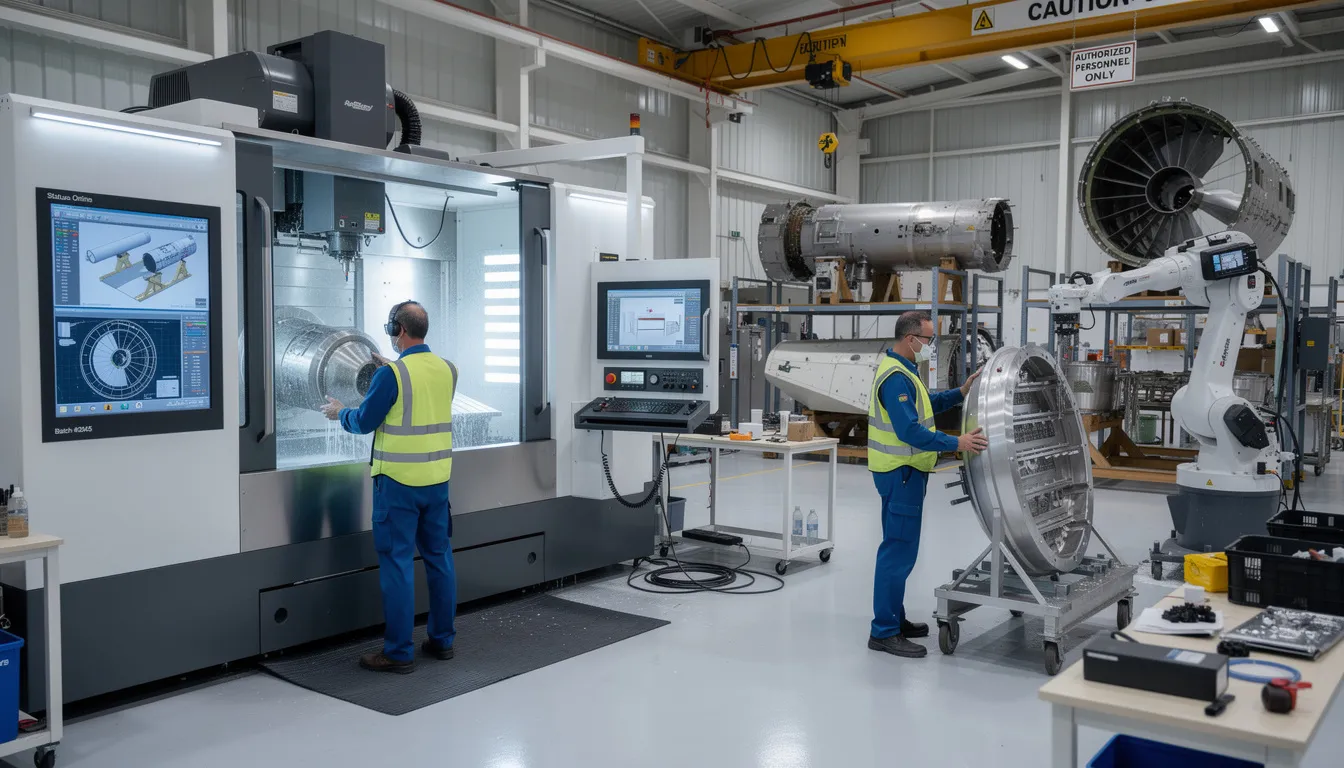
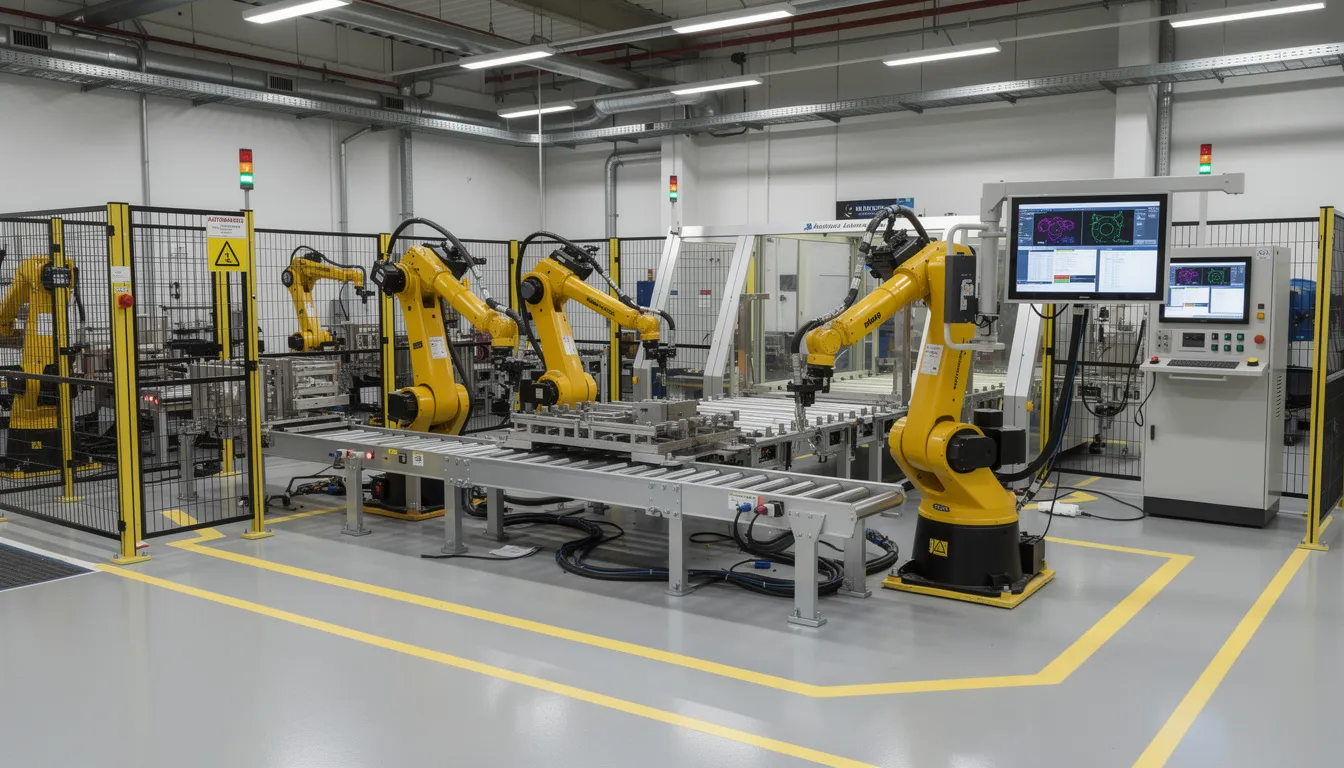
An Information Security Management System (ISMS) is a structured way to manage information security risks across people, processes, and technology. In regulated, industrial environments, several practical principles matter most.
1. Risk-based, asset-focused security
- Identify critical information assets (e.g., design data, NC programs, batch records, process parameters, quality records, maintenance logs).
- Assess risks in context: confidentiality, integrity, and availability, plus safety and regulatory impact.
- Prioritize controls where failure would meaningfully affect safety, product quality, regulatory exposure, or business continuity.
- Accept that not every risk can or should be reduced to zero; document risk decisions and rationales.
In practice, this connects to a connected execution platform when teams need to turn the answer into repeatable execution habits.
2. Governance, accountability, and scope clarity
- Define the ISMS scope explicitly: sites, systems, data types, and interfaces covered, including OT, MES, ERP, QMS, PLM, and lab systems.
- Assign owners for critical assets, risks, and controls; do not leave security “owned by IT” alone.
- Align policies and standards with regulatory expectations and internal quality systems (e.g., procedures, work instructions, records management).
- Use a risk committee or similar body to review major changes, exceptions, and incidents.
3. Lifecycle approach (Plan–Do–Check–Act)
- Plan: Establish policies, risk criteria, classification schemes, and control objectives.
- Do: Implement technical and procedural controls, train personnel, and integrate security into engineering and operations workflows.
- Check: Monitor logs, perform internal audits, review incidents, and test controls.
- Act: Correct nonconformities, update risk assessments, improve controls, and adjust scope as the system landscape evolves.
4. Defense-in-depth, not single-point solutions
- Combine multiple layers of control: network segmentation, access control, endpoint hardening, backup and recovery, monitoring, and procedural safeguards.
- Assume individual controls will fail occasionally; design so failure of one control does not create a single point of catastrophic compromise.
- In OT and manufacturing, favor controls that respect availability and safety constraints, for example using monitoring and segregation when patching is constrained.
5. Integration into existing processes and systems
- Design the ISMS to coexist with existing MES, ERP, PLM, QMS, DCS/SCADA, and data historians rather than assuming full replacement.
- Use existing change control, validation, and configuration management processes wherever possible instead of creating parallel security channels.
- Consider integration limits of legacy equipment and software; compensate with network controls, procedural controls, and compensating monitoring where modern agents or patches are not feasible.
- Recognize that large-scale rip-and-replace projects in regulated environments often fail due to qualification burden, downtime risk, and integration complexity; adapt the ISMS around a staged, incremental approach.
6. Strong change management and validation
- Treat significant security changes (e.g., new firewalls, identity systems, monitoring tools) as changes to validated systems where applicable.
- Link security changes to documented impact assessments, test plans, and rollback plans, with clear approval paths.
- Maintain configuration baselines for critical systems and enforce them through technical or procedural controls.
- Ensure security controls do not undermine product quality, data integrity, or safety; test in realistic operational conditions, not just IT labs.
7. Information classification and access control
- Classify information based on business and regulatory impact (e.g., public, internal, restricted, export-controlled, safety-critical).
- Apply least privilege and need-to-know principles to user and system access.
- Align identity and access management with roles already defined in HR, quality, and operations (e.g., operator, quality engineer, maintenance tech, supplier).
- Include machine and service accounts used in integrations (e.g., between MES and ERP) in access governance.
8. Monitoring, incident management, and learning
- Continuously monitor critical systems and networks for anomalies, with attention to both IT (office) and OT (plant) zones.
- Have a documented, rehearsed incident response process that coordinates IT, OT, quality, and regulatory communication where necessary.
- Capture and retain evidence suitable for internal and external audits without overloading storage or staff.
- Use incidents and near-misses to improve controls, procedures, and training, not just to close tickets.
9. Supplier and third-party management
- Recognize that many risks originate from vendors and integrators (e.g., remote access for OEM support, cloud services, outsourced manufacturing, and testing labs).
- Define security expectations contractually where practical and verify them proportionate to risk.
- Govern remote access tightly: time-bound, approved, logged, and preferably brokered through secure jump hosts or similar mechanisms.
- Ensure supplier changes to software, firmware, and configurations are integrated into your change control and validation processes.
10. Documentation, evidence, and traceability
- Document policies, procedures, risk assessments, and control implementations at a level suitable for audits and internal reviews.
- Maintain traceability from risks to controls to evidence, so you can show why each control exists and how it is verified.
- Keep records of exceptions and compensating controls, including time limits and responsible owners.
- Align ISMS documentation with existing document control practices to avoid duplication and version confusion.
11. People, awareness, and culture
- Treat operators, engineers, planners, and quality staff as core stakeholders, not just recipients of IT rules.
- Tailor training to roles and realistic scenarios (e.g., phishing, USB devices, vendor laptops, portable media for CNC, and configuration changes to PLCs).
- Encourage early reporting of issues without blame, similar to mature safety or quality cultures.
Dependencies and constraints in industrial environments
How these principles are applied will depend heavily on:
- The age and diversity of your equipment, control systems, and enterprise applications.
- The maturity of your change control, validation, and configuration management processes.
- Integration quality and data flows between MES, ERP, PLM, QMS, and shop-floor control systems.
- Regulatory obligations in your sector and jurisdictions.
No ISMS, even one aligned with recognized standards, can guarantee compliance outcomes or eliminate all risk. The value comes from a disciplined, risk-based and traceable approach that fits the realities of your plants and systems.