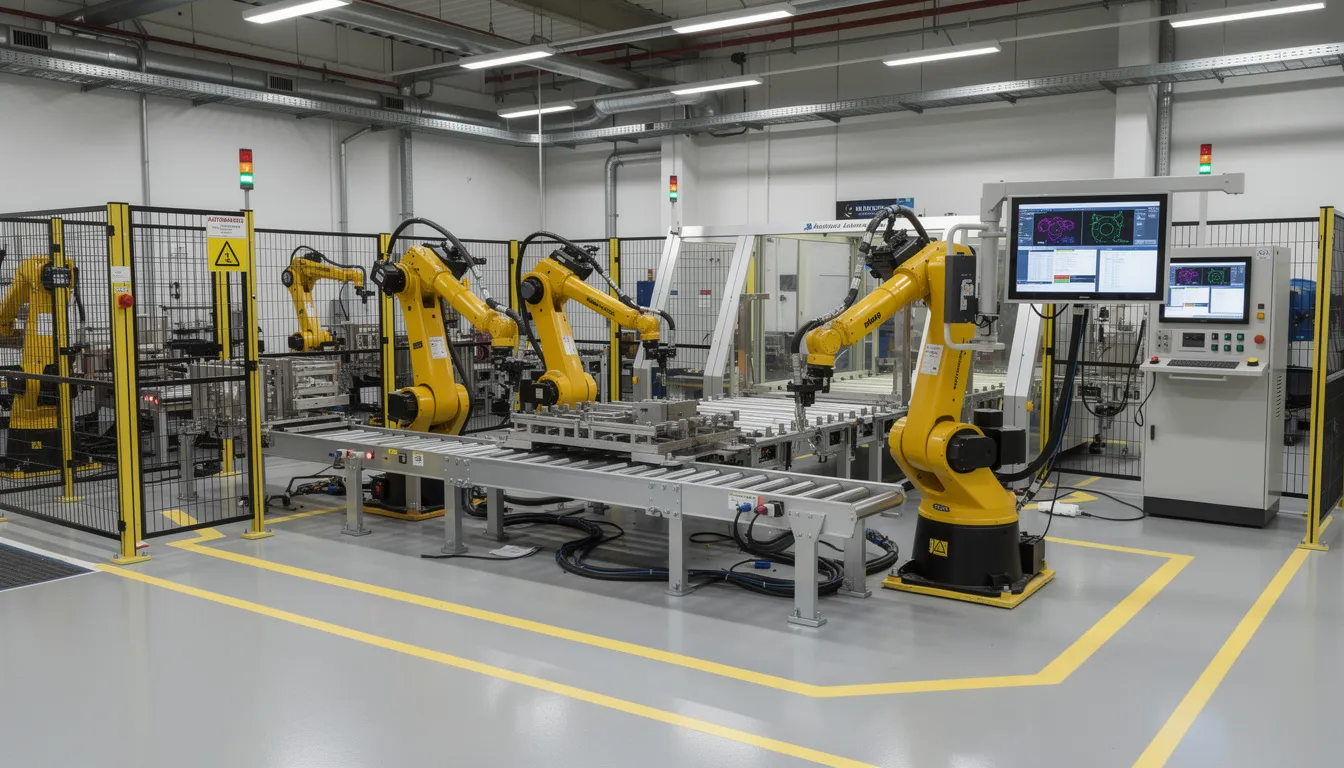
ISO 9001 does not require any specific software, but in complex industrial and regulated environments most organizations use QMS software to make the system workable and auditable. An ISO 9001-focused QMS should support the full Plan-Do-Check-Act cycle, integrate with existing systems, and produce reliable evidence for audits without claiming compliance guarantees.
Core document & record control
At minimum, ISO 9001-focused QMS software should support:
In practice, this connects to the ISO 9001 quality baseline when teams need to turn the answer into repeatable execution habits.
- Document control for QMS documents (procedures, work instructions, quality plans), including:
- Version control with full revision history and change rationale
- Approval workflows with role-based signoff and timestamps
- Controlled release and effective dates
- Obsolescence handling and access to prior revisions for traceability
- Record management for quality records (inspection results, training records, audits, NCRs, CAPAs), including:
- Retention rules and disposition tracking
- Searchable metadata (part, order, supplier, process, date)
- Secure storage with backup and disaster recovery controlled by IT
In brownfield plants, document control often straddles shared drives, PLM, MES, and QMS. The QMS must either integrate with or clearly reference the system of record for each document type to avoid version conflicts.
Risk-based thinking & context
ISO 9001 emphasizes risk-based thinking, but not a specific tool. Practical capabilities include:
- Risk registers for organizational, process, and product risks, with owners and review cycles
- Configurable risk scoring (likelihood, impact, detectability) with your own scales and criteria
- Linking risks to controls and actions (procedures, training, process controls, CAPAs)
- Evidence of risk review during changes, new products, and major process revisions
Some organizations use separate tools for FMEA, process hazard analysis, and enterprise risk. The QMS should at least reference where these live and provide traceable links so auditors can follow the logic from risk to control to evidence.
Nonconformance, corrective action, and improvement
ISO 9001 clauses on nonconforming outputs and improvement are a major driver for QMS software. Useful features:
- Nonconformance management (NCRs), including:
- Configurable NCR forms for product, process, and supplier issues
- Classification by severity, area, customer, part, and process
- Integration or at least mapping to ERP/MES data (work order, batch, lot, serial)
- Support for MRB, deviations, and concessions with decision logging
- Corrective and preventive actions (CAPA) with:
- Structured workflows for containment, root cause analysis, action planning, effectiveness checks
- Owner and due date tracking, escalations for overdue items
- Links between NCRs, complaints, audit findings, and CAPAs
- Analytics on trends, recurrence, and closure time
- Continuous improvement tracking (beyond formal CAPA), such as improvement ideas, kaizen events, and problem-solving projects if your culture supports it.
Many plants already have NCR workflows in MES or ERP. In those cases, the QMS may function as the CAPA and analysis layer, pulling or referencing defect and scrap data instead of replacing the operational system.
Audit management and evidence trails
To support internal audits, external audits, and customer visits, the QMS should provide:
- Internal audit planning with schedules, scopes, and auditor assignments
- Configurable checklists aligned to ISO 9001 clauses and your own processes
- Findings and observations tracking linked to NCRs or CAPAs where needed
- Audit trail and traceability for key QMS changes (who changed what, when, and why)
- Evidence management so each requirement or process has linked records that can be shown in an audit without file hunting
For regulated sectors, granular audit trails and immutable logs are especially important. The software must make it easy to demonstrate that the documented system matches the executed system, but it cannot itself guarantee audit outcomes.
Training, competence, and awareness
ISO 9001 requires control of competence, not a specific LMS. Helpful software capabilities:
- Role- and job-based training matrices mapping roles to required competencies and courses
- Training records with completions, expirations, and recurrent requirements
- Linkage from document changes to training so procedure revisions trigger training updates and acknowledgments where appropriate
- Support for multiple training channels (classroom, on-the-job, e-learning) with consistent record capture
In plants where HR systems or learning platforms are already in place, the QMS may only hold critical quality-related training records or provide references and links, rather than duplicating all HR training data.
Change management and configuration control
Robust change control is critical in long-lifecycle and aerospace-grade environments. QMS software should support:
- QMS change control for policies, procedures, and process descriptions, with impact assessments and approvals
- Traceability from change requests to risk assessments, training, and updated documents
- Visibility into upcoming and recently implemented changes for operations, quality, and IT
Product configuration (BOM, CAD, technical data) usually lives in PLM or ERP. The QMS should integrate with or reference those systems rather than trying to replace them, particularly in aerospace and other regulated sectors where requalifying PLM or ERP is extremely costly.
Customer focus, complaints, and feedback
To meet ISO 9001 requirements for customer focus and feedback, the QMS should make it practical to:
- Log and classify customer complaints and inquiries, with linkage to orders, parts, and lots
- Initiate NCRs and CAPAs from customer issues and trace them to closure
- Capture customer satisfaction metrics if you track them (OTD, quality performance, survey results)
- Generate inputs for management review about customer-related performance and risks
Where CRM or service systems already exist, the QMS often consumes complaint and return data via integration instead of acting as the front-end for customer interactions.
Management review, KPIs, and performance data
ISO 9001 expects structured management review and use of data. QMS software should help by providing:
- Configurable dashboards and reports for NCs, CAPA status, on-time closure, audit findings, and key quality KPIs
- Support for management review records: agendas, minutes, decisions, and actions with follow-up tracking
- Ability to ingest or reference data from ERP/MES for scrap, rework, delivery performance, and returns
In most plants, quantitative performance data still comes from ERP/MES and data warehouses. The QMS should focus on linking these metrics to actions, risks, and decisions, instead of trying to become the primary data platform.
Integration in brownfield environments
In regulated, long-lifecycle operations, QMS software usually has to coexist with an existing stack that is expensive and risky to replace. Realistic integration expectations include:
- Reference, not replacement, of ERP/MES/PLM as systems of record for orders, parts, and technical data
- APIs or file-based interfaces to exchange key identifiers (work order, serials, lots, supplier codes) for traceability
- Configurable master data mappings that can be maintained under change control
- Clear data ownership definitions to avoid duplicate or conflicting records across systems
Full replacement strategies for ERP or MES just to deploy new QMS functionality often fail due to qualification burden, downtime risk, validation costs, and the complexity of re-establishing traceability. In most cases, a layered QMS that integrates with existing systems is a lower-risk option.
Security, access control, and validation
Especially in aerospace, defense, and other regulated sectors, QMS software should support:
- Role-based access control with least privilege for viewing, editing, and approving records
- Configurable electronic signatures for approvals where appropriate, aligned with your regulatory context
- Comprehensive system logs for configuration changes, permission changes, and data changes
- Support for validation and change control (test evidence, configuration documentation, and repeatable deployment practices)
Security baselines, network segregation, and compliance with standards like ISO 27001 or NIST controls are typically governed by your broader IT policies, not the QMS alone. The QMS should fit into that framework rather than defining it.
Configuration, flexibility, and limitations
Finally, because every plant and quality system is different, practical ISO 9001-focused QMS software should be:
- Configurable in workflows, fields, roles, and forms without deep custom code where possible
- Transparent about what is configuration versus customization, so you can assess validation and lifecycle impact
- Capable of exporting your data in usable formats, to avoid lock-in and support audits and investigations
No QMS software can guarantee ISO 9001 certification or audit results. It can only support your processes, evidence, and discipline. The actual outcome depends on process maturity, training, leadership follow-through, and the quality of integrations and data.