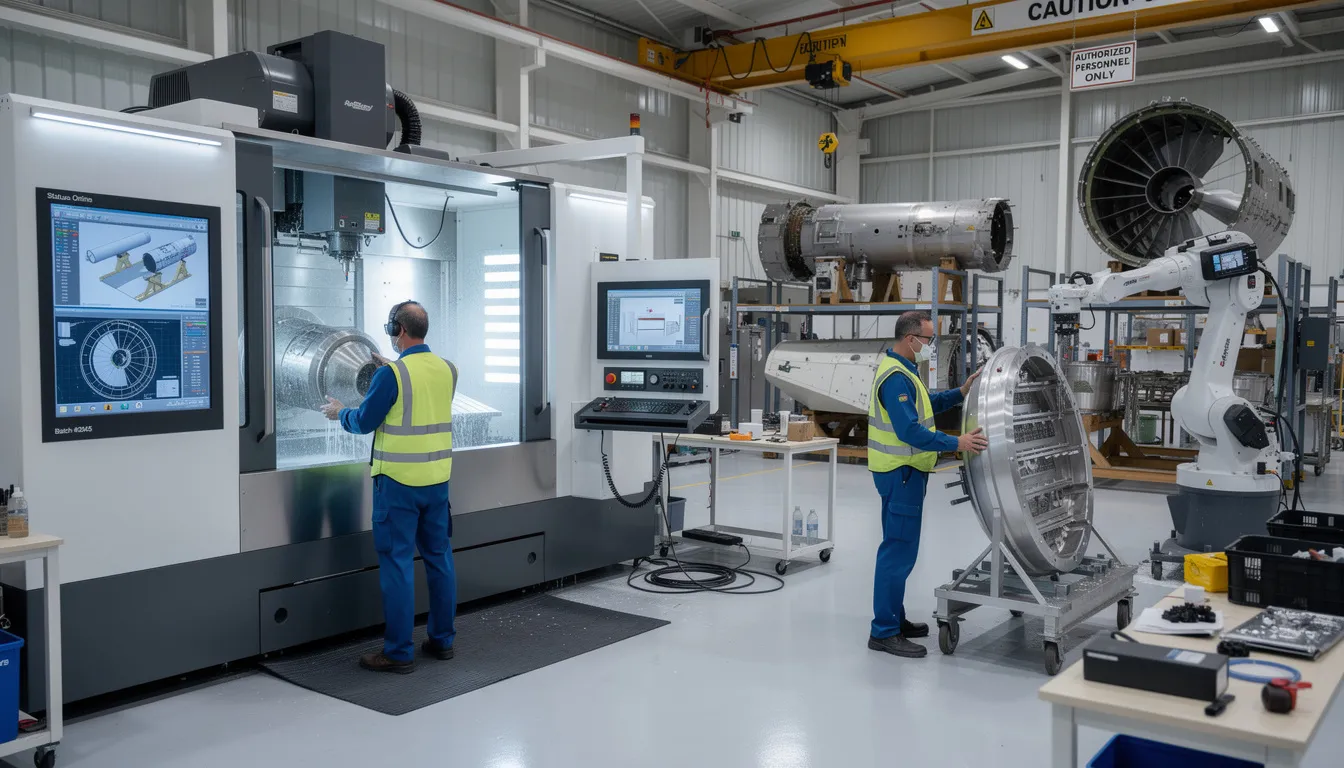
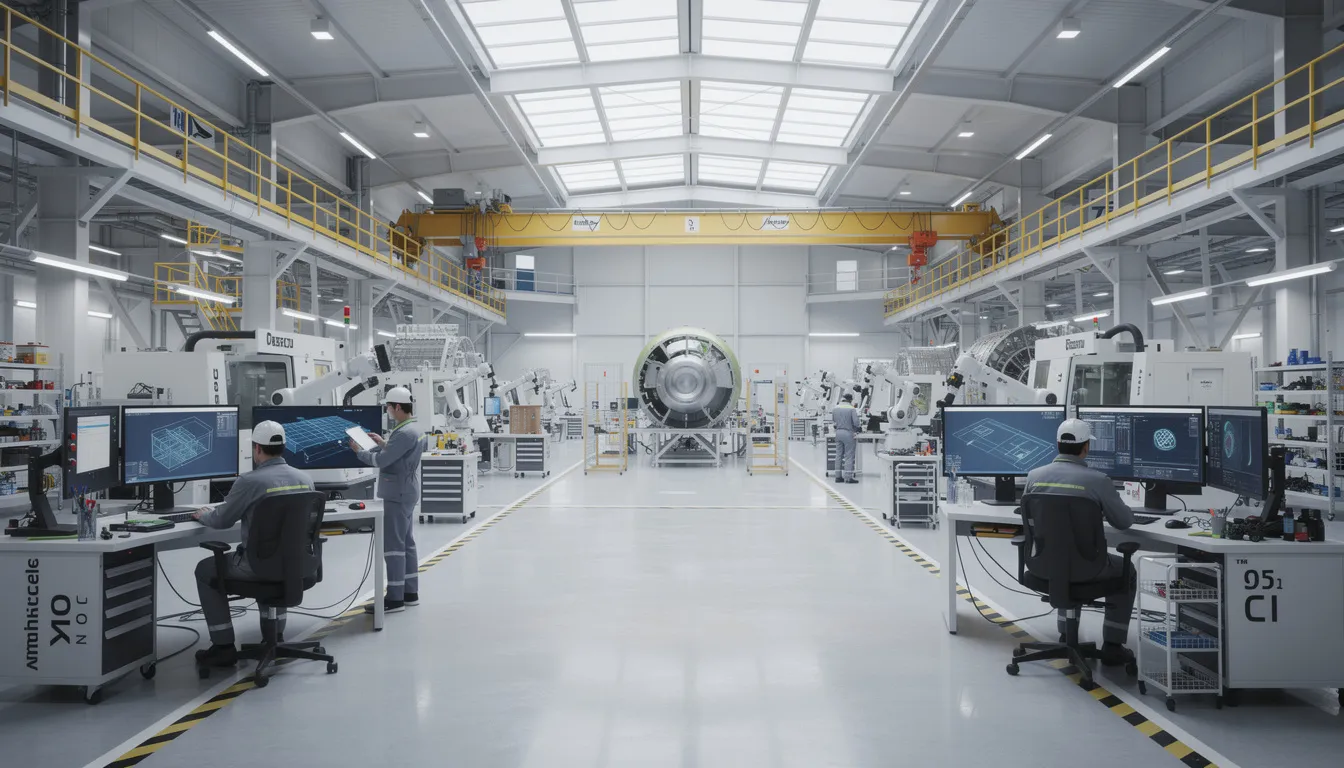
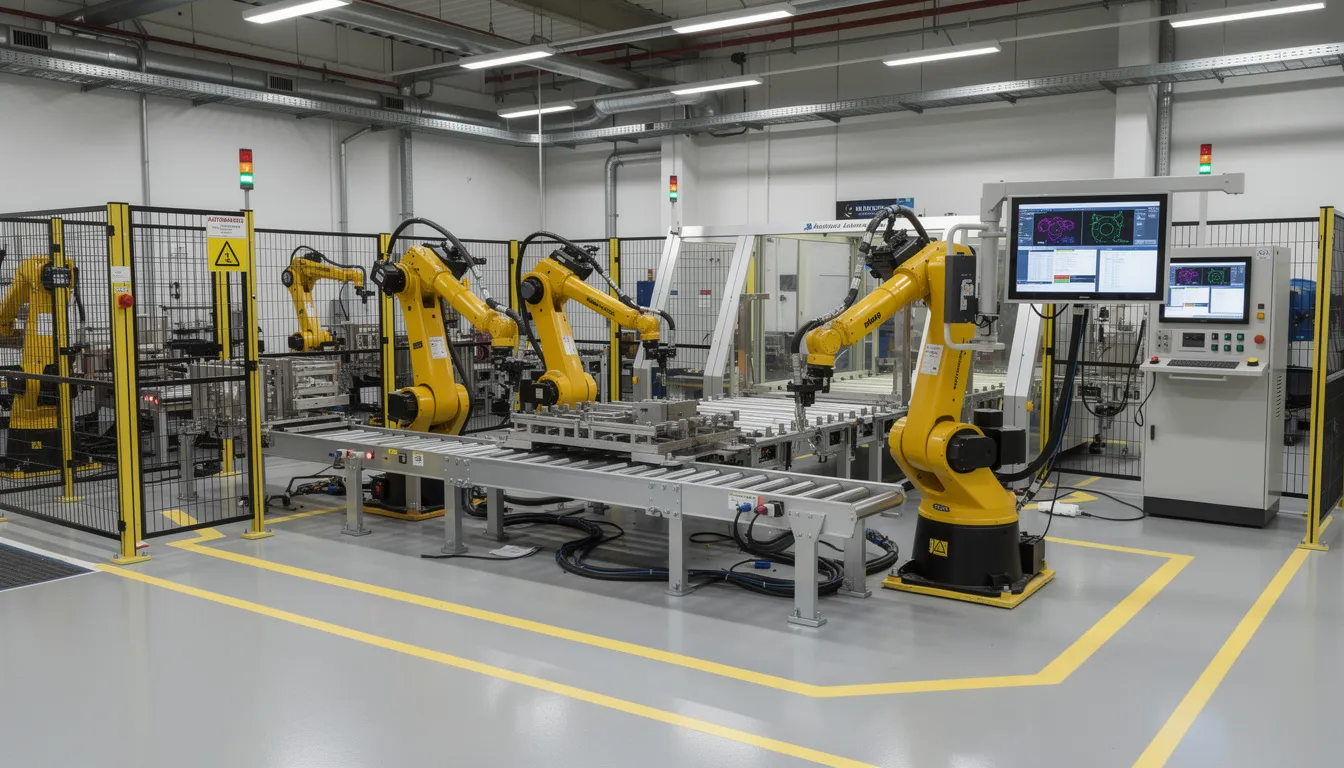
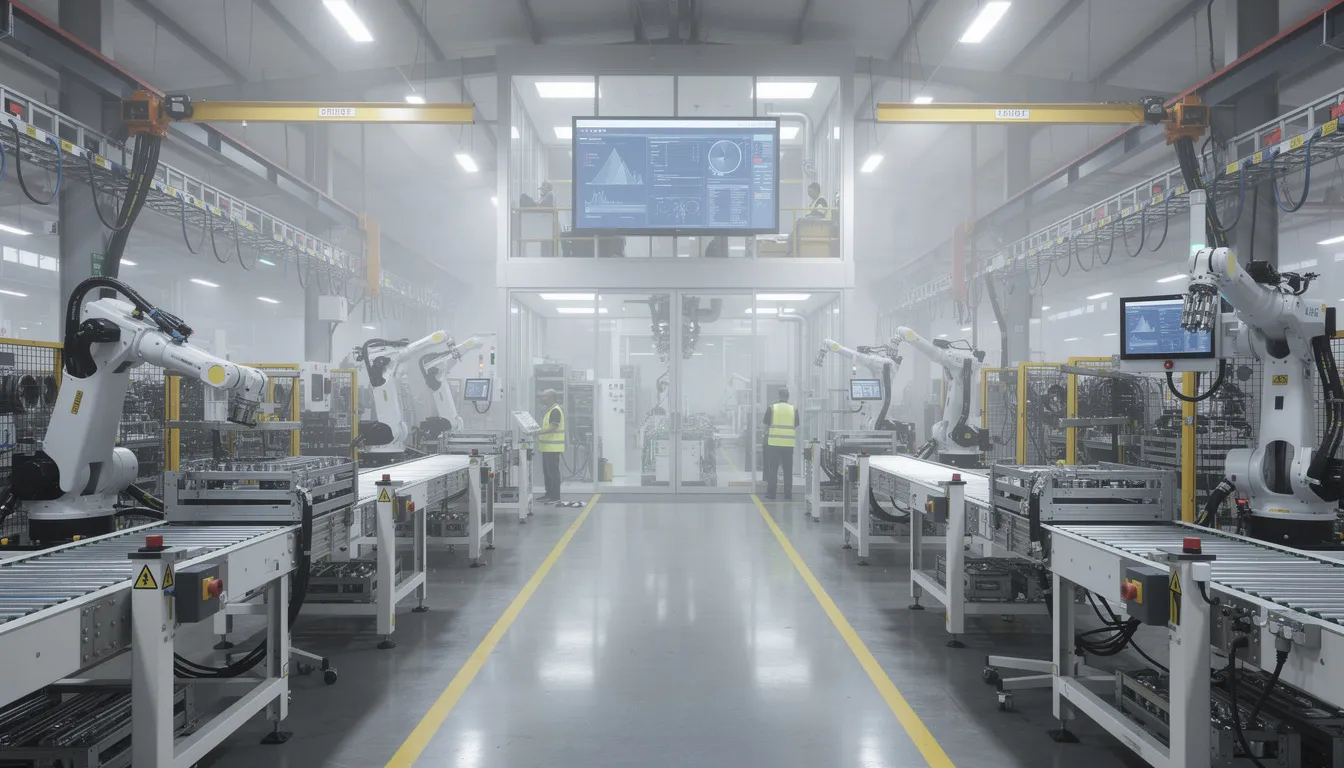
In most MES designs, a WIP location represents where material is actively in process as part of a defined routing or operation, whereas an inventory location represents where material is stored and not currently undergoing transformation. WIP locations are tied to execution objects such as operations, work centers, lines, or equipment and usually exist only while a work order or batch is open. Inventory locations are usually tied to physical storage such as warehouses, supermarkets, racks, silos, or tanks and persist regardless of specific orders. The same physical area might be modeled as both a WIP and an inventory location in the system, but logically the states are different: either the material is under work control or under inventory control. This distinction is important for traceability, costing, and integration with ERP or warehouse systems.
When material moves into a WIP location in MES, it typically goes through a status change such as “issued to order,” “consumed to batch,” or “started” on an operation. That step often removes the material from available inventory and associates it with a specific order, batch, or lot in the execution model. Transactions at WIP locations usually capture additional execution data such as operator, equipment, parameters, and timestamps. When material moves into an inventory location, the system usually treats it as available or quarantined stock with no active work order controlling it. The key difference is whether the material is governed by an execution context (WIP) or by stock management rules (inventory), though the exact transaction set depends heavily on MES configuration and ERP integration.
In practice, this connects to MES execution control when teams need to turn the answer into repeatable execution habits.
WIP locations are central to genealogy because they represent the path that specific units, lots, or batches followed through operations and equipment. Every movement into or out of a WIP location ideally records context for traceability, including which work order, recipe step, or operation is responsible for a change. Inventory locations are more about where traceable units are stored between processing steps or after completion, rather than what is being done to them. If you blur WIP and inventory concepts, genealogy reports may show gaps, or it may be hard to prove exactly when product left controlled processing and entered storage. In regulated environments, this boundary matters for answering questions such as when product was under validated process control and when it was simply stored under environmental or warehouse controls.
In many integrated MES–ERP setups, issuing material to WIP locations is what moves cost from raw or intermediate inventory into work-in-process accounting buckets. This distinction supports order-level costing, yield analysis, and scrap attribution back to specific operations. If everything is modeled as inventory locations, it can be harder to see where losses occur or to assign cost to specific steps. Conversely, overusing WIP locations can create noisy WIP balances that do not reflect real physical positions, especially if operators skip transactions under time pressure. Clear separation between WIP and inventory locations makes OEE, throughput, and yield calculations easier to reconcile with finance and warehouse records, provided master data and integration are maintained.
In brownfield environments, the physical layout rarely matches a clean MES model, and the same physical rack or room might serve both as an in-process staging area and as longer-term storage. In these cases, WIP and inventory locations are best treated as logical constructs layered on top of the same physical area, with clear rules about when material is considered in process vs. in storage. Some plants track this by container or pallet status rather than by physical coordinates alone, changing the status when a pallet is started on an operation. Others use separate sub-locations in the MES even if the actual physical separation is minimal, which can create confusion if operators are not trained effectively. The tradeoff is between model accuracy and operational complexity; more detailed modeling improves traceability but increases the risk of data errors if the process is not mature.
In many regulated sites, inventory locations are mastered in ERP or WMS, while WIP locations are primarily managed in MES, and the two worlds are synchronized only through defined interfaces. A material issue transaction may move stock from an ERP inventory location into an MES WIP location, effectively transferring ownership from warehouse control to production control. Similarly, a receipt transaction may move finished goods from a MES WIP or production location into an ERP inventory location. Quality systems may apply different controls depending on location type, such as hold states or release workflows, which can fail if WIP and inventory locations are not consistently modeled. Coexistence across these systems usually means accepting some duplication and rigorously validating integration and mapping tables during change control.
A frequent failure mode is using inventory locations as a catch-all for both stored and in-process material to avoid extra scans, which undermines traceability and blurs responsibility between production and warehouse. Another pitfall is overcomplicating WIP location structures down to every bench or tool, which may be accurate on paper but impossible to maintain in practice, leading to operator workarounds and inaccurate data. Plants sometimes forget to move material back from WIP to inventory locations after partial processing or staging, causing on-hand inventory mismatches and confusing audits. In regulated environments, auditors often probe whether the system can clearly show when product was under standardized, validated processing steps versus when it was simply held in storage. Getting the WIP vs. inventory distinction right is less about picking the “correct” model and more about choosing a consistent, validated approach that your operators can reliably execute and your leadership can defend.


Whether you're managing 1 site or 100, Connect981 adapts to your environment and scales with your needs—without the complexity of traditional systems.



Whether you're managing 1 site or 100, Connect981 adapts to your environment and scales with your needs—without the complexity of traditional systems.