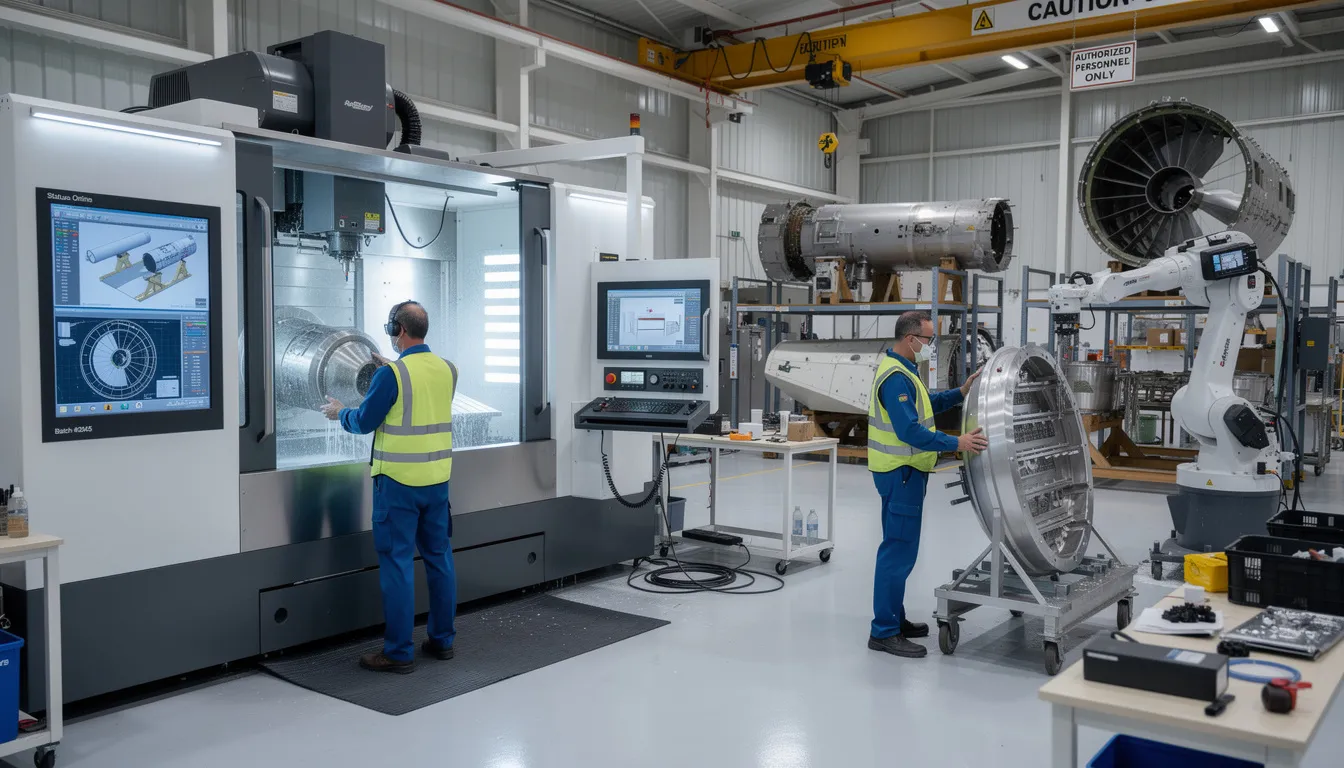
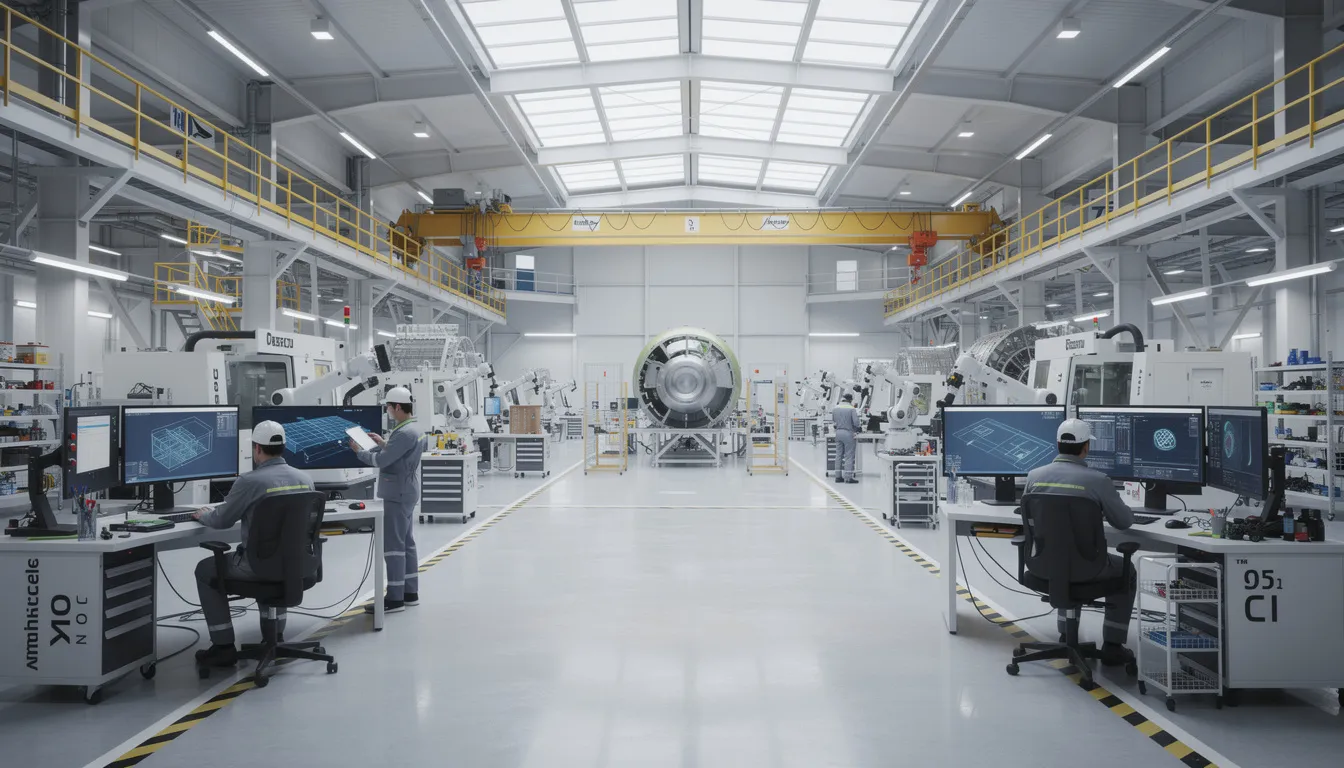
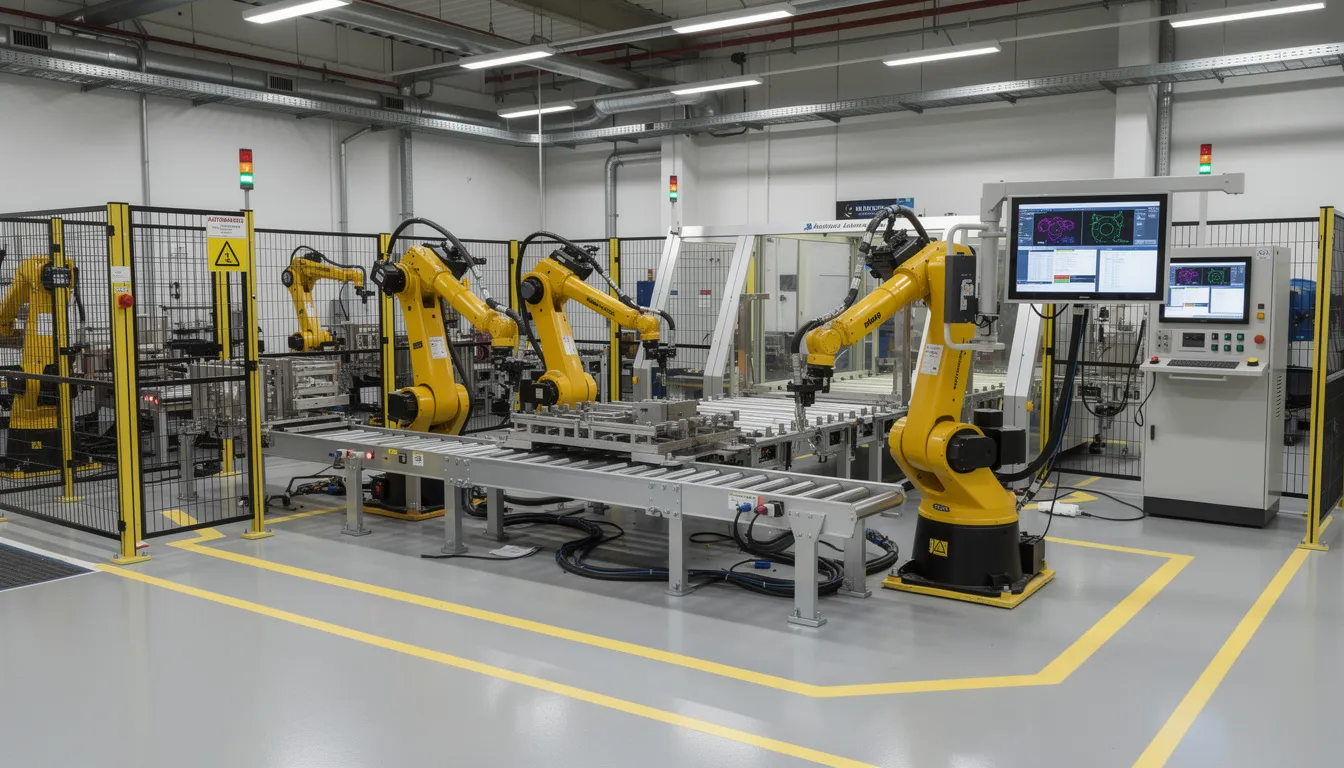
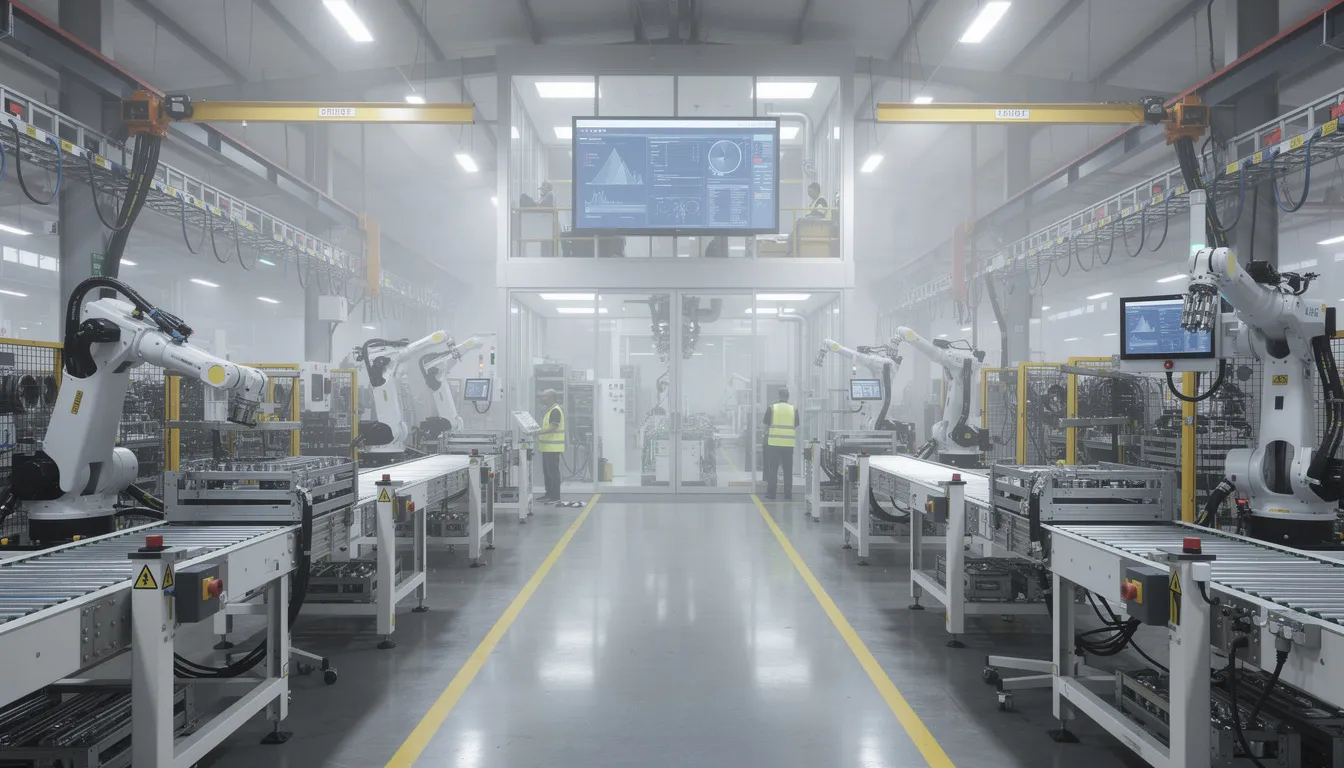
In aerospace, MES control usually delivers the most value in special processes where the end result cannot be fully verified by inspection and where certification evidence is parameter‑driven, not just part‑driven. That typically means heat treat, chemical processing, coatings, NDT, and composite curing/autoclave operations. These areas gain the most from recipe enforcement, equipment/lot traceability, and automated capture of process data needed for NADCAP, customer, and internal requirements. However, the magnitude of benefit depends heavily on integration quality, sensor coverage, and how consistently the plant actually runs to electronic work instructions.
Heat treatment (vacuum, atmosphere, solution, aging) is one of the highest‑value candidates because final properties cannot be fully proven by routine inspection, yet audits demand detailed evidence of time, temperature, load, quench media, and equipment status. MES can help enforce furnace qualification status, control recipe selection, validate thermocouple usage, and capture load‑level histories automatically. This works only if the furnaces and data acquisition systems are well integrated, calibrated, and covered by robust change control so that electronic records are trustworthy and auditable.
In practice, this connects to shop floor execution control when teams need to turn the answer into repeatable execution habits.
Chemical processes (anodize, conversion, plating, etch, cleaning) also benefit significantly because tank conditions drift over time and are hard to reconstruct from paper. MES can support bath tracking, tank life and chemistry status, required titrations, dwell times, and load routing between tanks. In practice, the benefit depends on whether the tanks and analysers provide reliable digital signals, operators consistently follow system prompts, and the plant has disciplined master data for routings, limits, and test frequencies.
Coating processes such as thermal spray, paint, and PVD/CVD coatings often have stringent parameters around surface prep, spray parameters, cure cycles, and environmental conditions that affect adhesion and performance. MES can add value by enforcing pre‑treatment steps, linking coating recipes to specific part numbers and revisions, and collecting key process data like booth conditions, gun settings, and batch IDs of paints or powders. The effectiveness is limited where equipment is older and lacks digital interfaces, forcing reliance on manual data entry that can reintroduce errors and gaps.
Shot peening and other surface enhancement processes benefit where intensity, coverage, media condition, and equipment settings have to be tightly controlled. MES can help tie machine qualifications, Almen strip results, and media control checks (size, contamination, replacement intervals) to specific work orders and serial numbers. To be meaningful, these controls must align with existing procedures and qualifications, and changes to peening parameters in MES must go through the same engineering, qualification, and customer approval processes as they would on paper.
Non‑destructive testing (e.g., fluorescent penetrant, magnetic particle, radiography, ultrasonic, eddy current) is another strong candidate, not because MES runs the physics of the inspection, but because it enforces procedure selection, equipment status, and traceability of inspectors and indications. MES can ensure that only qualified inspectors sign off, that calibrated equipment and approved techniques are used, and that images or indication maps are tied to specific parts or serial numbers. The improvement is constrained by how well NDT instruments, imaging systems, and report repositories are integrated and whether the plant is ready to manage inspection data as controlled, retrievable electronic records.
Penetrant and mag particle lines often overlap with chemical processing, so MES can also help manage dwell times, wash parameters, developer timings, and tank life in a unified flow. However, if the facility has legacy NDT equipment with minimal connectivity, MES may only serve as a routing and sign‑off tool, not as a full data capture system, and the ROI will be lower unless part of a broader modernization effort.
Composite layup, debulk, and cure (autoclave and out‑of‑autoclave) benefit substantially, as part quality depends on tight control of layup sequence, bagging steps, cure profiles, and material life. MES can enforce ply‑by‑ply work instructions, check material out‑time and freezer inventory, control sign‑offs, and link cure cycle data (pressure, temperature, vacuum, ramp/soak) to each part or tool. These controls are particularly important when physical re‑inspection cannot reliably detect all cure defects or voids.
Autoclaves and ovens often generate large volumes of data that must be tied to multiple parts in a single load for later investigations or audits. MES can act as the layer that connects autoclave control systems, load maps, thermocouple assignments, and part IDs into a coherent genealogy. The actual benefit depends on integration with existing control systems and historian databases, and on validated logic for associating each sensor or zone to specific parts within the load.
Special processes that are simple, short, or fully verifiable by straightforward inspection (e.g., some basic mechanical assembly steps, simple deburring, or low‑risk cleaning) typically see less incremental benefit from full MES control. In these cases, the overhead of maintaining electronic recipes, equipment models, and operator training in MES can exceed the practical gain in traceability or defect reduction. Plants with very manual, low‑volume, high‑mix operations may find that partial digitization (e.g., electronic travelers and signatures) is more realistic than fully parameterized process control.
MES also adds limited value where the process is already tightly controlled by a validated dedicated control system that provides robust, auditable electronic records. In such cases, attempting to push all detailed control logic into MES can create duplication, extra validation burden, and failure modes if the two systems become inconsistent. A more pragmatic approach is often to use MES as the orchestration and genealogy layer, while keeping detailed real‑time control inside equipment‑level systems.
In most aerospace facilities, special processes sit within a brownfield landscape of legacy furnaces, tanks, autoclaves, stand‑alone controllers, and a patchwork of MES, QMS, and data loggers. Full replacement of these systems with a single MES rarely works because of qualification and validation burden, downtime risk during cutover, integration complexity, and the long qualified life of existing assets. Instead, high‑value special processes are usually brought under MES gradually, with tight focus on traceability, parameter capture, and enforcement of critical steps, while leaving underlying control hardware in place.
Coexistence typically means that MES handles work dispatch, e‑signatures, recipe selection, equipment status, and high‑level interlocks (e.g., cannot start a load if furnace is out of qualification), while controllers, PLCs, and control systems execute the detailed sequences. To avoid new failure modes, it is important to define clear ownership of parameters and limits, maintain consistent master data between systems, and treat any interface changes as controlled, validated changes. Plants that ignore these integration and governance issues often end up with inconsistent records, confusing audit trails, or operators bypassing MES to “keep the line running.”
When deciding which special processes to bring under MES control first, prioritize where defects are most costly or most difficult to detect, and where audit or customer findings frequently cite incomplete records or weak parameter control. That typically points to heat treat, chemical processing, composite curing, coatings, and NDT, but the exact priority order will differ by plant and product mix. Also consider data readiness: processes with existing sensors, digital controllers, and reasonably clean master data will be much easier to onboard than fully manual or analog ones.
Starting with a narrow, high‑impact scope allows you to validate interfaces, train operators, and refine governance before expanding to additional processes. Each expansion should be treated as a formal change with documented requirements, risk assessment, and, where applicable, re‑validation of affected equipment and software. Over time, the goal is not to control every action via MES, but to ensure that the special processes that drive certification risk, customer escapes, and rework have defensible, traceable, and enforced electronic control.


Whether you're managing 1 site or 100, Connect 981 adapts to your environment and scales with your needs—without the complexity of traditional systems.



Whether you're managing 1 site or 100, C-981 adapts to your environment and scales with your needs—without the complexity of traditional systems.