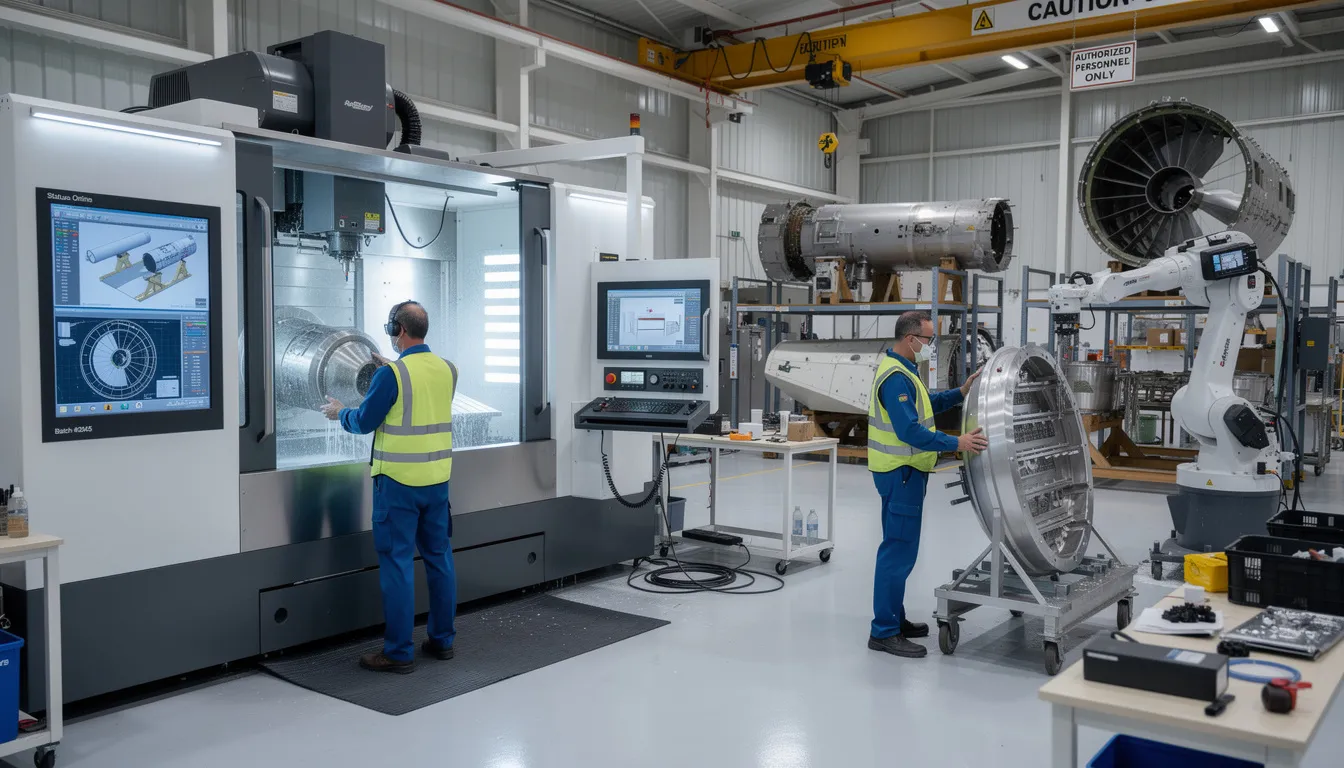
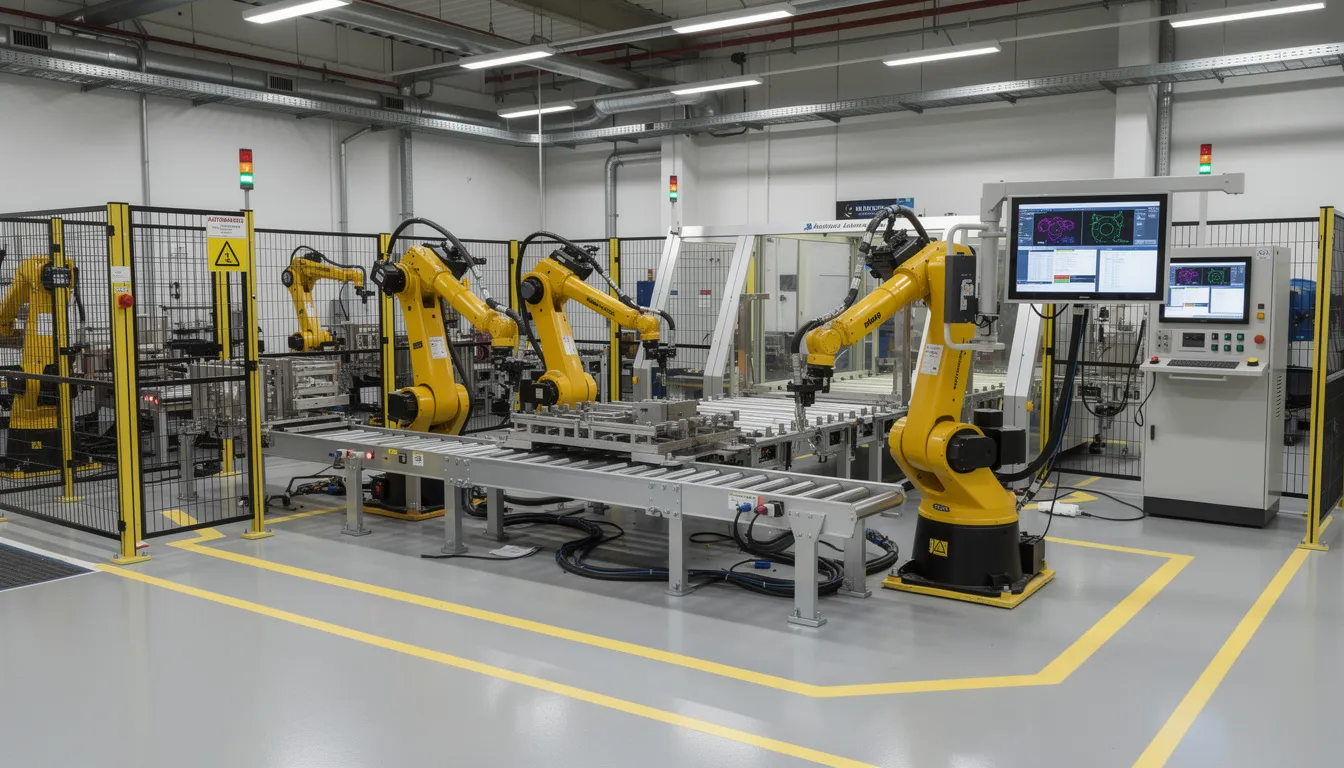
There is no single “right” subset of NIST SP 800-53 control families for all small organizations. The standard is intentionally broad and assumes risk-based tailoring. For a small manufacturer or regulated supplier, the most important families are usually the ones that directly reduce the likelihood and impact of security events on your critical assets (production equipment, design data, QMS/MES/ERP, and safety-related systems).
Start from risk, not from a fixed control list
Before picking control families, you need a basic view of:
In practice, this connects to industrial security evidence when teams need to turn the answer into repeatable execution habits.
- Your critical assets (e.g., OT networks, CNCs and PLCs, MES, QMS, CAD/PLM, ERP, supplier portals).
- Regulatory drivers (e.g., government contracts, export controls, customer security clauses, sector-specific rules).
- Existing controls and gaps (what IT already does well vs. where OT/plant systems are exposed).
Without this, any “top list” can be misleading. That said, certain 800-53 families almost always deserve early attention in small organizations.
High-priority control families for most small organizations
The following families typically provide the highest risk reduction per unit of effort, especially in mixed IT/OT manufacturing environments:
-
AC – Access Control
- Why it matters: Most impactful incidents in small plants involve inappropriate access: shared admin accounts on machines, default passwords on PLCs, uncontrolled VPNs into OT networks, or former employees retaining access to MES/QMS.
- Practical focus areas:
- Role-based access to MES, QMS, ERP and file shares with production and quality records.
- Eliminating shared accounts on OT assets where feasible, and tightly documenting any that remain.
- Strong remote-access controls for vendors and maintenance (MFA, defined entry points, time-bound access).
- Dependencies: Needs identity management basics (user inventory, joiner/mover/leaver process) and realistic coordination between IT and plant leadership.
-
CM – Configuration Management
- Why it matters: In brownfield plants, undocumented changes on servers, HMIs, routers, and PLC logic are a major source of instability and hidden security exposures.
- Practical focus areas:
- Baseline configurations for critical servers, workstations, and OT network equipment.
- Change control records for production software, scripts, and control logic that could affect quality, safety, or compliance.
- Maintaining images or backups of validated system builds (e.g., MES/QMS versions) for recovery.
- Constraints: Full configuration management is heavy; small organizations usually start with a short list of critical systems and expand gradually.
-
IR – Incident Response
- Why it matters: Small organizations rarely prevent every incident, but a basic, rehearsed response plan can dramatically reduce downtime and data loss.
- Practical focus areas:
- A simple incident response plan that distinguishes IT-only events from OT/production-impacting events.
- Clear roles for plant leadership, IT, quality, and EHS when production systems or quality records are affected.
- Evidence handling and post-incident review that feeds back into procedures and training.
- Dependencies: Needs at least minimal logging (AU), contact lists, and management support for planned downtime during recovery.
-
SC – System and Communications Protection
- Why it matters: In many small plants, IT and OT networks are flat and externally exposed in subtle ways (remote support, cloud connectors, unmanaged Wi-Fi). This increases the blast radius of any compromise.
- Practical focus areas:
- Segmenting OT and business networks where feasible, with carefully managed bridges (e.g., for MES, historians, reporting).
- Protecting external connections (VPN with MFA, secure tunnels to cloud, avoiding direct equipment exposure to the internet).
- Encrypting sensitive data in transit, especially design data, quality records, and supplier/customer interfaces.
- Constraints: Aggressive network changes can create unexpected downtime if legacy equipment and integrations are not well understood and tested.
-
CP – Contingency Planning
- Why it matters: For small organizations, the ability to restore operations and critical records (e.g., device history records, traceability data) is often more important than advanced preventive controls.
- Practical focus areas:
- Tested backup and restore procedures for MES, QMS, ERP, file servers with drawings, and OT configuration backups.
- Prioritized recovery plan: which systems must come back first to produce and ship while staying within quality and regulatory constraints.
- Documented manual workarounds that are validated where required (e.g., paper travelers when MES is down).
- Dependencies: Requires storage hygiene, offline or immutable backups for ransomware resilience, and alignment with existing validation/change control processes.
-
PL – Planning & RA – Risk Assessment
- Why it matters: Without a simple, repeatable risk process, control selection becomes arbitrary and hard to justify to auditors, customers, or internal stakeholders.
- Practical focus areas:
- A short, documented risk assessment method focused on key business and regulatory impacts (safety, product quality, delivery, confidentiality of designs/data).
- Linking chosen controls and exceptions to identified risks and business priorities.
- Constraints: Overly complex risk frameworks can stall progress; small teams often need lightweight templates and clear ownership.
-
IA – Identification and Authentication
- Why it matters: Strong authentication and account lifecycle management underpin access control, especially with remote support, cloud services, and engineering tools.
- Practical focus areas:
- Unique user IDs for anyone accessing business-critical or regulated systems.
- MFA for remote access and key administrative functions where technically feasible.
- Basic account lifecycle hygiene between HR, IT, and plant operations (timely disablement on termination or role change).
- Dependencies: Works best with at least a minimal identity directory; OT devices may have technical limitations that require compensating controls and documentation.
Secondary but still important families
Other 800-53 families often come next once the basics above are in place:
- AU – Audit and Accountability: Logging of key systems, at least for admin actions and security-relevant events. Valuable for incident response and investigations, but must be balanced with storage, monitoring capabilities, and privacy considerations.
- AT – Awareness and Training: Focused training for engineers, operators, and quality staff on secure use of production and quality systems, phishing awareness, and handling of controlled technical data.
- MP – Media Protection: Controls for removable media and portable devices that interact with machines, inspection equipment, and test stands (e.g., scanning USB drives before use, controlling use of portable laptops on OT networks).
- PE – Physical and Environmental Protection: Physical access control and monitoring for server rooms, OT network closets, and control cabinets; coordination with existing safety and facility programs.
How brownfield realities influence priorities
In most small, regulated manufacturers, you cannot “rip and replace” IT/OT systems to align neatly with 800-53. Long equipment lifecycles, validated software, and integration dependencies limit how quickly you can change:
- Many legacy OT assets cannot support modern controls (e.g., MFA, encryption), so you prioritize network-level protections (SC), strict access routes (AC), and configuration baselines (CM).
- Validated MES/QMS upgrades must go through change control and, where applicable, validation. Controls that require substantial software changes may be deferred or implemented through procedural or network compensating controls.
- Downtime windows are narrow, so network segmentation and configuration changes must be planned, tested offline where possible, and rolled out gradually.
Effective programs in these environments typically:
- Start with AC, IA, CM, IR, SC, and CP on a limited scope of critical systems.
- Use risk assessments (RA/PL) to justify both implemented controls and documented exceptions.
- Integrate security changes with existing quality, validation, and change control processes instead of building a separate, conflicting track.
Practical way to choose your initial focus
For a small organization trying to be systematic without overextending:
- Identify your top 10–20 systems and assets by impact on safety, quality, delivery, and sensitive data.
- Perform a short, structured risk assessment on those assets.
- Map current controls to the higher-priority families (AC, IA, CM, IR, SC, CP, RA/PL) and note obvious gaps.
- Define a 12–18 month roadmap that focuses on closing the most critical gaps with minimal disruption to validated and legacy systems.
- Reassess annually and expand scope as capacity and maturity grow.
This approach keeps NIST 800-53 manageable and defensible for small organizations while respecting brownfield constraints and regulated-environment realities.