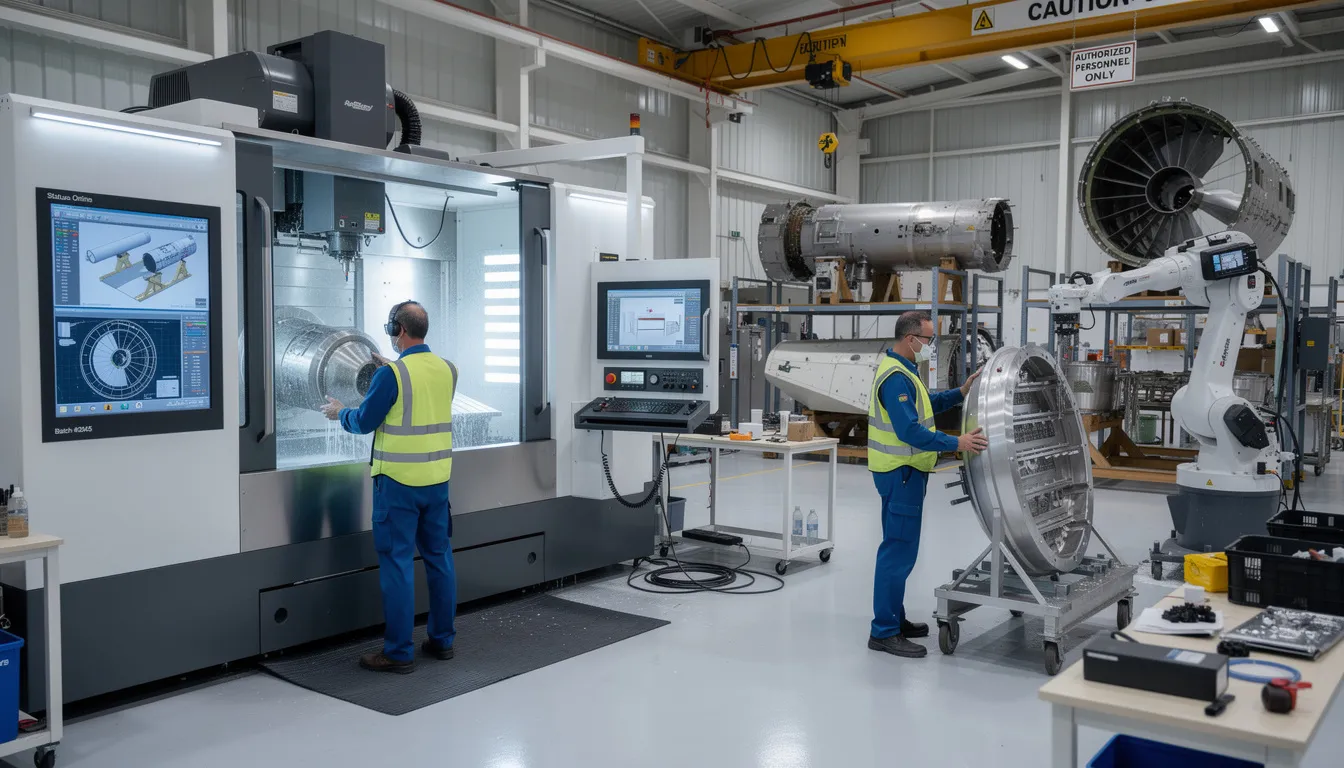
Aircraft delivery numbers are a narrow commercial metric, not an operational truth. They show how many airframes were contractually transferred to customers in a period, but they hide how much instability, rework, and risk was required to hit that number. For engineering, operations, quality, and IT leaders, delivery counts are at best a lagging, partial signal.
Delivery numbers are driven by contractual milestones, customer financing, and slot management. They do not show:
In practice, this connects to industry insight and operational thought leadership when teams need to turn the answer into repeatable execution habits.
A strong delivery quarter can coexist with poor process capability, mounting technical debt in the configuration, and growing quality risk.
“One delivery” can mean very different things operationally:
Counting each delivery as equivalent hides the true engineering and manufacturing load. Without configuration-aware metrics tied back to PLM, MES, and ERP, leadership cannot see which deliveries consumed disproportionate effort or created long-term sustainment burden.
Delivery metrics usually do not reflect the cost of poor quality required to get there:
In regulated aerospace environments, these activities are often tracked in QMS, NCR systems, or spreadsheets that are only loosely connected to the headline delivery figure. A stable delivery line with low rework is operationally very different from a line that hits the same deliveries by burning overtime, shifting work downstream, and accumulating deviations.
To preserve monthly or quarterly delivery targets, plants often push incomplete aircraft forward and close them late in flight test or in-service through service bulletins. Delivery numbers typically do not show:
Without integrated MES and digital traveler data, leadership may see smooth delivery numbers while the actual line is unstable, reliant on heroics, and vulnerable to a single disruption in parts or engineering support.
Delivery figures are also shaped by customer decisions rather than pure production capability:
This means a low delivery quarter can mask a healthy, improving factory, and a strong delivery quarter can hide a backlog of parked or partially complete aircraft.
Delivery counts do not differentiate between a stable supply chain and one held together by expedites and last-minute substitutions. They rarely show:
In brownfield environments with legacy ERP, supplier portals, and manual ASN processes, this information may be fragmented across systems. Delivery success can coexist with mounting supplier risk that will surface later as reliability or MRO issues.
In aerospace, safety-critical and regulatory constraints mean that how you achieve deliveries matters as much as how many you achieve. Over-focusing on deliveries can encourage behaviors that add long-term risk:
These choices complicate later audits, AS9100/AS9102 evidence gathering, and long-term fleet sustainment. They also make future system changes (MES, PLM upgrades, or digital thread initiatives) harder to validate and qualify.
Most aerospace manufacturers operate with mixed legacy MES, ERP, PLM, QMS, and point solutions. In this environment:
Because full replacement of core systems is difficult in regulated, long-lifecycle programs, organizations often lack a unified view linking each delivery to its real execution history. Without that linkage, deliveries are necessary to track but not sufficient to manage operational performance.
To get a more accurate view of program and plant health, delivery numbers should be combined with:
These metrics depend on clean routing data, digital travelers, and robust interoperability between ERP, MES, PLM, and QMS. Plants with more mature integrations can interpret delivery numbers in context; plants with fragmented data should be cautious about using deliveries as a proxy for operational health.
In summary, aircraft delivery numbers are useful but narrow. They describe one commercial outcome, not the stability, quality, or risk profile of the underlying manufacturing system. In regulated aerospace environments, relying on deliveries alone to judge performance can be actively misleading.


Whether you're managing 1 site or 100, Connect 981 adapts to your environment and scales with your needs—without the complexity of traditional systems.



Whether you're managing 1 site or 100, C-981 adapts to your environment and scales with your needs—without the complexity of traditional systems.