regulated industries
Sectors where operations are formally controlled by laws, regulations, or standards, often requiring documented, auditable processes.


Core meaning
Regulated industries are sectors in which organizations must operate under formal laws, regulations, and standards that govern how products are designed, manufactured, tested, documented, released, and sometimes maintained or retired.
In these industries, external authorities (such as government agencies, standards bodies, or notified organizations) define mandatory requirements. Companies must be able to demonstrate compliance through documentation, records, and auditable processes.
Common examples include, but are not limited to:
– Pharmaceuticals and biotechnology
– Medical devices and diagnostics
– Food and beverage manufacturing
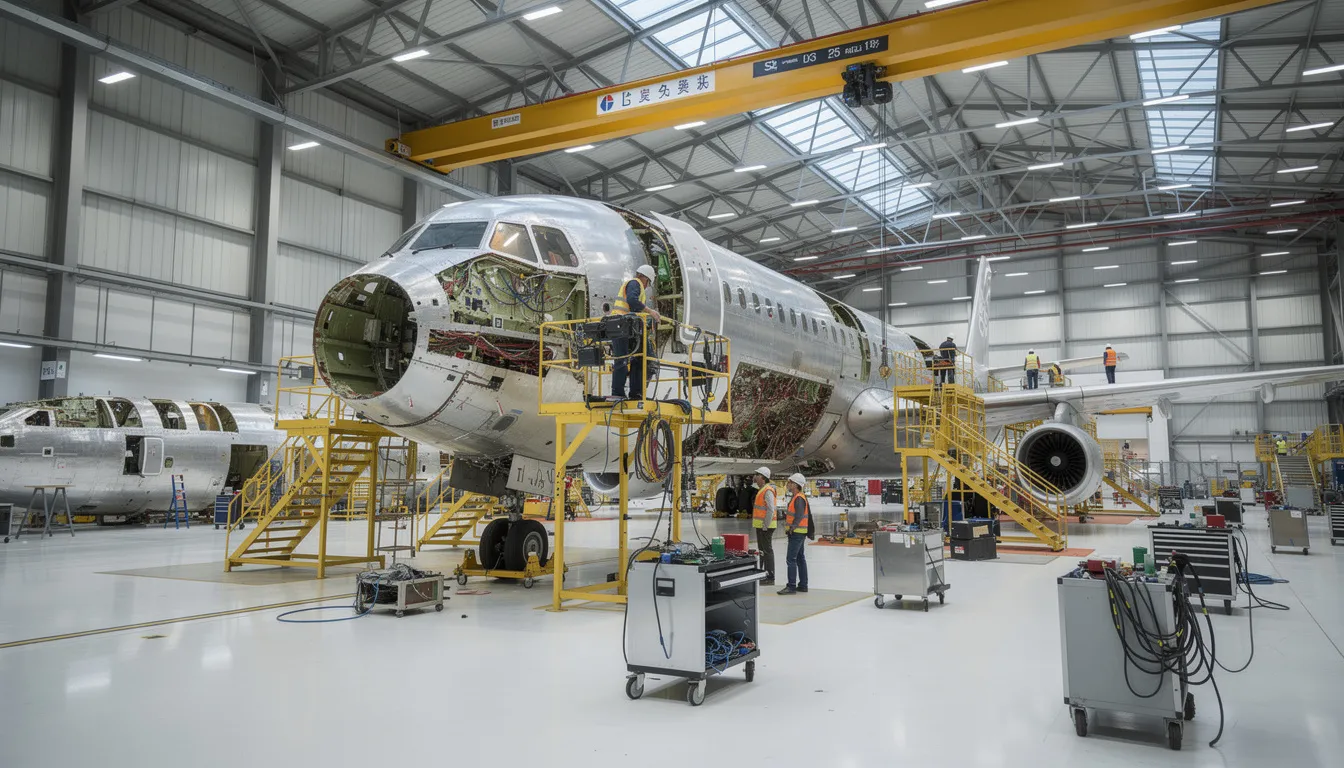
– Aerospace and defense
– Nuclear and certain energy sectors
– Automotive (especially safety- and emissions-related processes)
Operational characteristics
Regulated industries typically share several operational traits:
– **Documented procedures and controls**: Manufacturing, quality, and IT/OT processes are described in controlled documents and standard operating procedures (SOPs).
– **Traceability requirements**: Products, materials, and often equipment and operators must be traceable, sometimes down to individual batches, lots, or serial numbers.
– **Change control**: Modifications to processes, systems, or master data follow formal change control, including impact assessment and documented approval.
– **Records and data integrity**: Production and quality records must be complete, accurate, and tamper-evident, with controlled access and audit trails.
– **Qualification and validation**: Facilities, equipment, and computerized systems may require documented qualification/validation before use and after significant changes.
– **Audit and inspection readiness**: Processes and records must be organized so external auditors or inspectors can review them on demand.
Use in manufacturing and operations
In industrial and manufacturing contexts, the term is commonly used to describe environments where:
– **Manufacturing execution systems (MES)**, LIMS, QMS, and ERP integrations must support audit trails, electronic signatures, and controlled master data.
– **Standardization across sites** is constrained by regulatory expectations, local regulatory interpretations, and validated states of systems.
– **IT/OT governance** must align with regulatory expectations on data integrity, cybersecurity, and system lifecycle management.
– **Quality systems** (for example, deviation management, CAPA, batch release) are tightly coupled with production systems and must be demonstrably followed.
Site context: MES and multi-site operations
In the context of MES and multi-site manufacturing, regulated industries:
– Often use MES to **enforce standardized workflows, work instructions, and data collection rules** at the shop-floor level.
– Require **governance and change control** when rolling out master data or process changes to multiple plants, because these changes may impact validated states or filings.
– May limit how far process standardization can be pushed, due to **local regulatory requirements, legacy systems, or brownfield constraints**.
MES deployments in regulated industries typically must be configured and maintained so that any changes to recipes, parameters, or logic are controlled, documented, and, where required, tested or validated before use in production.
Boundaries and exclusions
The term **regulated industries**:
– **Includes** sectors where compliance with specific external regulations is central to daily operations and to the design of manufacturing and quality systems.
– **Does not automatically include** every industry that is subject to some general law (for example, labor law or basic environmental law); it refers more narrowly to sectors with detailed operational or product regulations.
– **Does not mean** a particular regulatory framework by itself; it is an umbrella label for industries subject to such frameworks.
Common confusion and related terms
– **Regulated industries vs. regulated utilities**: Regulated utilities (such as water or electricity providers) are a subset of regulated industries, but the term “regulated industries” is broader and includes many types of manufacturing.
– **Regulated industries vs. high-risk industries**: High-risk operations (for example, heavy construction) may be hazardous but are not always regulated in the same product- or process-specific way as pharmaceuticals or medical devices.
– **Regulated industries vs. standards-driven industries**: Some sectors follow voluntary or customer-driven standards without a strong legal or regulatory mandate; these are not usually categorized as regulated industries in a strict sense.


Related Blog Articles


Related FAQ
Related Glossary
Ready to See How C-981 Can Accelerate Your Factory’s Digital Transformation?

