
smart factory
A smart factory is a production facility that uses connected, data-driven technologies to monitor, control, and improve manufacturing operations in near real time.


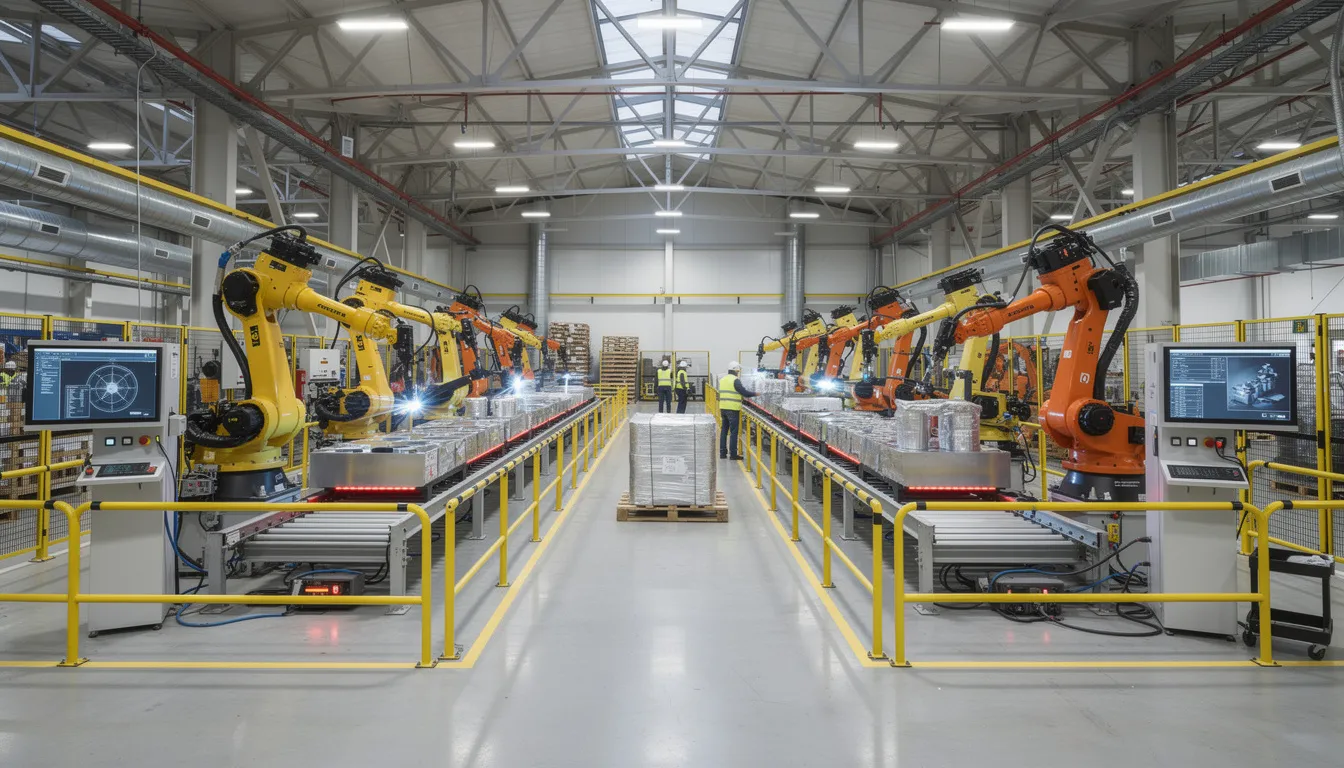
A smart factory is a manufacturing facility where equipment, systems, materials, and people are connected through digital technologies so that production can be monitored, controlled, and improved using data. It commonly refers to an Industry 4.0 style environment where machines, sensors, and software systems share information in near real time across the shop floor and into enterprise systems.
In a smart factory, operational technology (OT) such as machines, PLCs, and automation is integrated with information technology (IT) such as MES, quality systems, data platforms, and ERP. The goal is not a specific level of automation, but the use of data and connectivity to support more consistent, traceable, and coordinated operations.
Key characteristics
Smart factories typically include several of the following characteristics, although implementations vary:
- Connected assets: Machines, utilities, test equipment, and material handling systems instrumented with sensors and interfaces (for example OPC UA, industrial Ethernet) for data exchange.
- Integrated systems: Links between shop floor control (SCADA, PLCs, DCS), MES, quality management, laboratory systems, and ERP for shared master data and production records.
- Centralized and contextualized data: Collection of time-series, event, and transactional data into historians or data platforms where it is organized by product, batch, order, or equipment.
- Analytics and visibility: Dashboards and reports for OEE, downtime, scrap, deviations, and other key indicators, often with role-based views for operators, engineers, and management.
- Digital workflows: Use of digital work instructions, electronic logbooks, and electronic batch records rather than isolated paper processes.
- Closed-loop control: In some cases, automatic adjustment of process parameters based on inline measurements or analytics, subject to applicable change control and validation requirements.
- Cybersecurity and governance: Defined network segmentation, access controls, and change management practices to protect connected OT and IT systems.
Use in regulated and industrial environments
In regulated manufacturing, a smart factory still relies on defined procedures, documented evidence, and change control. Digital systems are typically subject to validation or qualification appropriate to the industry, and electronic records must support traceability, audit trails, and data integrity expectations.
Smart factory initiatives in these environments often focus on:
- Improving traceability of materials, equipment, and personnel activities across batches and lots.
- Providing real-time visibility into process conditions, alarms, and deviations.
- Linking quality events and CAPA processes to process data and production history.
- Supporting audit readiness by centralizing and organizing production and quality records.
What a smart factory is not
- It is not a specific product, vendor solution, or certification. Different organizations and suppliers use the term with varying scope.
- It is not limited to fully automated, lights-out production. Manual and semi-automated operations can be part of a smart factory if they are digitally connected and recorded.
- It is not a substitute for regulatory compliance, validation, or safety practices. Those requirements still apply, regardless of the level of digitalization.
Common confusion
Smart factory vs. Industry 4.0: Industry 4.0 is a broader concept describing the current phase of industrial digitalization, including technologies such as IoT, cloud computing, and advanced analytics. A smart factory is a concrete implementation of these ideas in a specific plant or network of plants.
Smart factory vs. digital twin: A digital twin is a virtual representation of a product, process, or asset that is kept in sync with its physical counterpart. A smart factory may use digital twins, but the terms are not interchangeable.
Smart factory vs. MES: A manufacturing execution system is one core component of many smart factories, but a plant can have an MES without being highly connected or data driven across all operations. The smart factory concept encompasses the broader connected ecosystem.
Relation to certification programs
Some organizations and national programs offer maturity models, assessments, or badges that label a site as a smart factory or as compliant with an Industry 4.0 framework. These programs vary in scope and are not standardized globally. In regulated industries they do not replace required validation activities, inspections, or audits, and they do not by themselves guarantee interoperability across suppliers or legacy sites.


Related Blog Articles



Related FAQ
Related Glossary
Ready to See How C-981 Can Accelerate Your Factory’s Digital Transformation?
