
Aerospace manufacturing faces a production reality that demands urgent attention. Boeing and Airbus collectively hold a backlog exceeding 5,000 aircraft, while the global MRO market is forecasted to exceed $120 billion by 2030. Meeting these demands requires a workforce that simply does not exist in sufficient numbers today. By 2024, nearly 25% of U.S. manufacturing workers were aged 55 or older, and projections suggest that 27% of manufacturing workers will retire this decade. The knowledge these seasoned workers carry with them when they leave rarely exists in any documented form.
Aerospace workforce training is no longer limited to classroom sessions or static PDF manuals. Modern training must capture institutional knowledge from experienced employees, standardize it into accessible formats, and deliver it in real time on the shop floor and in MRO hangars. The stakes are straightforward: legacy platforms will remain in service beyond 2040, complex processes require specialized knowledge that takes years to develop, and regulatory requirements demand full traceability of who did what, when, and with which revision of instructions.
Connect981 serves as a unified aerospace operations platform that transforms tribal knowledge, documents, and work instructions into a connected training and execution layer across factories and suppliers. Rather than replacing existing ERP or MES systems, it bridges them with a practical layer that makes training status, qualifications, and work execution visible and auditable.
This article serves as the pillar page for a broader content cluster addressing workforce knowledge capture in aerospace manufacturing. Supporting articles cover tribal knowledge loss and how to prevent it, training documentation best practices, operator onboarding strategies, cross-training for workforce flexibility, and workforce continuity planning for retirements and program transitions.
What Is Aerospace Workforce Training Today?
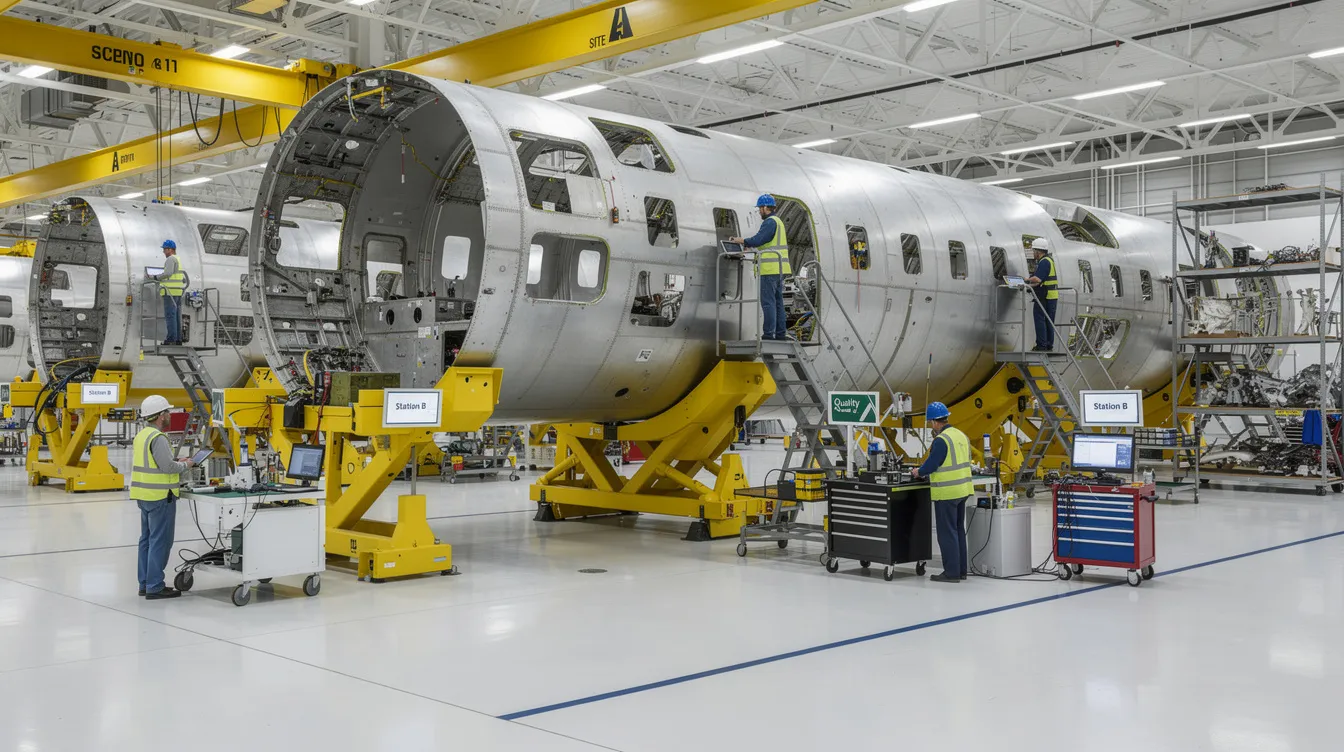
Aerospace workforce training operates as a closed-loop system that differs fundamentally from generic manufacturing training. It encompasses onboarding, certification, recurrent training, cross-training, and on-the-job guidance for production and maintenance roles. Each element feeds back into the others, with training status directly influencing work assignments, scheduling, and authorization levels.
The distinction from other manufacturing sectors lies in regulatory oversight. FAA, EASA, and Transport Canada impose strict requirements around configuration control, safety of flight documentation, and serialized parts traceability. A technician’s training record is not merely an HR artifact. It is part of the audit trail that regulators and customers expect to see when tracing how a particular aircraft was built or maintained.
Workforce training in aerospace spans a diverse range of roles. Structures and systems assemblers, avionics technicians, composite layup specialists, NDT inspectors, production planners, and MRO line and base maintenance teams all require role-specific competencies and authorizations. Each role intersects with different regulatory requirements and documentation standards.
Typical training artifacts include digital work instructions, task cards, service bulletin and airworthiness directive compliance documentation, inspection checklists, and repair approvals. These artifacts must integrate with ERP, MES, and QMS systems so that training status and qualifications are visible in daily scheduling and work assignment decisions. The shift from static PDFs to auditable, digital formats linked to specific aircraft configurations, part revisions, and work orders reflects the operational demands of modern aerospace production.
The Aerospace Knowledge Gap: Tribal Knowledge Loss and Skills Shortages
Tribal knowledge refers to the unwritten expertise that experienced workers accumulate over years or decades on the job. In aerospace, this includes techniques for rigging flight controls to specification, understanding the nuances of composite repair heat cycles, applying precise torque sequences on critical fasteners, or troubleshooting hydraulic system anomalies that do not appear in any manual. This knowledge lives only in the heads of veteran employees.
The demographic pressure is severe. By 2030, over 2 million manufacturing roles in the U.S. may remain unfilled. The aerospace manufacturing sector faces particular risk because its products demand decades of service life. Aircraft built today will fly into the 2060s, and the expertise required to maintain and modify them must somehow survive workforce turnover.
Consider specific scenarios where knowledge loss becomes critical. Legacy platforms like the 737NG or A320ceo will remain in service well beyond 2040. Custom STC modifications often have sparse documentation, relying on the institutional knowledge of the engineers who developed them. MRO shops frequently depend on a single expert for complex structural repairs. When that person retires, the capability may be lost forever.
Workforce churn, outsourcing to tier-2 and tier-3 suppliers, and program transitions from older fleets to next-generation aircraft all amplify the risk of losing critical knowledge. Each transition creates opportunities for knowledge drain if expertise is not systematically captured and transferred.
Knowledge capture must be positioned as the foundation of sustainable aerospace workforce training, not a supplementary initiative. Training quality depends directly on the quality and availability of captured manufacturing expertise. Without a living repository of expert insights, new hires learn from incomplete documentation or inconsistent informal guidance.
Core Building Blocks of an Aerospace Workforce Training Program
Effective aerospace workforce training rests on several interconnected building blocks. Each element must be traceable, auditable, and integrated with operational systems to support both daily execution and regulatory compliance.
Role-based skills matrices form the starting point. These matrices map roles to required competencies, licenses, and company-specific authorizations. For EASA Part-145 organizations, this means defining which personnel are authorized for which aircraft types, components, and inspection categories. For FAA Repair Stations, job functions must align with the capability list and individual training records. The skills matrix identifies where coverage exists and where single points of failure create risk.
Standardized digital work instructions provide the procedural foundation. Unlike paper build books or tribal knowledge passed verbally between shifts, digital instructions offer version control, configuration management, and clear effectivity. Every worker receives the correct revision for the specific aircraft, part number, or work order.
Competency-based training plans define the progression from novice to qualified operator. These plans specify what training content must be completed, what practical demonstrations are required, and what assessments verify competence. Certification tracking maintains the evidence needed for audits.
Continuous feedback loops distinguish aerospace training from static curricula. Frontline workers encounter deviations, ambiguous steps, and process improvements every day. A systematic approach to capturing this feedback and updating training materials ensures the knowledge base evolves with actual production experience.
The difference between procedural training and diagnostic training matters. Procedural training teaches workers to follow step by step guides accurately. Diagnostic training prepares them to troubleshoot and make safe decisions when conditions deviate from the norm. Both are essential skills for manufacturing environments where variability is inevitable.
Capturing Aerospace Tribal Knowledge and Turning It Into Training Content
Knowledge capture is the first pillar of aerospace workforce training, particularly as skilled workers retire in increasing numbers. The goal is to extract the essential information from experienced mechanics, inspectors, and manufacturing engineers before they leave, then normalize it into formats that current and future employees can use.
Practical capture methods include recording expert walkthroughs of complex assembly steps, capturing NDT setup procedures that experienced operators perform instinctively, documenting the tactile feel required for proper composite layup, and interviewing senior planners about routing exceptions and decision making criteria that never made it into formal procedures.
Connect981 can ingest videos, photos, markups on drawings, and notes on existing SOPs, then contextualize them to specific part numbers, work centers, or MRO tasks. This creates a centralized repository where pertinent information is linked directly to the operations where it applies, rather than buried in shared drives or personal notebooks.
Concrete practices include scheduling knowledge capture sessions before major retirements, using structured templates for troubleshooting techniques and deviation logs, and treating rework and nonconformance data as learning content. When a veteran employee solves a problem that stumped others, that solution should become part of the documented knowledge base.
Captured knowledge must be normalized into digital work instructions, inspection plans, and training modules. Left as standalone videos or documents, valuable knowledge remains difficult to find and apply. Integrated into the workflow, it becomes available at the moment of need.

From Expert Demonstrations to Digital Work Instructions
Converting expert demonstrations into digital work instructions follows a practical workflow. A senior technician performs a complex operation while being recorded, explaining each step, highlighting cautions, and noting inspection points. This raw content is then structured into a step by step format with photos, diagrams, and clear acceptance criteria.
Many aerospace manufacturers still rely on paper build books and routing sheets that accumulated tribal knowledge over decades in handwritten notes and margin annotations. These can be digitized and enriched with captured expertise inside Connect981, preserving the institutional memory while making it accessible and searchable.
AI-assisted workflows can accelerate this process by extracting steps, tools, torque values, and inspection points from videos or legacy documentation. What previously took months of technical writing effort can be reduced to days, allowing organizations to capture more knowledge from retiring workers before they leave.
A concrete example: converting a 737NG structural repair demonstration into a reusable, revision-controlled repair instruction. The captured content links to relevant Structural Repair Manual references and approval workflows, creating a complete package that any authorized MRO technician can follow. This eliminates dependence on a single go-to person and makes specialized knowledge available on any shift.
Identifying Critical Knowledge Areas To Capture First
Not all knowledge carries equal operational impact. Forward thinking manufacturers prioritize critical knowledge areas based on risk, complexity, and current documentation gaps.
Priority domains include first article inspection for new programs, complex assembly stations with high defect rates, special process operations such as heat treat or plating, engine and APU overhauls, and structural repairs that require judgment and experience beyond what specifications capture.
A practical audit process starts with reviewing nonconformance histories, rework hotspots, and delay codes. Operations that consistently require intervention from senior experts are prime candidates. These patterns reveal where tribal knowledge is already compensating for weak process documentation.
Quality engineers, manufacturing engineers, and experienced operators should collaborate to select initial capture targets and define must-not-lose procedures. This collaborative approach ensures that the knowledge deemed most critical by those who use it daily receives priority attention.
Connect981 dashboards can surface high-defect routes or long cycle time operations as candidates for knowledge capture and training content development. Rather than guessing where knowledge gaps exist, data-driven analysis points to the operations that would benefit most from systematic documentation.
Designing Effective Digital Training Content for Aerospace and MRO
Effective digital training content for aerospace reflects the unique constraints of the industry. Configuration control matters. Regulatory compliance matters. The content must work for frontline workers in manufacturing environments, not just look good in a presentation.
The evolution from static PDFs and slideshows to interactive digital work instructions reflects how training integrates with actual work execution. Learning modules and microlearning content embedded inside the workflow reach workers at the moment they need guidance, not days before in a classroom.
Mixing formats improves comprehension and retention. Text instructions work for simple operations. Annotated 3D models clarify complex geometries. Wiring diagrams support avionics work. Short video clips demonstrate techniques that are difficult to describe. Checklists with clear acceptance criteria tied to drawings and specifications ensure nothing is missed.
Version control and configuration management are non-negotiable. Training content must match the correct aircraft configuration, part revision, or SB/AD status. When an engineering change updates a procedure, the associated training must update as well. Connect981 can manage revisions, approvals, and effectivity so training always reflects the right baseline for specific tail numbers, work orders, or serial numbers.
On-the-Job, In-Context Training vs. Classroom-Only Learning
Traditional multi-day classroom training served aerospace manufacturing for decades, but it has fundamental limitations. Workers learn procedures in isolation from actual execution, then must recall them days or weeks later when facing the real task. Details fade. Errors occur.
Learning in the flow of work delivers guidance at the moment of execution. Operators receive the exact instruction, caution, or short video they need while performing the task, not as a remembered fragment from classroom training.
Practical examples illustrate the approach. A mechanic scans a QR code on a composite repair fixture and sees a 90-second clip on correct vacuum bagging technique. An assembler receives an in-app reminder of the specific torque sequence for the fasteners they are about to install. An inspector reviews the acceptance criteria on a tablet while examining the part.
Connect981 can present training prompts, verification checks, or knowledge snippets automatically based on work order context, operator skill level, or recent defect trends for that operation. The system adapts to what the worker needs, when they need it.
In-context training accelerates time-to-competence while reducing errors that could affect airworthiness or compliance. New employees reach proficiency faster. Experienced operators receive reminders for infrequently performed tasks. Quality assurance improves because the right information appears at the right time.
Structuring Content for Different Experience Levels
Aerospace workforce training should be tiered to serve workers at different stages of competence. Novices need visual aids and detailed step by step guides. Intermediates benefit from condensed checkpoints and decision trees. Experts require advanced troubleshooting techniques and diagnostic guidance for non-standard conditions.
Content structure guidelines follow this progression. New hires see detailed visual instructions with photos, callouts, and explicit cautions for each step. Experienced technicians see summarized checkpoints with branching logic for common variations. Experts access troubleshooting guides and one point lessons addressing rare but high-impact scenarios.
Tagging content by complexity, certification requirements, and prerequisite skills allows platforms like Connect981 to serve appropriate instructions automatically. A worker new to a station receives full guidance. A worker with documented proficiency sees the abbreviated version.
This structure supports cross-training programs by allowing workers to progress from basic tasks like hardware installation to higher-complexity jobs like systems integration with clear milestones. Each step builds on documented competencies.
Differentiated content also helps when ramping temporary staff, contractors, or new suppliers into aerospace-grade processes. Rather than overwhelming them with expert-level procedures or leaving them without sufficient guidance, the system adapts to their current level.
Operator Onboarding in Aerospace Manufacturing and MRO
Aerospace onboarding differs from other industries because of the safety, documentation, and regulatory training expectations involved. New employees cannot simply shadow a colleague for a few days and start working independently. The regulatory framework demands documented competence before performing certain operations.
A typical 90-day onboarding blueprint integrates three streams. Corporate safety training covers general facility requirements, emergency procedures, and organizational expectations. Regulatory training addresses human factors, FOD control, and compliance obligations specific to aerospace. Role-specific training introduces the actual digital work instructions and processes the new hire will execute.
Linking onboarding modules directly to real operations accelerates learning. Connect981 can assign initial work orders with enhanced guidance and additional verification steps, allowing new hires to perform real work while receiving extra support. This builds practical skills faster than classroom simulations.
Standardized onboarding reduces variation between sites and suppliers. A mechanic at a tier-2 machining supplier follows the same baseline practices as an OEM line worker when both operate under the same documented procedures. This consistency matters for operational excellence and regulatory compliance.
Analytics from the platform reveal where new hires struggle. Time-on-step data, help requests, and error patterns identify specific procedures that need clarification or additional training support. This feedback enables continuous improvement of onboarding content rather than repeating the same gaps with each new cohort.
Blending Compliance Training with Practical Skills
Mandatory compliance topics like AS9100 awareness, ITAR handling, and human factors training are often delivered as detached courses disconnected from daily work. This approach produces employees who pass quizzes but fail to apply the concepts when they matter.
Integrating compliance training with practical, job-relevant exercises improves retention and application. An ITAR module can include a scenario of properly handling a controlled drawing in Connect981. Human factors content can reference actual incident cases from the shop floor that illustrate why the principles matter.
Completion records, quiz scores, and sign-offs must be stored in an auditable way and linked to each worker’s authorization matrix. When an auditor asks to see evidence that a specific employee was trained on a specific instruction revision before performing an operation, that evidence must be readily available.
Connect981 serves as a single source of truth for training completion data tied to actual work execution history. This linkage simplifies compliance demonstration and reduces the administrative burden of preparing for audits.
Cross-Training and Workforce Continuity in Aerospace Operations
Cross-training serves as a strategic response to labor shortages, program ramps, and seasonal MRO demand spikes. Rather than being caught short when a single qualified worker is unavailable, organizations with robust cross-training programs maintain coverage across essential skills and critical knowledge areas.
Aerospace cross-training requires careful control. Only properly trained and authorized personnel can perform safety-critical tasks. This constraint means cross-training programs must track progress through defined stages and enforce authorization checks before allowing independent work.
Building a digital skill matrix in Connect981 maps workers to stations, processes, and certifications. The matrix flags single points of failure where only one person can perform a job, highlighting risks that require immediate attention. When experienced workers retire, the matrix shows exactly which capabilities are at risk.
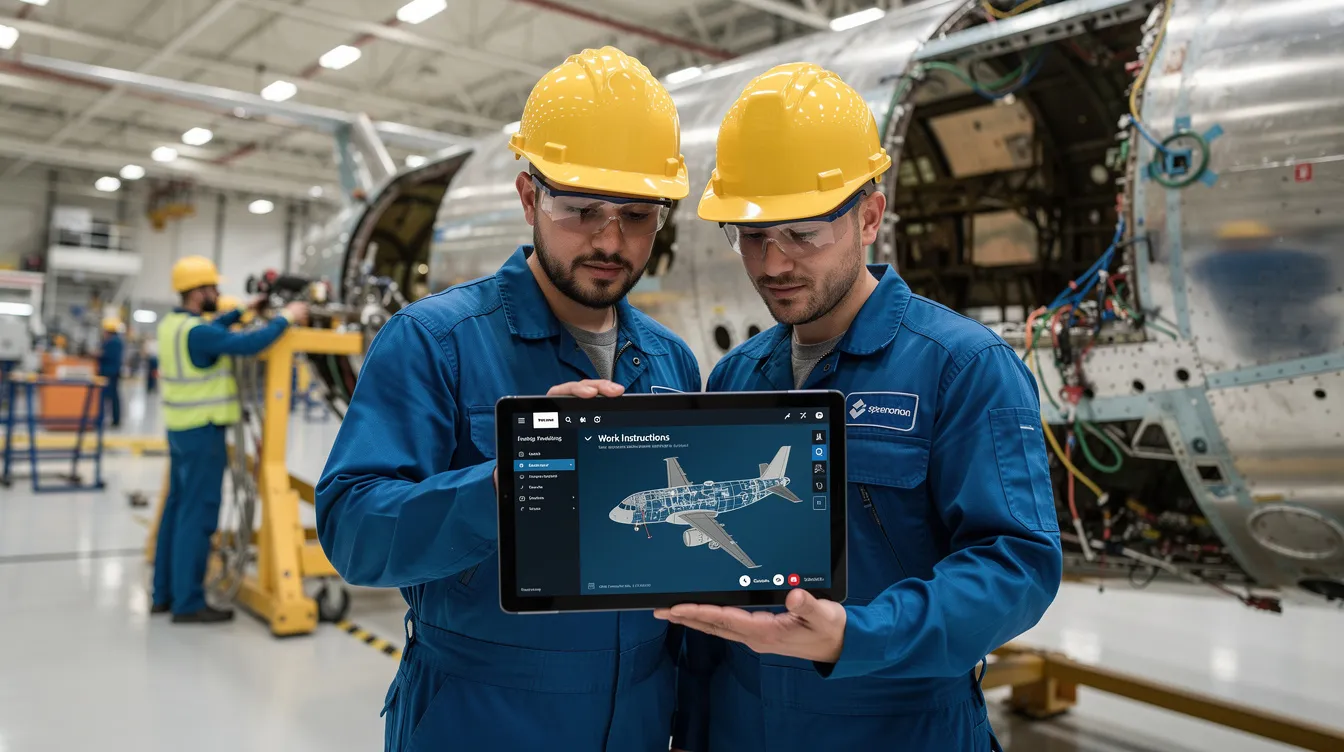
Structured cross-training plans rotate workers through compatible tasks with step-up training content. A technician might progress from simple wiring harness assembly to more complex avionics integration, with each stage requiring completion of specific training modules and demonstrated competence.
Cross-training directly supports workforce continuity. When the plan accounts for vacations, medical leaves, and retirements, operations continue smoothly. Transitions between aircraft programs become less disruptive because workers have documented capabilities across multiple product lines.
Using Data to Target Cross-Training Efforts
Operational and HR data can guide cross-training investments toward the highest impact areas. Not all cross-training delivers equal value, so prioritization matters.
Reviewing overtime patterns identifies operations where lack of qualified coverage forces excessive hours. Capacity bottlenecks and schedule delays often correlate with single-qualified positions. Connect981 dashboards can flag these operations as priority targets for cross-training investment.
Mapping defect and rework rates to specific work centers ensures cross-trained workers learn from stronger experts. Deploying trainees to high-performing stations reinforces best practices rather than propagating errors.
Cross-training progress should be tracked as workers move from shadowing to assisted execution to independent sign-off. Each stage is captured inside the platform, creating a clear record of who is qualified for what and how they achieved that qualification.
Program managers can use these insights during risk reviews when planning production ramps, new line setups, or work offloads to suppliers. Knowing exactly where workforce capability exists and where gaps remain enables realistic planning.
Integrating Training With ERP, MES, QMS, and Supplier Workflows
Aerospace workforce training must be integrated with execution systems. Workers should not be able to perform work they are not trained or authorized to do. This integration transforms training from an HR function into an operational control.
Connect981 sits as a unifying layer that pulls data from ERP for orders and parts, MES for operations and routing, PLM for BOM and CAD references, and QMS for nonconformances and audit findings. These data sources drive training requirements dynamically.
When a new process, engineering change, or service bulletin is introduced, the platform triggers training updates and must-read acknowledgements before workers execute affected operations. This ensures that process documentation changes flow through to the people who execute the work.
Supplier scenarios extend this integration. Tiered suppliers can receive digital instructions and training artifacts via Connect981, ensuring consistent execution and documentation across the extended enterprise. When a prime contractor updates a procedure, the supplier workforce receives the same update.
This integration supports audit readiness in tangible ways. Organizations can trace a nonconformance back to training status, revision history, and specific work instructions used at the time. This traceability demonstrates operational continuity and regulatory compliance.
Ensuring Only Qualified Workers Execute Safety-Critical Tasks
Aerospace organizations must enforce competency and authorization checks before work assignment. This is especially critical for operations like NDT inspection, structural repairs, engine disassembly, and final buy-off inspections.
Connect981 can enforce rules that prevent assignment of certain operation codes to workers missing required training, licenses, or internal approvals. The system checks qualifications automatically during scheduling and work assignment.
A concrete example: blocking a technician without current borescope inspection training from being assigned to a C-check engine inspection task. The assignment simply cannot proceed until the required recurrent training is completed and documented.
Such controls reduce regulatory findings, quality escapes, and costly rework while giving operations leaders confidence in their daily scheduling decisions. When the system enforces compliance automatically, supervisors can focus on execution rather than manual verification.
These capabilities simplify audit demonstrations. Organizations can show FAA, EASA, or customer auditors clear evidence of who was authorized to do what, and when, with direct links to training completion records.
Measuring the Impact of Aerospace Workforce Training
Aerospace workforce training investments must be justified with measurable outcomes tied to safety, quality, delivery, and cost. Vague claims of improved capability do not satisfy leadership or support continued investment.
A focused set of KPIs includes:
KPI
What It Measures
Time-to-competence
Days from hire to independent work authorization
Rework and scrap reduction
Percentage decrease in quality defects
FAI defect rate
First article inspection pass rate
Training-related audit findings
Regulatory and customer audit results
MRO TAT
Turnaround time improvement in maintenance operations
Data from Connect981 enables correlation analysis. Usage of work instructions, help requests, deviation flags, and defect reports can be matched against training completion to assess which training interventions actually improve outcomes.
Engagement metrics provide leading indicators. Frequency of access to instructions, completion of microlearning modules, and feedback submitted by operators reveal whether training content is being used and whether it meets frontline needs.
Before and after case examples make the value concrete. A 20% reduction in rework on a wing assembly line after updating training and work instructions demonstrates ROI in terms leadership understands.
Continuous Improvement of Training Content and Knowledge Base
A governance loop ensures training materials evolve with operational experience. Feedback from operators, inspectors, and supervisors flows back into updates. This is not optional for aerospace, where products and regulations change continuously.
Assigning owners for specific process instructions creates accountability. Manufacturing engineers and quality engineers responsible for particular processes are accountable for updates when nonconformances, engineering changes, or customer feedback indicate a need.
Connect981 can flag outdated content, show which instructions are rarely accessed, and highlight operations with frequent deviations. These signals identify candidates for training improvement before problems escalate.
Aerospace expertise is dynamic. New aircraft variants, new composite materials, and new repair schemes all require updates to the knowledge base and associated training. A cadence of quarterly reviews for high-risk operations ensures alignment with evolving products, regulations, and customer expectations.
Building a Culture That Values Knowledge Sharing and Training
Cultural challenges often pose greater obstacles than technical ones. Some technicians protect their expertise, viewing it as job security. Others are skeptical of digital tools after experiencing poorly designed systems. Training fatigue accumulates when programs feel disconnected from actual work.
Leadership must position knowledge sharing and training as core to flight safety, program success, and professional pride. This is not administrative overhead. It is how aerospace organizations maintain their capability and reputation.
Practical cultural levers include recognition programs for knowledge contributors, mentor and mentee pairings that formalize knowledge transfer, and involving frontline experts in designing digital instructions. When experienced operators help build the content in Connect981, adoption improves and quality increases.
Addressing job security concerns directly matters. Documenting expertise increases an expert’s influence and legacy. It makes their knowledge available to future employees and demonstrates their contribution. This framing shifts the narrative from replacement to recognition.
Digital tools gain adoption when they visibly make work easier. Fewer surprises, clearer instructions, less paperwork, and quick access to pertinent information all build positive reinforcement. Early pilots should target painful processes where improvement is immediately obvious.
Change Management for Digital Training and Knowledge Capture
Rolling out digital aerospace workforce training and knowledge capture across one or more sites follows established change management principles adapted to manufacturing environments.
Starting with a pilot area limits risk and builds proof points. A critical assembly line or MRO check bay provides a contained scope with measurable outcomes. Selecting respected technicians as champions accelerates peer adoption.
Clear communication about goals, timelines, and system interactions sets expectations. Emphasizing that Connect981 does not require a full ERP or MES replacement reduces resistance from IT and operations stakeholders.
Hands-on support on the shop floor during early usage is essential. Workers who can ask questions and see quick fixes to issues with instructions or workflows build confidence in the system. Problems resolved immediately do not become entrenched objections.
Scaling to multiple factories and suppliers requires standardized templates with local flexibility. Connect981’s low-code workflows enable manufacturing engineers to adapt procedures for site-specific equipment or supplier capabilities without central IT involvement.
How Connect981 Supports Aerospace Workforce Training and Knowledge Capture
Connect981 serves as a unified operations platform designed specifically for aerospace manufacturing and MRO realities. Unlike generic manufacturing software adapted from other industries, it addresses the configuration control, traceability, and documentation demands that aerospace requires.
Key capabilities relevant to workforce training include:
- Digital work instructions with version control and configuration management
- Operator guidance delivered at the workstation via tablet or terminal
- Integrated quality checks tied to instructions and part numbers
- Supplier collaboration tools for extending training content to the extended enterprise
- Training completion tracking linked to work execution history
- Qualification enforcement that prevents unauthorized work assignment
Zero and low-code workflow tools allow manufacturing engineers and quality leaders to build training-oriented workflows without large IT projects. Drag and drop templates accelerate deployment. The platform adapts to existing processes rather than forcing rigid standardization.
AI-assisted analytics identify training gaps, recurring issues, and process variations. These insights feed targeted updates to instructions and onboarding content, supporting a continuous learning environment that evolves with operational experience.
Organizations ready to unify their tribal knowledge, training documentation, and operator workflows into a single, audit-ready system can request a demo to see how Connect981 addresses their specific challenges.
Conclusion: Turning Aerospace Workforce Training Into a Strategic Advantage
Aerospace workforce training has evolved beyond classroom sessions and static manuals. Capturing tribal knowledge from retiring workers, digitizing and standardizing that expertise, and delivering it at the point of work across factories and MRO networks defines modern workforce development.
The stakes are clear. An aging workforce creates knowledge drain that threatens operational efficiency and quality. Complex regulatory requirements demand traceability and audit readiness. Production backlogs and MRO demand require accelerated competence development for the next generation of manufacturing workers.
A connected platform like Connect981 enables continuous learning, cross-training, and workforce continuity by linking training content to real operations and data. Knowledge management systems that integrate with execution systems transform training from administrative overhead into operational advantage.
Aerospace leaders in operations, quality, MRO, and digital transformation should treat training and knowledge capture as core to their smart factory and connected shopfloor strategy. Organizations that invest now in digital workforce training foundations will be better prepared for new aircraft programs, advanced materials, and evolving regulatory demands through 2030 and beyond. The long term success of aerospace manufacturing depends on preserving today’s expertise for tomorrow’s workforce.