First Article Inspection (FAI) in Aerospace Manufacturing: Complete Operational Guide
A comprehensive guide to First Article Inspection in aerospace manufacturing, including AS9102 requirements, FAIR documentation, traceability, workflow execution, system integration, common failure points, and how digital platforms improve compliance in regulated production environments.


Cluster map
Links will become clickable once the target pages are published.
First Article Inspection (FAI) is one of the most important quality validation activities in aerospace manufacturing. It is the formal process used to confirm that a production-representative part or assembly has been manufactured exactly to engineering requirements, using approved materials, processes, tooling, and methods. In a regulated environment where traceability, repeatability, and documented evidence matter as much as the hardware itself, FAI serves as a critical control point between design release and stable production.
For teams putting this topic into daily operation, Connect 981’s aerospace execution solutions, real aerospace execution examples help connect the concept to traceability, work-order reality, and audit-ready evidence.
For teams putting this topic into daily operation, digital AS9102 FAI, supply chain and supplier execution help connect the concept to traceability, work-order reality, and audit-ready evidence.
The same operating model also depends on a connected execution platform, Connect 981’s aerospace operations guidance, practical aerospace operations FAQs, especially when decisions have to move across quality, production, suppliers, and program leadership without losing context.
For aerospace manufacturers and suppliers, FAI is not simply an inspection event. It is a structured verification of the manufacturing system behind the part. A completed First Article Inspection Report (FAIR) demonstrates that the organization can translate design intent into controlled production output, and that every relevant characteristic, material source, special process, and inspection result is traceable.
This guide explains the broader operational role of FAI in aerospace manufacturing, how AS9102 structures documentation, when FAI is triggered, how it connects with engineering and production systems, and where organizations typically encounter execution problems. It is designed to function as a hub article for teams building a stronger aerospace quality and production traceability framework.
What First Article Inspection Means in Aerospace Manufacturing
In aerospace, First Article Inspection is a documented verification process performed on a first production run item to confirm that manufacturing can consistently produce conforming hardware. The emphasis is not only on whether one part passes inspection, but whether the entire production method is suitable for repeatable, compliant output.
This distinction matters. A prototype may be manually adjusted, selectively reworked, or built under conditions that do not reflect the actual production environment. An FAI, by contrast, is intended to represent normal production conditions. That means the part should be manufactured using the released drawing or model, approved routing, production tooling, qualified special processes, and the same supply chain controls that will be used for ongoing production.
In practical terms, FAI confirms:
- the correct design definition was used
- all drawing and specification characteristics were identified
- materials and processes are documented and approved
- inspection results show conformance for every required characteristic
- the manufacturing process is stable enough to establish a production baseline
The output of the process is the FAIR, typically aligned to SAE AS9102. The FAIR creates a permanent compliance record linking the part definition, accountability data, material and process evidence, and measured results. This makes FAI both an acceptance activity and a traceability mechanism.
Several terms are central to FAI execution:
- FAI: the actual first article verification activity
- FAIR: the First Article Inspection Report package containing forms and supporting evidence
- AS9102: the aerospace standard governing FAI documentation expectations
- ballooned drawing: the engineering drawing or digital definition with each requirement indexed for accountability
- characteristic accountability: the process of matching every design requirement to objective inspection evidence
- partial or delta FAI: a focused FAI update after defined changes to design, process, tooling, source, or facility
Because FAI sits at the intersection of engineering, quality, manufacturing, and supplier management, it is often one of the clearest indicators of operational maturity in an aerospace production system.
Why First Article Inspection Matters Operationally
FAI matters because aerospace production is highly regulated, highly specified, and intolerant of undocumented variation. A dimensional issue, incorrect material lot, unapproved special process, or broken traceability chain can have consequences far beyond a single nonconforming part. It can delay qualification, disrupt customer acceptance, trigger costly rework, or create downstream risk in service.
Operationally, FAI provides value in several ways.
It validates production readiness
Before stable manufacturing begins, organizations need evidence that released engineering can be built correctly with the selected routing, equipment, and supplier network. FAI provides that evidence. It acts as a formal transition gate from design release into production execution.
It establishes the baseline for future change control
Once the first article is accepted, the FAIR becomes the reference point for future revisions and process changes. If a machine changes, a special process source is updated, a drawing revision modifies a feature, or production transfers to another site, teams can assess whether a partial or full FAI is required by comparing the new condition to the original approved baseline.
It supports customer and audit requirements
Aerospace customers frequently require FAIR submission as a purchase order or quality clause obligation. During customer audits, AS9100 surveillance, or internal quality reviews, FAI records are often examined as evidence that the organization understands design characteristics, controls process changes, and maintains objective production records.
It reduces downstream quality risk
Catching issues during FAI is far less costly than discovering them after multiple lots have shipped or assembly integration has begun. FAI exposes problems such as missing specification flowdown, unballooned notes, outdated revisions, incomplete process certifications, and weak measurement planning before they become repeated escapes.
It strengthens supply chain coordination
Many aerospace products depend on distributed manufacturing across internal sites and external suppliers. FAI forces the collection and reconciliation of information that otherwise remains fragmented: material certifications, special process approvals, lower-level part accountability, dimensional evidence, and engineering interpretation. For supplier quality teams, it is often the point where hidden gaps in documentation discipline become visible.
In this sense, FAI is not a paperwork exercise. It is a structured test of whether the organization can operate as a traceable, controlled aerospace manufacturer.
Key Systems, Processes, and Technologies Involved
Although FAI is commonly associated with AS9102 forms, successful execution depends on a broader manufacturing information architecture. The FAIR is only the visible output. Behind it sits a network of systems and workflows that must align.
Engineering definition and product data
FAI begins with the released product definition. This may include 2D drawings, model-based definition, specification callouts, notes, assembly relationships, and customer requirements. Engineering data must be current, revision-controlled, and accessible to those creating the ballooned characteristic list.
Any mismatch between released engineering and the data used during inspection immediately undermines FAIR validity. For that reason, aerospace organizations need strong revision synchronization between PLM, document control, and the quality team preparing the inspection package.
Ballooning and characteristic extraction
Every required feature, note, material requirement, process requirement, and test requirement must be accounted for. This is typically done by ballooning the drawing and assigning identifiers that map to Form 3 or its digital equivalent.
Characteristic extraction is more complex than listing dimensions. Teams must also capture:
- drawing notes
- specification references
- surface finish requirements
- material conditions
- special process requirements
- functional or acceptance tests
- key or critical characteristics designated by the customer
Errors at this stage create systemic FAIR problems, because omitted requirements can produce a complete-looking package that is still noncompliant.
Manufacturing execution and routing control
The part used for FAI should be built through the normal production process. That means manufacturing routing, traveler execution, work instruction control, tooling usage, and operation signoffs must reflect actual production conditions.
Manufacturing execution systems (MES) and digital traveler platforms can help ensure that the first article unit is linked to the exact routing, work order, machine path, operator actions, and inspection points used in production. This improves both confidence and traceability.
Inspection planning and metrology
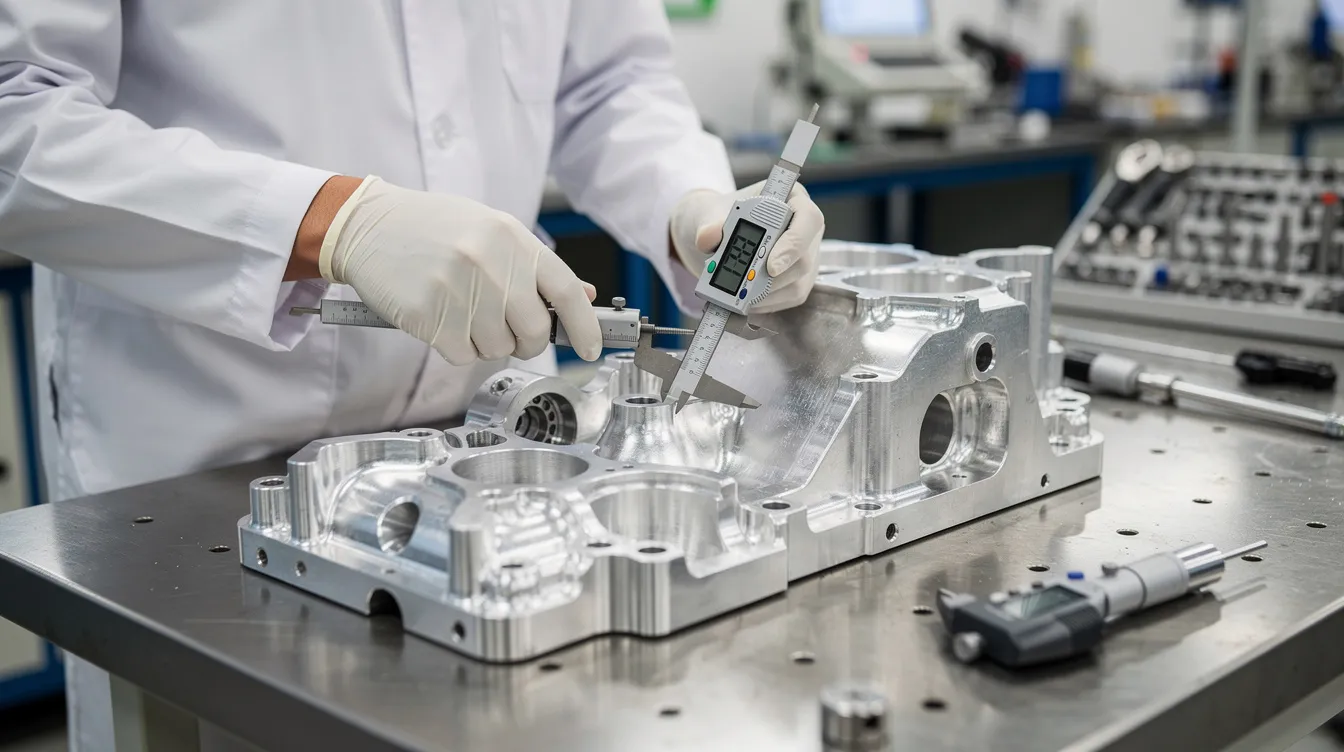
FAI requires complete measured evidence for applicable characteristics. Depending on the part, this may involve calipers, micrometers, height gages, CMM programs, optical systems, laser scanning, functional gages, electrical tests, pressure testing, or NDT records.
Inspection planning should define:
- which method will be used for each characteristic
- how measurements will be recorded
- what sampling logic applies, if any customer rule allows it
- how results from CMM or automated systems map into FAIR fields
- how out-of-tolerance conditions will be documented and dispositioned
In advanced environments, metrology systems feed digital FAIR workflows directly, reducing rekeying and transcription error.
Material and special process traceability
Form 2 and related attachments depend on complete accountability for raw materials, outside processing, and qualified special processes. Aerospace production often includes controlled sources for heat treat, plating, welding, coating, NDT, machining, or composites processing. FAI must connect the first article hardware to the correct certification package.
This requires traceability across internal receiving, inventory control, supplier documentation, lot management, and work order consumption records.
Quality management and nonconformance control
If a first article characteristic is nonconforming, the organization must manage that condition within the quality management system. Concessions, deviations, waivers, or corrective actions may affect whether the FAIR can be submitted, accepted with conditions, or rejected.
FAI therefore interacts with broader aerospace quality processes such as document control, calibration, approved supplier management, corrective action, audit readiness, and records retention.
Digital manufacturing platforms
Modern aerospace teams increasingly use connected platforms to coordinate FAI execution. A digital approach can link ballooned characteristics, inspection plans, ERP part data, MES traveler records, supplier certificates, and FAIR forms in one controlled workflow.
When implemented well, digital FAI systems improve data integrity, reduce manual compilation effort, and provide better visibility into bottlenecks such as missing certs, incomplete process approvals, or delayed dimensional results.
How Aerospace Manufacturers Implement First Article Inspection
FAI implementation varies by organization size, customer profile, and product complexity, but mature aerospace manufacturers typically follow a repeatable cross-functional sequence.
1. Confirm the trigger and scope
The first step is determining why the FAI is being performed and whether it should be full, partial, or delta. Common triggers include new part introduction, drawing revision, new supplier, facility transfer, major tooling change, process sequence change, material source change, or extended production lapse.
Scope control is essential. Teams need to know exactly which characteristics, parts, assemblies, and process records are in scope before work begins.
2. Freeze the applicable product definition
The organization identifies the released drawing or digital model, revision level, notes, specifications, and customer requirements that govern the build. This definition should be formally controlled so that the first article is not executed against outdated or mixed revisions.
3. Create the ballooned characteristic list
Quality or engineering personnel balloon the drawing and compile the full characteristic accountability set. This usually becomes the basis for inspection planning, FAIR Form 3 population, and assignment of measurement methods.
4. Build the first article under production conditions
The part is manufactured using normal routing, approved tooling, and released instructions. If a supplier network is involved, lower-tier records must also be collected. The build should represent actual production, not a one-off manually optimized exercise.
5. Collect material, process, and test evidence
Material certifications, special process records, test reports, subassembly records, and supplier documentation are gathered and reviewed. This often takes longer than dimensional inspection and is one of the most common schedule constraints in FAIR completion.
6. Perform inspection and record results
Dimensional, visual, functional, and specification-driven checks are completed. Results are recorded against the ballooned characteristic list. If digital tools are available, this data may come directly from metrology systems or structured inspection applications.
7. Assemble the FAIR package
The organization prepares Form 1 for part accountability, Form 2 for materials and special processes, and Form 3 for characteristic accountability, along with all required attachments. Internal review verifies completeness, accuracy, and consistency before submission.
8. Resolve exceptions and submit for approval
If there are nonconformances, approved deviations, or customer concessions, they must be properly linked to the FAIR. The package is then submitted according to customer or internal approval workflow requirements.
9. Retain the FAIR as the production baseline
Once accepted, the FAIR becomes the traceable reference for future changes, audits, and subsequent FAI determinations. Mature organizations maintain this baseline in a searchable digital quality record system rather than a disconnected file share.
This implementation model becomes much stronger when ownership is cross-functional. Engineering defines requirements, manufacturing ensures production-representative execution, quality manages accountability and records, and supplier quality closes external documentation gaps. When FAI is left to a single function without integrated workflow support, delays and omissions become much more likely.
Common Challenges and Mistakes
Most FAI problems in aerospace are not caused by the AS9102 forms themselves. They are caused by weak process coordination, fragmented data, and poor change control. Several failure modes appear repeatedly across both manufacturers and suppliers.
Incomplete characteristic accountability
One of the most common issues is failing to capture every requirement from the engineering definition. Teams may balloon dimensions but miss notes, flag requirements, specification references, or customer-identified key characteristics. This leads to FAIR rejection or rework after submission.
Using the wrong revision level
If engineering revisions are not synchronized across planning, manufacturing, and inspection, the FAIR may document a configuration that no longer matches the released design. This is especially common when drawing changes occur during launch or when supplier documents lag behind customer updates.
Weak material and process traceability
A part may measure correctly yet still fail FAI if the supporting records are incomplete. Missing mill certifications, incomplete lot linkage, expired special process approvals, or unclear sub-tier accountability can stop FAIR acceptance even when dimensional results appear sound.
Manual transcription error
Many FAIR delays come from manually moving data between spreadsheets, inspection systems, certificates, and PDF forms. Characteristic numbers get mismatched, measurements are keyed incorrectly, or attachments are omitted. Digital workflow platforms reduce this risk substantially.
Poor scope determination for partial or delta FAI
Organizations often underestimate the impact of a change. A tooling update, software revision, process relocation, or source change may affect more characteristics than initially assumed. If scope is too narrow, the resulting FAIR may not satisfy AS9102 intent or customer expectations.
Late supplier documentation collection
Lower-tier certs and process records are often chased at the end rather than planned at the start. This creates avoidable lead time. Aerospace manufacturers with strong supplier collaboration workflows request and validate required FAI evidence as the job progresses, not after the part is already awaiting shipment.
Treating FAI as a paperwork task
When teams focus only on producing the final FAIR package, they may overlook whether the first article truly reflects controlled production. An accepted document set is not enough if the underlying manufacturing process was improvised, undocumented, or not production-representative.
The best way to avoid these problems is to standardize the workflow, define clear roles, and connect FAI execution to the broader manufacturing system rather than handling it as an isolated quality event.
Future Trends and Industry Direction
FAI in aerospace is becoming more digital, more connected, and more integrated with production systems. The underlying compliance objective remains the same, but the method of execution is changing.
Digital FAIR generation
Organizations are moving away from manually assembled spreadsheets and static PDFs toward software-driven FAIR generation. These systems can pull part master data from ERP, routing and traveler data from MES, inspection results from metrology systems, and certification records from supplier portals or quality repositories.
This reduces manual effort while improving record consistency and auditability.
Model-based product definition
As model-based definition becomes more common, FAI workflows will increasingly rely on digital product characteristics rather than only 2D drawings. That changes how ballooning, characteristic extraction, and inspection planning are performed, especially for complex geometries and high-density feature sets.
Integrated supplier collaboration
Because FAI often depends on lower-tier documentation, supplier collaboration platforms are becoming more important. Aerospace manufacturers want earlier visibility into missing certs, process approvals, and subcomponent accountability before FAIR submission is due.
Stronger traceability architectures
Regulated manufacturing environments continue to push toward end-to-end traceability linking design, production, quality, and supplier data. FAI is a natural anchor point in that architecture because it ties together product definition and objective manufacturing evidence.
Analytics for recurring FAI bottlenecks
Once FAIR execution is digitized, manufacturers can analyze recurring delays and defects. Common questions include which suppliers most often delay cert packages, which part families create the highest characteristic extraction burden, and where rework originates in the FAI lifecycle. These insights help quality and operations leaders improve launch performance over time.
Closer alignment with digital manufacturing governance
FAI is increasingly viewed as one element of a broader aerospace manufacturing control framework that includes digital travelers, electronic device history, process qualification, quality event management, and supplier traceability. In that environment, FAIR completion is not the end of a siloed process. It is part of a connected production governance model.
Building a Stronger FAI Framework in Aerospace
For aerospace manufacturers and suppliers, First Article Inspection remains one of the clearest demonstrations of production discipline. It tests whether engineering requirements are understood, whether manufacturing can execute under controlled conditions, whether the supply chain is traceable, and whether quality records can withstand customer and audit scrutiny.
A strong FAI process requires more than familiarity with AS9102 forms. It depends on coordinated engineering release, characteristic accountability, production-representative execution, inspection planning, supplier documentation control, and reliable records management. The organizations that perform FAI well usually have one thing in common: they treat it as a system-level manufacturing workflow, not a last-minute documentation task.
Within the Connect 981 aerospace manufacturing ecosystem, FAI should be understood as part of a broader digital quality and traceability strategy. When FAIR execution is connected to manufacturing systems, supplier collaboration, and controlled engineering data, organizations can reduce cycle time, improve compliance confidence, and establish a stronger production baseline for every new or changed part.
That broader perspective is what turns First Article Inspection from a required deliverable into an operational advantage in regulated aerospace manufacturing.



Related Blog

Built for Speed, Trusted by Experts
Whether you're managing 1 site or 100, Connect 981 adapts to your environment and scales with your needs—without the complexity of traditional systems.
