NCR Template: Practical Fields, Evidence, and Audit‑Ready Traceability
In aerospace manufacturing and MRO, a non conformance report is not just a quality form. It is a controlled quality record used to formally document, investigate, and resolve nonconformities identified during any phase of the product or service lifecycle.Nonconformance reports are essential for documenting deviations from specifications, procedures, or regulatory requirements, ensuring that quality issues…

In aerospace manufacturing and MRO, a non conformance report is not just a quality form. It is a controlled quality record used to formally document, investigate, and resolve nonconformities identified during any phase of the product or service lifecycle.
Nonconformance reports are essential for documenting deviations from specifications, procedures, or regulatory requirements, ensuring that quality issues are formally identified and addressed. Manufacturing and production sectors utilize NCRs to flag defective materials, assembly errors, or machinery malfunctions. In aerospace, that same discipline supports AS9100, FAA, EASA, customer, and program requirements.
This guide explains what belongs in an NCR template, what evidence should be attached, and how an ncr record should be closed so it can withstand external audit review. Examples include nonconforming turbine blade machining in March 2026 and MRO inspection findings on A320 landing gear.
Connect 981, also known as Connect 981, provides digital NCR templates and workflows that connect shopfloor, engineering, quality control, and suppliers in a single ncr process.
What Is an NCR Template? (Definition and Purpose)
An NCR template is a standard, controlled layout for capturing every required piece of information about a non conformance in production, MRO, supplier quality, or service quality. An NCR template standardizes how organizations document, track, and resolve deviations from quality standards.
The template is the data structure. The ncr process is the workflow: detection and reporting, evaluation and classification, root cause analysis, implementation of corrective actions, verification and closure, and follow-up and monitoring. Both must align with the quality management system, defined procedures, customer obligations, and regulatory requirements.
A good nonconformance report template prevents missing quality data. It forces a clear description, requirement reference, acceptance criteria, immediate containment, disposition, root cause, corrective and preventive actions, closure verification, and sign off.
There is also an older meaning to NCR. NCR paper is coated with micro-encapsulated dye and a reactive clay that create copies when pressure is applied. In that context, an NCR template is a digital layout used to print multi-part forms that duplicate writing without carbon paper. In this article, ncr template means the quality management form used to control nonconforming material and process deviation records.
NCRs support compliance with various industry standards and regulations, including ISO 9001, AS9100, and FDA requirements, by providing documented evidence of quality issue resolution. Nonconformance reports are essential for compliance with industry standards and regulations, such as ISO 9001, AS9100, and FDA regulations, which require organizations to manage nonconformities and take corrective action. NCRs also serve as compliance records for government audits and risk mitigation in medical devices and pharmaceuticals. For aerospace, AS9100 clause 8.7 on control of nonconforming outputs is a useful anchor point; see the IAQG 9100 series overview.
NCRs can be customized and standardized for different organizations, allowing for various templates that fit specific departmental needs, such as simple one-page reports for smaller organizations or extensive reports for larger organizations with compliance requirements.
Core Sections of an NCR Template (Field-by-Field Guide)
Every ncr form should contain these core sections, whether it is Word, Excel, paper, eQMS, or a digital workflow:
- Unique report number, location, work order, date, and ncr status.
- Problem description and non conformance description.
- Non conformance type and standard violated.
- Requirement reference, specifications, and acceptance criteria.
- Risk, severity, and potential impact.
- Immediate action, immediate corrections, containment, and affected process.
- Root cause and root cause analysis.
- Corrective actions, preventive action, and corrective and preventive actions.
- Disposition, verification, closure evidence, and closure verification.
Key sections of an NCR template include unique report number, problem description, standard violated, immediate action, root cause analysis, and corrective/preventive action. A Nonconformance Report includes key components such as a clear description of the nonconformance, the type of nonconformance, a reference to the unmet requirement, associated risk level, immediate containment actions, and disposition decisions.
The structure of a nonconformance report typically includes sections for identification, location and work description, non-conformance description, requirement references, immediate action or containment, contractor response, engineer disposition, and verification and closure. If any of these fields are missing, the report is easier to challenge during an AS9100 or customer audit.
1. NCR Identification and Context
Strong identification is the backbone of traceability and later trend analysis. The template should include:
- Unique NCR number, such as NCR-A320-MRO-2026-0142.
- Site, line, cell, station, aircraft tail number, or MRO bay.
- Manufacturing order, MRO work package, repair order, service bulletin, or PO.
- Date and time raised.
- Reporter name, function, department, and role.
- Internal or supplier origin flag.
For supplier issues, include supplier name, supplier code, PO number, contract number, delivery note, and supplier certificate reference. These fields link directly to process records and relevant documentation.
2. Non Conformance Description (Facts, Not Opinions)
The non conformance description must be factual. It should identify what was observed, where it was found, and how it failed to meet specific requirements. It should not speculate about human error or blame.
A strong example: “Flap track pin diameter measured 15.94 mm versus specified 16.00 ±0.02 mm on PN FT-23-195, SN 23-981-047, measured on 18 Mar 2026 at Station B using CMM-05.”
Required fields include part number, serial number, lot or batch, configuration revision, process step, aircraft registration if relevant, and measurement method. NCR documentation must include a clear, objective summary of the defect or deviation and the immediate steps taken to isolate affected products.
3. Requirement References and Acceptance Criteria
This is the most important part of turning an observation into a defensible non conformity report. The template must force at least one hard reference:
- Drawing number and revision.
- Specification clause.
- Repair manual task.
- Work instruction ID.
- Customer requirement ID.
- AS9102 first article inspection reference, when applicable.
- OEM service bulletin or procedure number.
Examples: “Drawing 981-TRB-110 Rev F, note 7” or “CMM 77-21-01, task 301, allowable corrosion depth 0.25 mm max.” Without a requirement reference, the NCR becomes an opinion rather than objective evidence.
4. Detection Details and Audit Trail Hooks
The template should capture when and how the issue was detected:
- Incoming inspection, in-process inspection, final inspection, MRO inspection, automated vision check, operator observation, audit finding, or customer complaint.
- Equipment ID, such as CMM-03 or torque wrench TW-12.
- Last calibration date and calibration certificate number.
- Linked inspection report, test log, maintenance log, or customer defect report.
These fields create the early audit trail. In Connect 981, several can be auto-populated from ERP, MES, inspection, and work order systems, reducing manual entry errors and protecting data continuity.
Risk, Severity, and Scope Fields in the NCR Template
Non-Conformance Reports can be classified into different types based on their severity, including minor and major non-conformance reports, which reflect the impact of the non-conformance on the product, service, or process.
A strong ncr template includes severity rating, probability or occurrence, risk score if used, and regulatory-impact flag. Severity should consider flight safety, airworthiness, delivery impact, customer escape risk, and compliance exposure.
Scope fields are equally important. The template must force bracketing: how many units, which lots, which serial numbers, and whether shipped assemblies may be affected. Poor scope definition can turn systemic issues into a false one-off.
Severity and Classification Fields
Use a standard dropdown or scale: Minor, Major, Critical. Minor Non-Conformance Reports typically address less severe issues that have a lower impact and can be corrected easily, while Major Non-Conformance Reports involve significant violations that require extensive corrective actions and communication with management.
Examples:
- minor non conformance: paint shade variance outside cosmetic requirement.
- Major: dimensional out-of-tolerance condition on a structural bracket.
- Critical: suspected unapproved part in a 737NG spoiler repair.
For MRO, add fields for airworthiness impact, MEL or CDL relevance, and engineering authorization. Consistent classification improves trend analysis and management review.
Scope and Impacted Items
Scope fields should include quantity affected, serial numbers, tail numbers, production dates, work order range, and lot genealogy. Add checkboxes for:
- Confined to single unit.
- Multiple units affected.
- Unknown, investigation required.
- Shipped product potentially affected.
Example: 50 titanium fasteners received on 02 Feb 2026 fail hardness requirements. The ncr data must show which engine builds used the lot, which units remain in stores, and which assemblies require re inspection.

Containment, Correction, and Disposition Fields
Containment, correction, and disposition are different decisions. Immediate containment controls risk now. Short-term correction addresses already-touched units. Final disposition determines what happens to each item.
Auditors expect proof that nonconforming product or work was controlled. The template should show whether the job was stopped, stock was quarantined, ERP or MES holds were applied, and relevant stakeholders were notified.
In digital systems like Connect 981, disposition fields can block production movement until the required authority approves the next process step.
Immediate Containment and Short-Term Correction
The template should include:
- Work stopped? Yes or no.
- Material quarantined? Yes or no.
- Hold tag, cage, bin, or location ID.
- Temporary controls implemented.
- Authorized by, with date and time.
- Units already affected and immediate corrections completed.
Example: a torque wrench is found overdue for calibration. The tool is suspended, all fasteners installed since 01 Apr 2026 are placed under review, and any suspect installation is rechecked against specifications. “Fixed issue” is not enough. The correction must be concrete and verifiable.
Disposition Options and Approval
Standard disposition choices include:
- Rework to meet spec.
- Repair under approved engineering disposition.
- Scrap.
- use as is with documented justification.
- Return to supplier.
- Customer-defined concession.
Each disposition requires named approval, date, technical justification, and reference to any deviation, concession, MRB record, or customer approval. Example: “Accept under MRB concession MRB-2026-078 with revised allowable blend radius per OEM approval.”
The template must allow split disposition when one lot is divided: some parts reworked, some scrapped, some returned. If a repair or concession changes configuration, the serialized record must not be left unchanged; the build record, markings, or PLM reference must be updated.
Root Cause, Corrective, and Preventive Actions (CAPA-Ready Fields)
A strong template separates symptom, root cause, corrective actions, and preventive action. NCR templates are designed to capture essential information such as the nature of the nonconformance, corrective actions taken, and preventive measures to avoid recurrence, ensuring compliance with quality management system requirements.
For major or recurring issues, the NCR should link to the capa process, corrective action process, CAPA ID, SCAR, or formal risk assessment. Connect 981 can initiate CAPA workflows when severity, recurrence, or supplier thresholds are met.
Nonconformance reports help organizations identify and analyze recurring issues, which can lead to the implementation of preventive actions to avoid future nonconformities.
Root Cause Analysis Field Design
The root cause field should be separate from the non conformance description. It should capture contributing factors such as method, machine, material, manpower, environment, and measurement.
Good example: “Outdated CNC program Rev B used after engineering released Rev D; program control process did not require shopfloor verification of current revision.”
Add a field for investigation method: informal review, 5 Whys, fishbone, or full investigation. Generic “operator error” should be rejected unless evidence shows why the system allowed the error.
Corrective and Preventive Action Planning Fields
Corrective action fields should include action description, owner, target dates, resources, implementation date, and verification method. Preventive action fields should address broader controls that prevent recurrence across similar parts, suppliers, programs, or work centers.
Examples include updating torque procedures, revising supplier acceptance criteria, adding barcode checks, or changing work instruction revision controls. By documenting nonconformities and their root causes, organizations can implement corrective and preventive actions (CAPA) that address the underlying issues, thereby reducing the likelihood of recurrence.
Evidence, Attachments, and Traceability Requirements
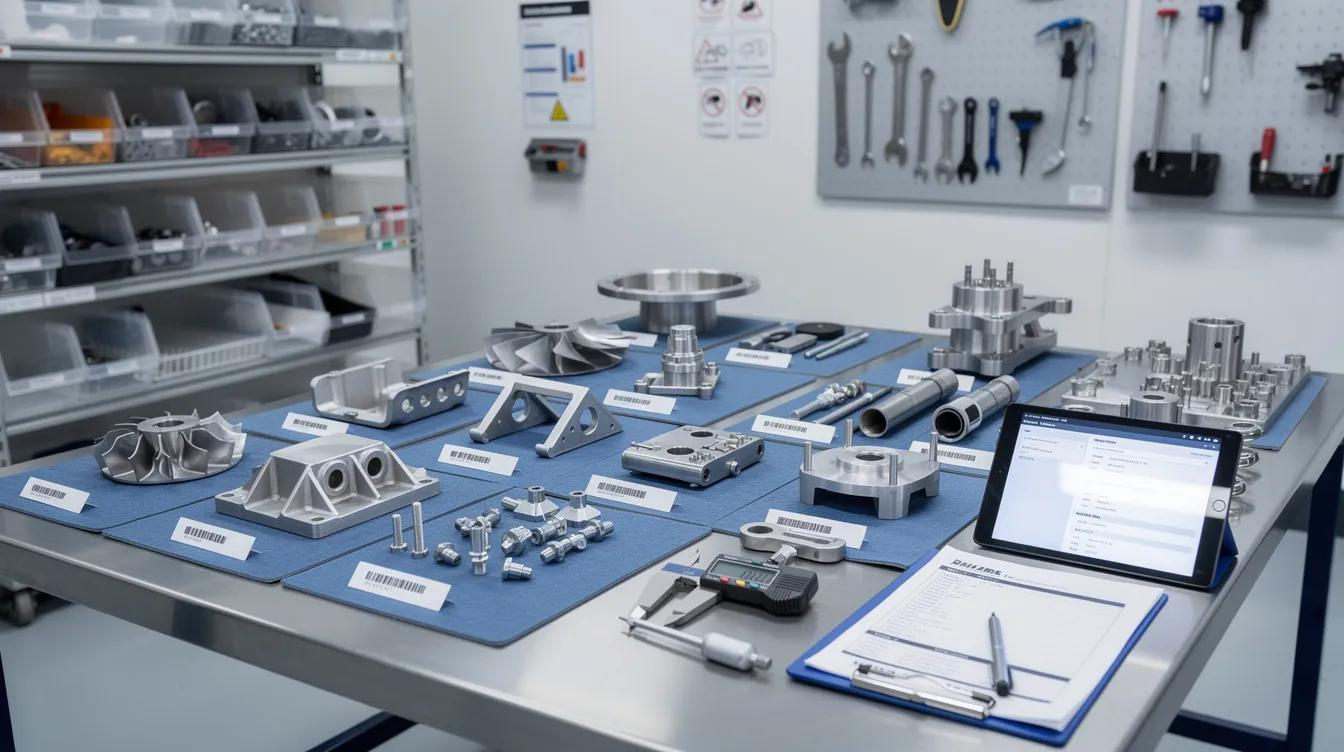
An NCR without objective evidence is weak. Typical attachments include photos, dimensional reports, NDT results, material test reports, calibration certificates, MES logs, supplier certificates of conformity, and inspection records.
The template should list each attachment with filename, ID, revision, storage location, and owner. To ensure complete data collection, an NCR must document details such as evidence of defects and sign-offs for verification.
Traceability means a reviewer can reconstruct exactly what happened, to which part, when, by whom, and under which requirement. Connect 981 supports drag-and-drop uploads, version control, and linked evidence so the ncr record is not split across emails and file shares.
Audit Trail and Revision History Fields
An audit trail should capture who created, edited, reviewed, dispositioned, verified, and closed the NCR. It should include timestamps for raised, contained, dispositioned, corrective actions completed, verified, and closed.
Regulated aerospace environments should prevent silent overwrites. Updates need a reason for change, prior value, new value, and user identity. In Connect 981, these events are system-generated and exportable for AS9100, customer, FAA, or EASA audit review.
If the audit history is unreliable, the technical content may still be questioned.
Internal vs Supplier NCR Templates (What Changes?)
Internal NCRs apply to shopfloor processes, in-house MRO work, tooling issues, documentation errors, and internal production quality problems. Supplier NCRs apply to incoming material, outsourced special processes, external repair stations, or supplier documentation gaps.
Both share a common core. Supplier templates add supplier code, PO, contract, delivery note, certificate of conformity, supplier NCR number, 8D reference, and response due date.
Supplier NCRs may link to SCARs, scorecards, and sourcing decisions. The fields can vary depending on customer requirements, product criticality, and regulatory compliance impact.
Coordinating Supplier Corrective Actions and Internal Records
Supplier response fields should include supplier root cause, corrective actions, preventive actions, completion dates, and supplier verification evidence. Internal quality should accept, reject, or return the response with comments.
Add fields for multi-program impact and impact on other customers when shared suppliers are involved. Keeping supplier answers in the same system reduces email-driven data loss and improves supplier collaboration.
What Makes an NCR Weak vs Audit-Ready?
Weak NCRs usually have the same pattern:
- Vague description such as “dimension wrong.”
- No requirement reference or acceptance criteria.
- Missing severity, risk, or scope.
- No containment record.
- Disposition not approved.
- “use as is” without engineering justification.
- Root cause listed as human error without systemic analysis.
- No closure evidence or verification.
- Attachments missing or stored outside the record.
Strong NCRs include measurable facts, named approvers, linked specifications, objective evidence, complete audit trail, and closure verification that can verify effectiveness.
Weak example: “Paint peeling on A320 flap track. Repainted.”Audit-ready example: “Paint finish on A320 LT flap track PN FT-23-195, SN 14579, per PS-105 Rev C, found 15 Mar 2026 during final inspection. Delta E measured 4.5 versus required ≤3. Supplier batch 002345 quarantined. Disposition: rework per WP-05. Verification: next 10 parts measured within limit. Closed with QA sign off.”
The effective use of NCRs can lead to improved product quality, reduced operational costs, and enhanced compliance with regulatory requirements, ultimately preventing customer complaints and operational inefficiencies. NCRs serve as critical inputs for continuous improvement programs, allowing organizations to analyze trends and implement preventive measures that enhance overall quality and compliance.
Checklist: Quick Review Before Closing an NCR
Before closure, confirm:
- Is the unique NCR number, location, date, part, serial, lot, and configuration complete?
- Is the description factual and measurable?
- Is the requirement reference documented?
- Is severity set and justified?
- Is scope bracketed across affected units and shipped product?
- Is containment documented with owner and date?
- Is disposition approved by the authorized role?
- Are corrective actions assigned with target dates?
- Is preventive action defined where needed?
- Are photos, reports, certificates, and process records attached?
- Did re inspection or test data verify effectiveness?
- Is closure evidence complete and sign off recorded?
This checklist should be part of daily quality review, not just audit preparation.
Designing and Using an NCR Template in Connect 981
A digital NCR template in Connect 981 differs from static forms because required fields, routing, approvals, supplier access, and role-based visibility are built into the workflow. Teams can configure internal, supplier, and MRO templates with zero or low-code tools.
Connect 981 links NCRs to work orders, serial numbers, digital work instructions, supplier records, CAPA workflows, and dashboards. Results feed management review, recurrence metrics, time-to-containment, supplier performance, and minor versus major non conformance trends.
The outcome is practical: better quality, stronger compliance, less manual reporting, and clearer decisions at the point of work. Request a Demo of Connect 981 to see NCR templates, supplier workflows, and audit-ready traceability in a live aerospace context.



Related Blog

Built for Speed, Trusted by Experts
Whether you're managing 1 site or 100, Connect 981 adapts to your environment and scales with your needs—without the complexity of traditional systems.
