No.
Moving production to a different machine does not automatically mean a delta FAI is required in every case. What matters is whether the move represents a change that could affect product characteristics, process capability, or the approved manufacturing method, and whether your customer, contract, or internal quality system treats that change as FAI-impacting.
In practice, this connects to digital AS9102 FAI when teams need to turn the answer into repeatable execution habits.
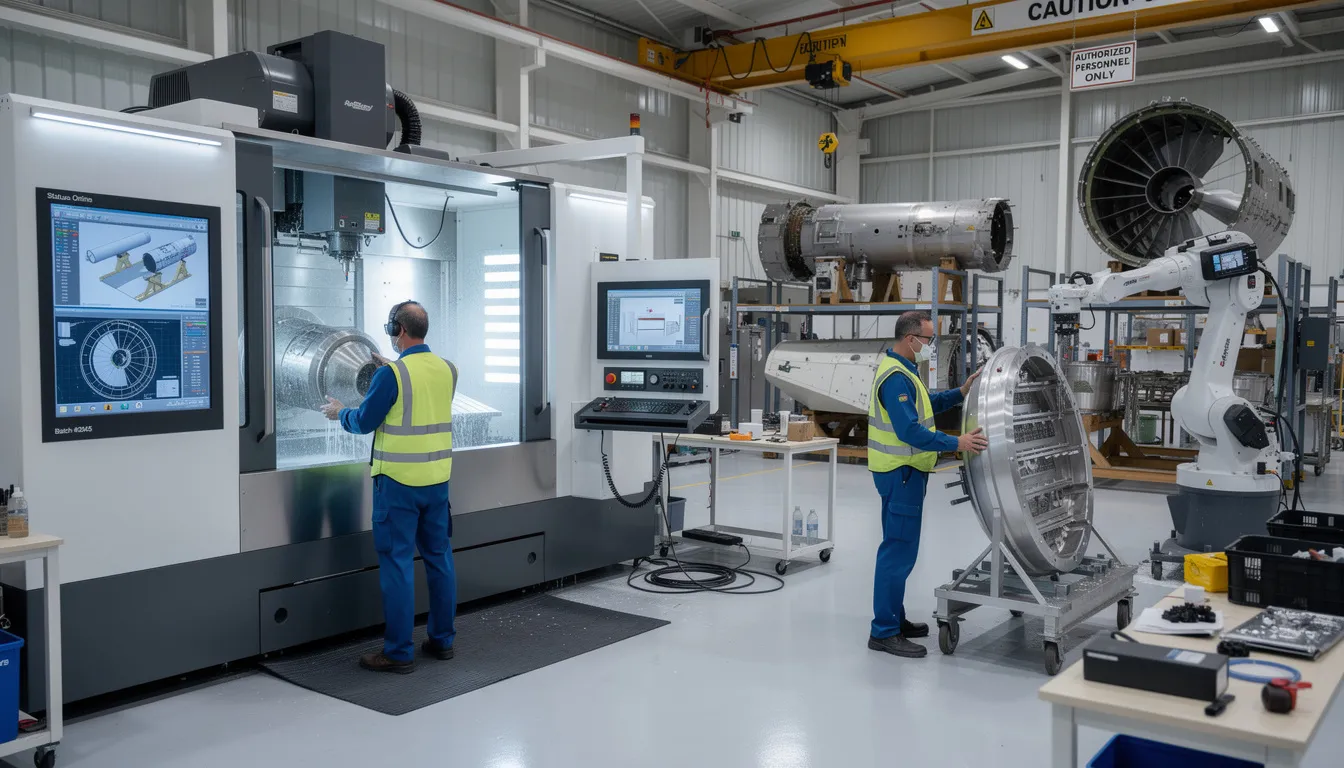
In practice, a machine change often can trigger a delta FAI, but not simply because the asset ID changed. The decision usually depends on factors such as machine equivalence, control software differences, fixture changes, tooling changes, CNC program transfer risk, process parameter changes, operator method changes, and whether the process is considered the same validated or qualified process after the move.
Customer or contract-specific requirements: Some customers are stricter than the baseline expectation and may require delta FAI for machine moves that another customer would not.
Whether the manufacturing process changed in a meaningful way: A move between truly equivalent machines with the same tooling, program revision, setup method, and demonstrated capability may be treated differently from a move to a different machine platform or control.
Impact on product characteristics: If the new machine could influence dimensions, surface finish, hole quality, material condition, or other characteristics, a delta FAI becomes more likely.
Qualification and validation status: In regulated and aerospace environments, process validation, equipment qualification, and change control can matter as much as the part drawing itself.
Risk classification of the part and process: Critical features, special processes, or tight capability margins raise the burden of evidence.
The replacement machine is a different model, control platform, kinematic configuration, or capability class.
Tooling, fixturing, probing routine, offsets, or setup method changed.
The CNC program was reposted, modified, or adapted for the new machine.
Inspection results or capability on the new machine are not yet established.
The part has critical or tightly toleranced features sensitive to machine behavior.
Your internal procedure or customer flowdown explicitly lists machine changes as FAI-triggering events.
The new machine is formally controlled as equivalent and uses the same approved method.
Tooling, program revision, setup, process parameters, and inspection method remain unchanged.
You have documented change assessment showing no expected effect on form, fit, function, or process capability.
Your quality system and customer requirements allow a justified no-delta decision with objective evidence.
That said, a justified no-delta decision needs more than tribal knowledge. It typically requires documented review, traceable rationale, and supporting records. If the only basis is that the machines are “basically the same,” that is usually weak in an audit or customer review.
In mixed-vendor plants, this decision is often harder than it should be because machine identity, CNC revision, tooling records, setup instructions, inspection plans, and FAI history live in different systems or paper files. MES, ERP, QMS, PLM, and CMM software may not agree on what actually changed. That integration gap does not eliminate the requirement. It just means engineering and quality need a more disciplined change assessment and evidence trail.
This is one reason full system replacement is rarely the practical answer. In long-lifecycle regulated environments, replacing core execution and quality systems to “clean up” FAI decisions often creates more qualification burden, validation work, downtime risk, and traceability gaps than the original problem. Coexistence with stronger change control and clearer system-of-record definitions is usually more realistic.
If production moves to a different machine, treat it as a controlled change and assess whether it could affect the part or approved process. Do not assume the answer is always yes, and do not assume it is automatically no. Review the contract, customer expectations, internal FAI procedure, machine equivalence, process risk, and available objective evidence before deciding whether a delta FAI is required.
If there is any ambiguity, escalate the decision through quality and the responsible customer-facing authority rather than relying on an informal shop-floor judgment.


Whether you're managing 1 site or 100, Connect981 adapts to your environment and scales with your needs—without the complexity of traditional systems.



Whether you're managing 1 site or 100, Connect981 adapts to your environment and scales with your needs—without the complexity of traditional systems.