ISO 27001 is an international standard that describes how an organization should manage information security in a systematic, auditable way. It does not tell you which specific firewalls or tools to buy. Instead, it defines a management system for deciding what you need to protect, how you will protect it, how you will monitor and improve controls, and how you will prove you are doing what you say.
What ISO 27001 actually is
At a simple level, ISO 27001 requires you to:
- Define scope for an Information Security Management System (ISMS). This might include IT only, or both IT and OT, or specific plants, business units, or data types.
- Identify information security risks in a structured way, including confidentiality, integrity, and availability impacts.
- Select and justify controls (many listed in Annex A of the standard) that address those risks, or explain why a control is not applicable.
- Document policies and procedures that describe how security is managed, monitored, and improved.
- Operate under governance with roles, responsibilities, internal audits, management review, and corrective actions.
- Maintain records as evidence of what you did and when, under change control.
In short, ISO 27001 is about having a repeatable, auditable system for managing information security risk, not a checklist of technical measures guaranteed to make you secure.
How this looks in an industrial / regulated environment
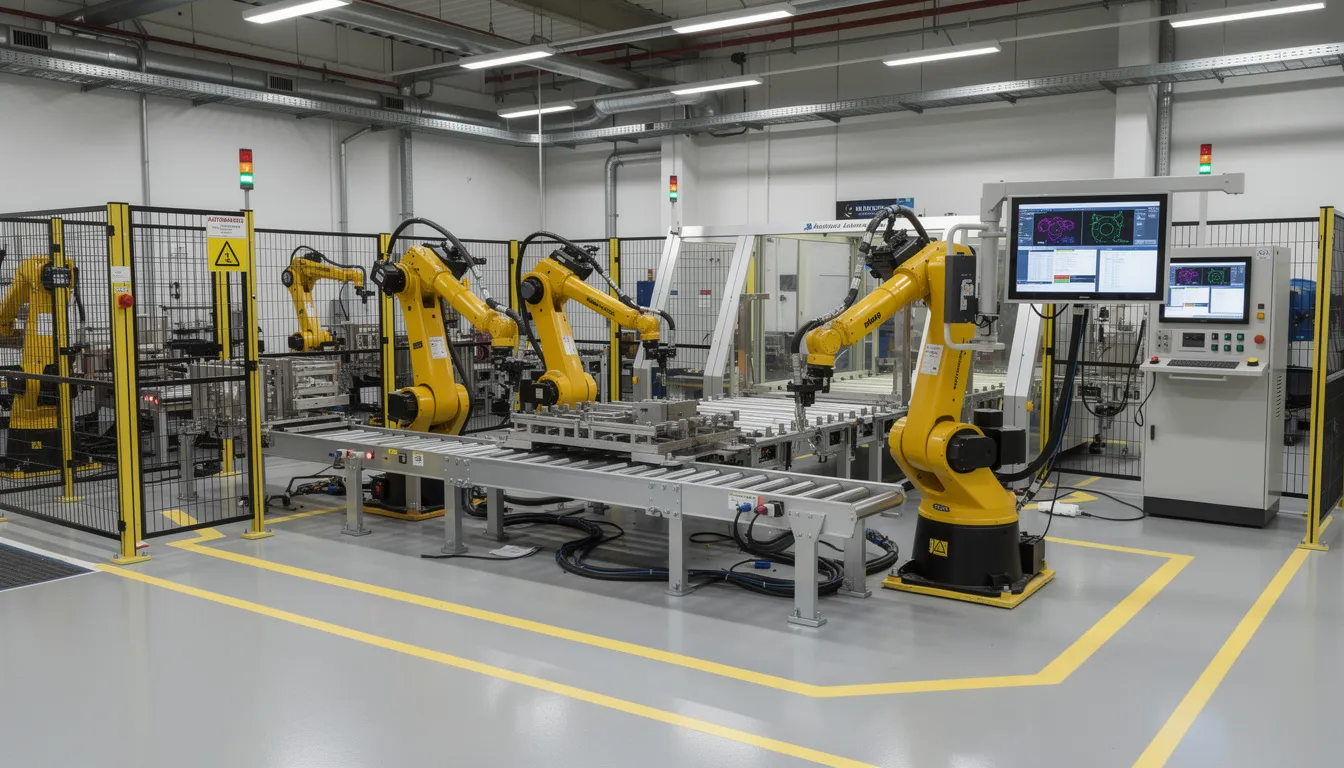
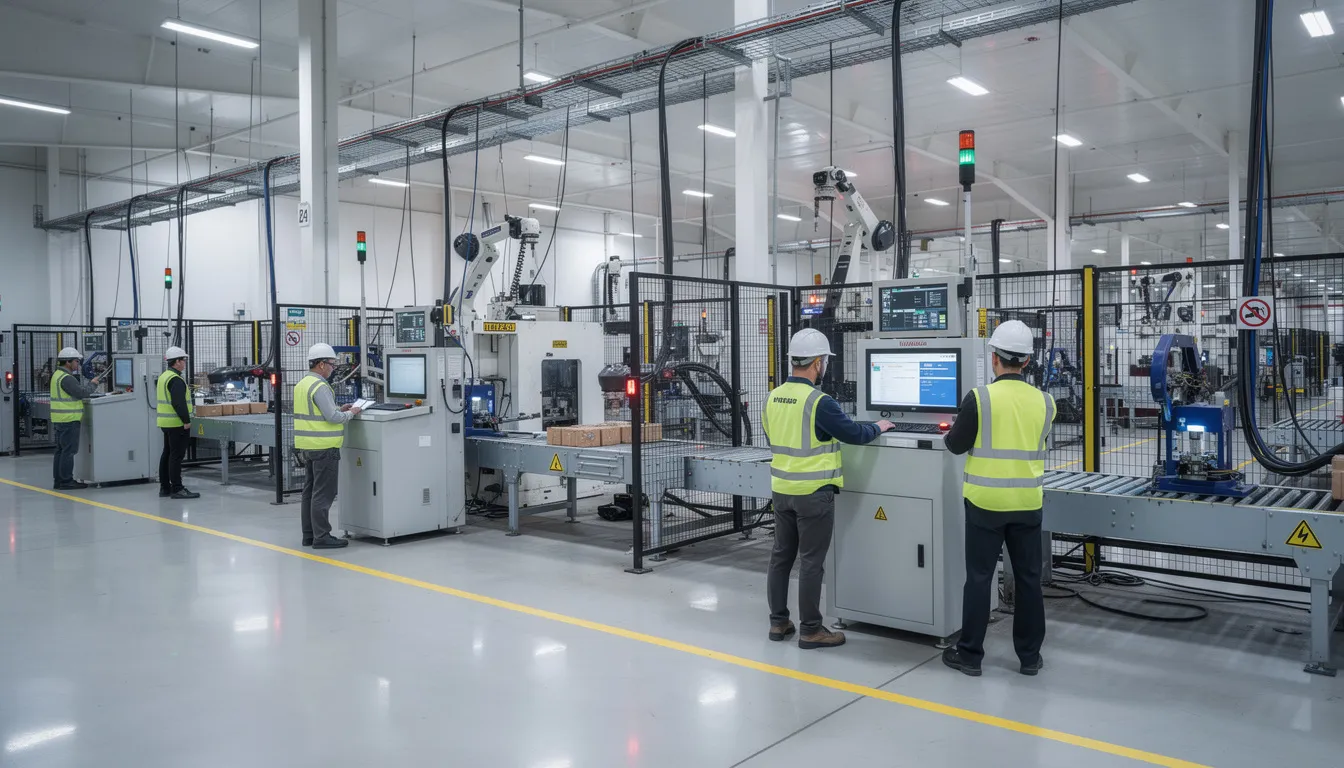
In manufacturing and other regulated operations, ISO 27001 usually sits on top of a complex brownfield stack: historic MES, ERP, PLM, QMS, data historians, on-prem AD, and a mix of modern and legacy OT. Applying ISO 27001 here typically means:
- Careful scoping: deciding which plants, networks, and systems are in-scope, and where you will accept residual risk because replacement or redesign is not realistic in the short term.
- Integration with existing frameworks: aligning ISO 27001 controls with existing cybersecurity programs (for example IEC 62443 for OT), corporate IT standards, and regulatory expectations.
- Respecting equipment lifecycles: many OT assets cannot be patched or replaced quickly. ISO 27001 forces you to document that reality, evaluate the risk, and implement compensating controls where possible.
- Traceability and evidence management: linking access control, change control, incident handling, and supplier management records so you can show why decisions were made and how risks are being monitored.
ISO 27001 does not replace your MES, QMS, or OT cybersecurity program. It provides the governance wrapper that ties policies, risk decisions, and controls together and keeps them under review.
What ISO 27001 does not guarantee
Several common misunderstandings are worth calling out directly:
- No security guarantee: Being aligned with, or even certified to, ISO 27001 does not mean your systems are secure or that breaches are impossible. It only means a defined management system is in operation and has passed a specific kind of audit.
- No compliance guarantee: ISO 27001 alignment does not, by itself, satisfy sector-specific regulations, export controls, or customer security requirements. You still need to map those requirements into your ISMS and validate that controls really cover them.
- No promise of modern tooling: An organization can be formally aligned with ISO 27001 while still running a lot of legacy technology. The standard focuses on risk management and governance, not on forcing specific technical modernization.
Why full “rip and replace” is rarely part of ISO 27001
In long-lifecycle, regulated environments, ISO 27001 programs that assume large-scale replacement of legacy systems typically run into:
- Qualification and validation burden: Replacing MES, historians, or OT platforms can trigger extensive requalification and revalidation, with significant cost and schedule impact.
- Downtime risk: Critical production assets cannot be offline for long without impacting contracts, customers, and sometimes regulatory commitments.
- Integration complexity: Existing custom integrations, data flows, and interfaces to ERP, QMS, PLM, and OT are rarely well documented and are expensive to rebuild.
- Traceability and change control: Large technology changes must be tightly controlled and documented, which slows sweeping replacement initiatives.
ISO 27001 fits more naturally with incremental hardening, compensating controls, and better governance around existing systems than with wholesale replacement of the technology stack.
Practical implications for operations and engineering leaders
For leaders in operations, engineering, quality, and IT, an ISO 27001-style approach typically means:
- Clear accountability for information security in plants and engineering environments, not just in corporate IT.
- Structured risk discussions that explicitly weigh security controls against production availability, validation impact, and change-control overhead.
- Evidence-ready processes where controls like access management, backup and recovery testing, vendor access to OT networks, and incident response are defined, executed, and logged.
- Alignment with OT cybersecurity, so that IEC 62443-style network segmentation and system hardening are supported by policies, risk registers, and management review rather than done in isolation.
If you think of ISO 27001 in “for dummies” terms, it is the rulebook and record-keeping system for how you decide, implement, and continually review information security measures, especially in complex, mixed IT/OT environments. Its effectiveness depends heavily on realistic scoping, integration with existing programs, and disciplined execution over time.