
OEM
An OEM is an original equipment manufacturer that designs and produces equipment or components sold directly or via other brands.


Core meaning
OEM stands for **original equipment manufacturer**. It commonly refers to a company that designs and manufactures equipment, machinery, or components that are sold either:
– Under its own brand, as the original producer of the equipment, or
– Embedded in or alongside another company’s branded products (for example, parts supplied to a systems integrator or end-product manufacturer).
In industrial and regulated environments, OEMs are often the source of primary production equipment (e.g., filling lines, CNC machines, inspection systems) or critical components (e.g., sensors, actuators, avionics modules).
Role in industrial and regulated operations
In manufacturing and operations contexts, OEM commonly refers to:
– **Equipment OEM** – the designer and builder of production assets such as packaging lines, reactors, robots, test stands, or inspection machines.
– **Component OEM** – the manufacturer of parts used within larger assemblies, such as pumps, valves, PLCs, drives, or aircraft parts.
Typical interactions between an OEM and an operating site include:
– **Design and specifications**: Providing technical specifications, performance limits, and interfacing information for integration with MES, SCADA, or ERP.
– **Documentation and data**: Supplying drawings, manuals, maintenance procedures, and data needed for validation, change control, and regulatory records.
– **Spare parts and lifecycle support**: Manufacturing or coordinating supply of original spare parts and upgrades for installed equipment.
– **Software and firmware**: Providing and maintaining embedded control software, firmware, and sometimes higher‑level applications tied to their equipment.
Distinction from MRO and other related terms
In many operations, OEM is contrasted with:
– **MRO (maintenance, repair, and overhaul) provider**: An MRO organization services and repairs equipment or components, often after delivery from the OEM. The MRO may be independent from the OEM or may be an OEM‑authorized service provider.
– **Aftermarket supplier**: A company that supplies non‑OEM (alternative or compatible) replacement parts or enhancements for original equipment.
– **System integrator**: An engineering firm that combines equipment from multiple OEMs into a complete production line or plant system.
An OEM is **not** the same as:
– The end user or operator of the equipment
– A reseller that only distributes equipment without designing or manufacturing it
Use in aerospace and AOG risk context (site context)
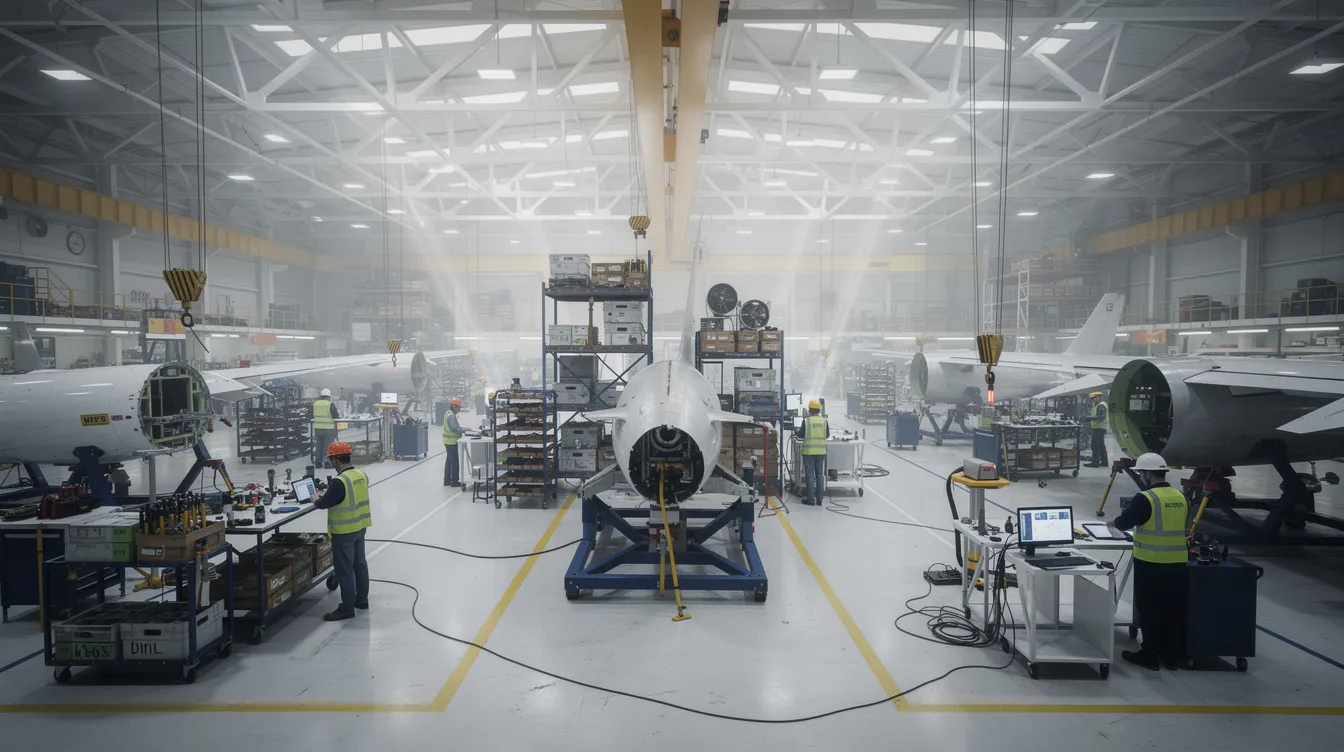
In aerospace and aviation operations, an OEM typically refers to the original designer and manufacturer of an aircraft, engine, or critical components. In this context:
– OEMs focus on **design**, **initial provisioning**, and **global supply risk** for parts and assemblies.
– AOG (aircraft on ground) risk mapping may distinguish between risk driven by **OEM supply chains** (e.g., long lead times, design changes) and risk managed by **MRO organizations** (e.g., turnaround time, local inventory, and service-level agreements).
The OEM role in such environments includes providing configuration data, traceability information, approved part lists, and change notifications that feed into operators’ and MROs’ quality, maintenance, and risk-management systems.
Common confusion and terminology nuances
– **OEM vs. brand owner**: In some sectors, a brand owner outsources all manufacturing; in others, the OEM and brand owner are the same legal entity. The term OEM refers to the manufacturing role, not necessarily the marketing entity.
– **OEM vs. contract manufacturer (CM)**: A contract manufacturer builds products to another company’s design. An OEM is typically responsible for the design and performance of the equipment or component, even if it subcontracts some fabrication.
– **OEM parts**: Usually means parts supplied or specified by the original equipment manufacturer, as opposed to third‑party or aftermarket parts.
Clear use of “OEM” helps distinguish responsibilities for design, manufacturing, documentation, and ongoing technical support across the lifecycle of industrial equipment.


Related FAQ
Related Glossary
Ready to See How C-981 Can Accelerate Your Factory’s Digital Transformation?
