NCR vs MRB vs CAPA: How They Work Together in Aerospace Quality Workflows
In real aerospace operations, NCR, MRB, and CAPA are not isolated quality terms. They are connected handoffs in the same quality control process, moving from defect detection to product disposition to systemic improvement.The practical sequence is simple: Detect → NCR → MRB → sometimes CAPA → closure and learning. The value comes from knowing where…

In real aerospace operations, NCR, MRB, and CAPA are not isolated quality terms. They are connected handoffs in the same quality control process, moving from defect detection to product disposition to systemic improvement.
The practical sequence is simple: Detect → NCR → MRB → sometimes CAPA → closure and learning. The value comes from knowing where each step starts, where it stops, and when the next step becomes necessary.
1. Overview: NCR vs MRB vs CAPA in One Workflow (Answer the Query Fast)
In quality management, an NCR documents defects, the MRB evaluates non-conforming materials, and the CAPA addresses underlying causes. That is the cleanest way to understand ncr vs mrb vs capa in aerospace manufacturing and MRO.
NCR is the first formal record when a nonconforming product, process deviation, or documentation issue fails a requirement. MRB is where a cross functional team determines what to do with that specific material. CAPA is the structured system used to determine root cause, take corrective actions, add preventive action where needed, and prevent recurrence.
NCR, MRB, and CAPA are interconnected quality management frameworks designed to manage product or process defects. In AS9100, FAA, and EASA environments, this workflow must be well defined, documented, risk based, and supported by objective evidence. Connect 981, also known as Connect 981, supports all three in one system so quality, production, engineering, and suppliers can see the same NCR → MRB → CAPA chain.
2. Core Definitions in Service of Workflow Clarity
Definitions matter only if they clarify the workflow. The question is not “what does each acronym mean?” The better question is: what does each step control, and when does the work move forward?
2.1 NCR: The Trigger Point in the Quality Workflow
Nonconformance Reporting (NCR) is a critical process in quality management systems that helps organizations identify and document deviations from expected standards or specifications. NCRs are opened whenever a nonconforming product, process problem, or documentation gap is detected against customer requirements, a drawing, a contract clause, or a quality standard.
An NCR might capture a mis-drilled hole pattern on a 737 wing rib found on 12 March 2024 during in-process inspection. It might capture incorrect heat-treatment certification from a supplier on a landing gear forging at incoming inspection. It might also come from final inspection, MRO teardown, internal audits, customer complaints, or field returns.
A useful NCR includes part number, serial or lot number, work order, specification, defect description, immediate actions, containment status, and risk assessment flag. In many organizations, NCRs originate in ERP, MES, QMS, email, or paper. Connect 981 can centralize these inputs so quality data is not lost before the next decision point.
2.2 MRB: Structured Disposition for the Specific Nonconforming Material
The material review board is the cross-functional decision forum that evaluates the NCR record and the affected product. The MRB is a cross-functional team that decides what to do with non-conforming material that cannot be easily fixed.
The MRB determines the fate of defective items through actions such as scrapping, reworking, or returning to the vendor. Common mrb decisions include rework to drawing, repair through approved data, use-as-is with documented risk justification, scrap, or return to supplier.
The MRB question is narrow and practical: what can be safely done with this hardware now? It is not a full systemic investigation. MRB decisions focus on safety, airworthiness, fit, form, function, traceability, and whether customer or OEM approval is required.
2.3 CAPA: Systemic Corrective and Preventive Actions
CAPA stands for ‘corrective and preventive action’, which is a systematic approach used in regulated industries to identify, investigate, and address problems or non-conformities in products, processes, and systems. The practical capa meaning is this: CAPA changes the system so the same failure mode is less likely to happen again.
The capa process is opened when repeat NCRs, serious risk, audit findings, supplier trends, or customer feedback suggest a systemic problem. A robust CAPA process should include steps for creating a CAPA request, reviewing it, initiating it formally, investigating the root cause, and verifying the effectiveness of the actions taken.
Effective CAPA management requires a cross-functional team to oversee the investigation and resolution of issues, ensuring that all relevant perspectives are considered. That team must approve capa actions, maintain capa records, and confirm capa effectiveness through a verification step, not just implementation evidence.
The CAPA process is crucial for maintaining compliance with quality management system standards, such as ISO 9001, and is often evaluated during external audits. In aerospace and medical devices, a robust quality management system (QMS) is essential for ensuring compliance with industry standards and regulations, particularly where adherence to standards like AS9100 and ISO 13485 is critical.
Quality management systems must include clear documentation and control processes to ensure that all procedures are followed and that changes are properly managed throughout the product lifecycle. Continuous improvement is a key principle of quality management systems, which involves regularly assessing and refining processes based on internal audits and customer feedback to enhance product quality and compliance.
3. The Actual Sequence: From Detection to NCR, MRB, and (Sometimes) CAPA
The order is operational, not theoretical. An operator, inspector, supplier quality engineer, or MRO technician detects an issue. The immediate issue is contained. The NCR is created. The MRB decides the product disposition. Then the organization determines whether a formal capa is required.
Sequence diagram logic: Operator → NCR → MRB → CAPA or No CAPA → updated procedures, training, risk files, and closure.
Key steps:
- Detect an issue on the shopfloor, at receiving, during test, in the field, or during MRO.
- Contain the affected product and document the NCR.
- Route the NCR to MRB for technical evaluation and disposition.
- Determine whether the event is isolated or systemic using trends, risk analysis, recurrence, and customer impact.
- If needed, open a CAPA investigation with root cause analysis and an action plan.
- Close the loop by confirming MRB disposition, verifying CAPA effectiveness, and updating control plans, training, and risk registers.
Consider an A320 assembly line with repeated torque-out defects on titanium fasteners. The first NCR leads to MRB rework. The second NCR leads to another rework decision. By the third similar event from the same supplier, the pattern points beyond one lot. CAPA becomes necessary because the production process or supplier control process may be unstable.
A thorough investigation might find improper furnace calibration at the supplier. Corrective and preventive actions could include supplier calibration controls, revised incoming inspection checks, updated work instructions, and tighter supplier scorecards. Connect 981 can visualize this chain across programs and suppliers, giving quality and supply chain management one view of NCRs, MRB outcomes, and CAPA status.

4. Decision Boundaries: When You Stop at NCR/MRB and When You Escalate to CAPA
A major source of confusion in ncr vs mrb vs capa is the assumption that every NCR must become CAPA. That is not a robust process. It creates backlog, weak problem solving, and shallow corrective actions.
You may stop at NCR plus MRB when the cause is obvious, risk is low, impact is local, and recurrence is unlikely. A single handling scratch on a nacelle panel may require containment, repair, documentation, and perhaps localized training. It does not automatically justify a full CAPA.
Escalate to CAPA when root cause is unclear, recurrence is likely, potential risks extend across other products or suppliers, or the issue affects safety, compliance, delivery, or customer satisfaction. Frequent low-severity NCRs can justify CAPA if they reveal process problems or create cost and schedule impact.
Effective NCR processes require clear definitions of escalation criteria to ensure consistent decision-making across an organization. NCRs should be used to capture not only isolated incidents but also to identify systemic issues that may require corrective actions to prevent recurrence.
Good boundaries use risk matrices, FMEA scores, program-specific criteria, and documented risk tolerance set by OEMs or airworthiness authorities. This makes sense in multi-site networks where tribal judgment creates variation. Connect 981 helps standardize these thresholds while still allowing site-specific controls.
5. What Not to Conflate: Common Misunderstandings About NCR, MRB, and CAPA
Many audit findings and quality escapes happen because organizations collapse these distinct concepts into one informal process. The result is incomplete records, weak root cause determination, and poor closure evidence.
Common errors include:
- MRB disposition is not corrective action. Rework or scrap fixes the lot, not necessarily the process.
- NCR closure is not CAPA closure. “Fixed this part” is not the same as “fixed the cause.”
- CAPA closure is not complete until effectiveness is verified with objective evidence.
- Preventive actions are not MRB dispositions. They are changes to process, training, design controls, supplier controls, inspection plans, or environmental conditions.
The separation is simple. NCR documents and controls the event. MRB documents risk based product disposition. CAPA documents system-level corrective and preventive actions and verifies they were properly addressed.
Under-escalation is dangerous when repeated NCRs are closed through MRB without recognizing a trend. Over-escalation is also a problem because opening CAPA for every routine defect creates fatigue and delays serious investigations.
For aerospace manufacturing, AS9100 expects control of nonconforming outputs and effective corrective action. For medical devices, FDA 483 observations and warning letters often cite weak capa procedures, poor complaint handling, and failure to verify effectiveness. A well-designed digital workflow separates the steps while keeping traceability between them.
6. Risk Management Across NCR → MRB → CAPA
Risk management in quality assurance involves identifying, assessing, and mitigating potential threats to processes to ensure product safety and reliability. A robust risk management process is essential for maintaining compliance with regulatory standards, as it helps organizations proactively address potential quality issues before they escalate.
Incorporating risk management into the CAPA process is crucial, as it ensures that corrective and preventive actions are aligned with the severity and likelihood of potential risks.
At each stage, risk changes shape:
- NCR stage: screen whether the nonconforming product could have escaped, affected airworthiness, violated customer requirements, or created downstream quality problems.
- MRB stage: determine whether use-as-is, repair, rework, or scrap is justified. Use-as-is should only occur when risk analysis confirms no safety or performance impact.
- CAPA stage: determine whether the failure mode can affect the entire organization, other lines, other suppliers, or other programs.
Risk tools may include FMEA, hazard analysis, severity and occurrence scoring, and program-specific control plans. In medical devices, CAPA actions may also update ISO 14971 risk management files. In Connect 981, centralized risk data across NCRs, MRB records, and CAPA cases supports predictive analytics and better prioritization.
7. How NCR, MRB, and CAPA Interact with Supply Chain Management
Supplier issues are a major source of NCR volume in aerospace. Effective supplier management involves qualifying, evaluating, and monitoring the performance of suppliers to ensure compliance with industry standards and specifications.
Establishing stringent criteria for supplier selection and ongoing evaluation is crucial for maintaining quality and compliance in aerospace manufacturing. A robust supplier management process includes issuing nonconformance reports (NCRs) when items purchased from suppliers do not meet established specifications, which can lead to corrective actions if issues are systemic.
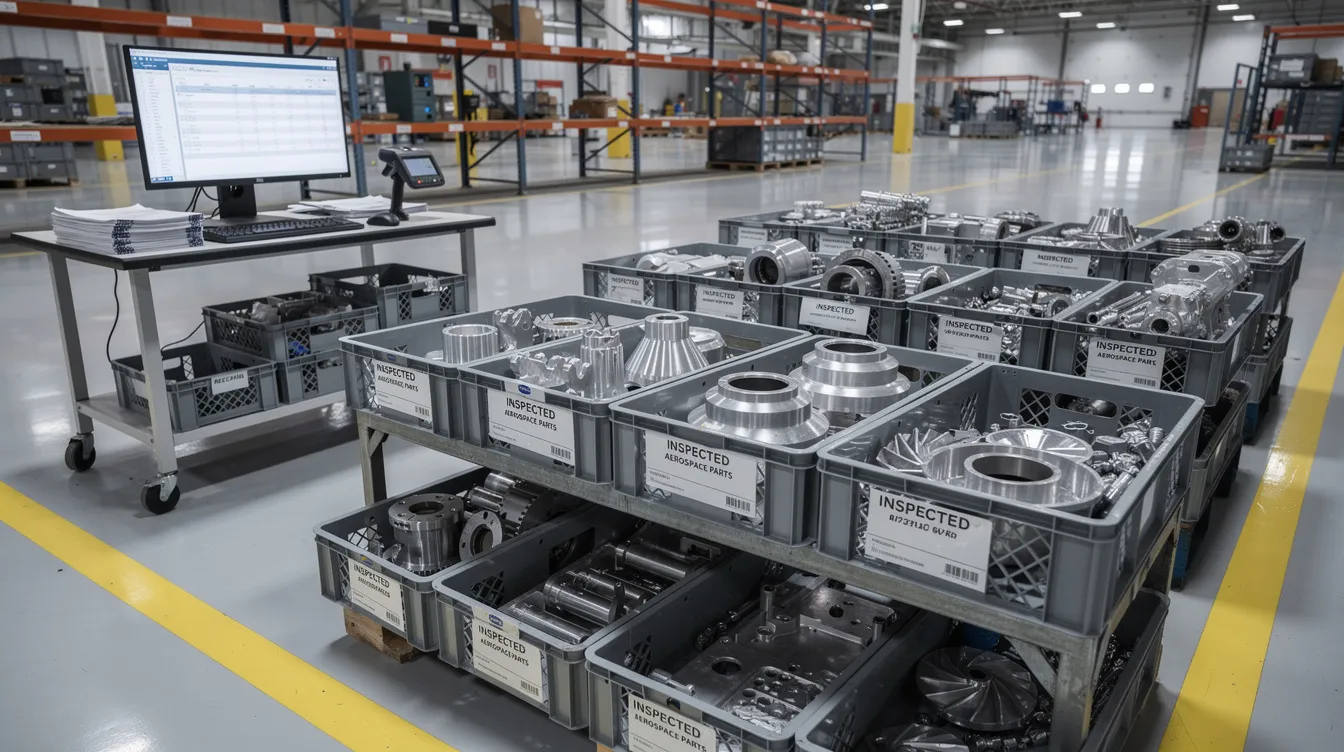
A typical supplier workflow starts with an NCR for composite plies out of tolerance, incorrect material certs, or a machined feature outside drawing limits. MRB then decides whether to rework internally, return to supplier, scrap, or expedite replacement. If the same supplier or commodity repeats the issue, CAPA or supplier corrective action becomes appropriate.
Supplier corrective action requests (SCARs) may be necessary when suppliers repeatedly fail to provide items that meet specifications, indicating a need for more serious intervention. Supplier PPM, on-time delivery, MRB scrap rates, and customer feedback should all feed capa sources.
Connect 981 supports supplier collaboration by sharing controlled NCR, MRB, and CAPA-related information without relying on disconnected spreadsheets or email threads.
8. Industry Examples: Aerospace Manufacturing, MRO, and Medical Devices
The workflow logic is consistent across regulated industries, but the triggers differ.
In aerospace manufacturing, repeated paint thickness nonconformities on control surfaces for a 2025 production program may start as final inspection NCRs. MRB may allow rework for affected surfaces. If the pattern continues, CAPA adjusts paint process parameters, operator training, spray booth controls, and inspection frequency.
In aerospace MRO, multiple repair stations may report the same nonconforming repair outcome on an engine component. Local MRB teams disposition the affected hardware, but the trend should roll into a network-level CAPA. The improvement may include revised repair instructions, validation checks, tooling controls, and technician qualification updates.
In medical devices, nonconforming product, complaint trends, returns, and customer complaints are common CAPA sources under ISO 13485 and FDA expectations. The same distinction applies: NCR identifies problems, MRB-like review controls product, and CAPA addresses the system.
In all cases, the value comes from relationship clarity. NCRs detect. MRB controls. CAPA transforms the system so organizations can deliver high quality products with better compliance readiness.
9. Digitalizing the NCR–MRB–CAPA Chain with Connect 981
Brownfield aerospace environments often spread NCR, MRB, and CAPA work across ERP, MES, legacy QMS, file shares, spreadsheets, paper travelers, and email. That fragmentation creates missed escalations, incomplete thorough documentation, delayed approvals, and weak audit trails.
Connect 981 acts as a unified aerospace operations platform. It ingests NCR data from shopfloor execution, inspection, supplier portals, and existing enterprise systems. It routes MRB decisions through configurable zero-code workflows with the right engineering, quality, manufacturing, and supply chain approvals. It links CAPA records to the originating NCRs, MRB decisions, serial numbers, work orders, and production data.
The practical capabilities are direct:
- Digital work instructions update when CAPA actions change the process.
- Parts traceability and serial number control enforce MRB decisions at point of use.
- Dashboards show NCR trends, MRB scrap versus rework ratios, CAPA aging, supplier performance, and iso audit readiness.
- AI-assisted root cause analysis helps identify problems earlier and suggests likely contributing factors for review.
- Automated alerts help teams address problems before overdue tasks become compliance exposure.
Technology does not replace quality judgment. It gives the quality system a more reliable operating structure. For teams comparing ncr vs mrb vs capa, the goal is not more terminology. The goal is one connected workflow where product and quality problems are visible, decisions are documented, and improvement is measurable.
To see an end-to-end digital NCR → MRB → CAPA workflow in action, request a demo of Connect 981.



Related Blog


Built for Speed, Trusted by Experts
Whether you're managing 1 site or 100, Connect 981 adapts to your environment and scales with your needs—without the complexity of traditional systems.
