What is ISO 27001? A Practical Overview for Aerospace and Industrial Operations
Quick answer: what ISO 27001 is and why it matters in manufacturingISO/IEC 27001 is the leading international standard for establishing, implementing, maintaining, and improving an information security management system. Published jointly by the International Organization for Standardization (ISO) and the International Electrotechnical Commission, the standard defines formal requirements for how organizations manage information security across…

Quick answer: what ISO 27001 is and why it matters in manufacturing
ISO/IEC 27001 is the leading international standard for establishing, implementing, maintaining, and improving an information security management system. Published jointly by the International Organization for Standardization (ISO) and the International Electrotechnical Commission, the standard defines formal requirements for how organizations manage information security across people, processes, and information systems.
In practical terms, ISO 27001 specifies what an organization must do to protect the confidentiality, integrity, and availability of information. It addresses cybersecurity, data protection, and privacy through a structured management system rather than through prescriptive technical controls. The standard is industry-neutral by design, applicable to any organization regardless of size or sector.
For aerospace manufacturing, MRO operations, and industrial digitalization, ISO 27001 has become increasingly relevant. Production and supplier workflows now depend on connected, data-driven systems. ERP, MES, PLM, and supplier collaboration platforms like Connect 981 create interdependencies that require structured governance over information security. The current version, ISO/IEC 27001:2022, reflects this reality by focusing on how organizations manage information security risks, not on specific technologies or tools.
Key points to understand about ISO 27001:
- It is a requirements standard, not an implementation guide
- It applies to information in all forms: digital, paper-based, and verbal
- It provides a comprehensive framework for managing information security risks
- It supports integration with other ISO management system standards such as ISO 9001 and AS9100
What does ISO/IEC 27001 actually define?
ISO 27001 is a requirements standard. It specifies what an organization’s approach to managing information security must achieve. It does not dictate how to technically configure systems, which tools to deploy, or which specific security measures to implement.
The standard covers several core areas:
- Establishing an ISMS: Defining the scope, context, and governance structure for information security management
- Implementing and maintaining the ISMS: Operating the management system through defined policies, procedures, and processes
- Performing risk assessment and risk treatment: Identifying information security risks and determining how to address them
- Defining roles and responsibilities: Assigning accountability for information security across the organization
- Evaluating and improving ISMS performance: Monitoring effectiveness, conducting internal audits, and driving continual improvement
ISO 27001 addresses information regardless of where it resides or what form it takes. For aerospace and industrial operations, this means the standard applies equally to design documentation stored in PLM systems, production data flowing through MES platforms, quality records maintained for AS9100 compliance, and supplier data shared through collaboration portals.
The standard deliberately avoids prescribing specific products, tools, or detailed control techniques. An organization certified to ISO 27001 has demonstrated that its information security management processes meet the standard’s requirements. The actual controls selected depend on the organization’s risk assessment and treatment decisions.
The scope of information security management in ISO 27001
ISO 27001 defines information security through three fundamental properties, collectively known as the CIA triad:
- Confidentiality: Protecting information from unauthorized disclosure
- Integrity: Safeguarding information from improper modification
- Availability: Ensuring information is accessible to authorized users when needed
The scope of an ISMS is defined by the organization itself. In aerospace and industrial contexts, this scope might be expressed as “global aerospace manufacturing and MRO operations,” “production facilities in North America,” or “supplier collaboration platform and associated data flows.” Whatever the boundaries, they must be explicitly documented.
Information assets within scope can include:
- Design documentation and engineering drawings
- Digital work instructions and revision-controlled procedures
- Production data, including serial number tracking and build records
- Quality records, inspection results, and nonconformance logs
- Maintenance and repair histories for MRO operations
- Supplier and customer data shared through collaboration portals
- Configuration files for production systems, ERP integrations, and connected platforms
When defining scope, organizations must consider both internal and external issues. Regulatory requirements such as AS9100, ITAR, FAA, and EASA create external constraints. Contractual commitments with primes or Tier 1 suppliers may specify information security expectations. Dependencies on cloud services or SaaS platforms, including operations software like Connect 981, introduce additional considerations for how information is managed across boundaries.
The scope determines which locations, processes, information systems, and interested parties fall under the ISMS. It defines what is governed, not how to secure it technically.
The concept of an Information Security Management System (ISMS)
An information security management system is the core concept at the heart of ISO 27001. It represents a formal management system that governs how an organization manages information security throughout the lifecycle of its information assets.
An ISMS is not a piece of software or a collection of security tools. It is built on:
- Policies that define the organization’s information security commitments
- Procedures that translate policy into operational practice
- Defined processes for identifying and treating information security risks
- Roles and responsibilities assigned across the organization
- Documented information that provides evidence of conformity and enables consistent operation
The underlying model for an ISMS is the Plan-Do-Check-Act cycle, familiar to organizations already operating under ISO 9001 or AS9100. At a high level:
- Plan: Establish the ISMS scope, conduct risk assessment, define objectives, and plan risk treatment
- Do: Implement and operate the ISMS, including the risk treatment plan and selected security controls
- Check: Monitor and measure ISMS performance, conduct internal audits, and perform management review
- Act: Address nonconformities and drive continual improvement
For manufacturing and MRO operations, the ISMS connects strategic decisions with operational practices. Leadership defines the organization’s information security policy and risk appetite. Those decisions then cascade into how production data is controlled, how documentation is managed across ERP, MES, and platforms like Connect 981, and how supplier information flows are governed.
In practice, the ISMS typically interfaces with other management systems. Quality management under AS9100, environmental management under ISO 14001, and occupational health and safety systems may all coexist. ISO 27001 focuses specifically on the information security aspects of operations, complementing rather than replacing those other systems.
High-level structure of ISO/IEC 27001
ISO 27001 follows the Harmonized Structure used across ISO management system standards. This common architecture makes integration with quality management (ISO 9001, AS9100), environmental management (ISO 14001), and other management systems more straightforward.
The standard is organized into three main components:
Component
Description
Clauses 0–3
Introduction, scope of the standard, normative references, and terms and definitions
Clauses 4–10
Core requirements for the ISMS
Annex A
Reference set of 93 information security controls
Requirements Clauses 4–10
- Clause 4 – Context of the organization: Understanding internal and external issues, determining interested parties and their requirements, defining the scope of the ISMS
- Clause 5 – Leadership: Top management commitment, establishing the organization’s information security policy, assigning roles and responsibilities
- Clause 6 – Planning: Addressing risks and opportunities, conducting information security risk assessment, planning risk treatment, setting information security objectives
- Clause 7 – Support: Resources, competence, awareness, communication, and control of documented information
- Clause 8 – Operation: Implementing and controlling the processes needed to meet information security requirements, executing the risk treatment plan
- Clause 9 – Performance evaluation: Monitoring, measurement, analysis, and evaluation; internal audits; management review
- Clause 10 – Improvement: Addressing nonconformities, implementing corrective actions, driving continuous improvement
Annex A Controls
Annex A of ISO/IEC 27001:2022 provides a catalog of 93 information security controls organized into four themes:
Theme
Focus Areas
Organizational controls
Policies, governance, asset management, access control policy, supplier relationships, incident management, business continuity, compliance
People controls
Human resource security, awareness, training, responsibilities during and after employment
Physical controls
Physical security, environmental security, equipment protection, secure areas
Technological controls
Endpoint security, access control, cryptography, operations security, communications security, secure coding, data masking, data leakage prevention, threat intelligence
Selection and implementation of Annex A controls is not a fixed checklist. Organizations must justify their selection or exclusion of controls based on their information security risk management process. Full conformity with ISO 27001 requires meeting all applicable requirements in Clauses 4–10 and documenting the rationale for control selection.
Relationship between ISO 27001 and ISO 27002
ISO/IEC 27001 and ISO/IEC 27002 serve distinct but complementary purposes.
Standard
Purpose
ISO/IEC 27001
Requirements standard for an ISMS; certifiable
ISO/IEC 27002
Guidance document for information security controls; not certifiable
ISO 27001 specifies what an ISMS must achieve. ISO 27002 provides detailed guidance and examples for how information security controls might be implemented. Each control listed in Annex A of ISO 27001:2022 has a corresponding section in ISO 27002:2022 with objectives, implementation guidance, and other information.
An organization can pursue ISO 27001 certification through an accredited certification body. ISO 27002, by contrast, is a supporting code of practice. It helps organizations understand control objectives and consider implementation options, but it does not define additional requirements beyond what ISO 27001 specifies.
In aerospace and industrial contexts, organizations typically use ISO 27001 to define the overarching management process and governance structure for information security. When more detail is needed on specific control areas, such as how to approach access control for production networks, documentation repositories, or supplier data flows, ISO 27002 serves as a reference.
This article does not describe technical implementation or recommend specific technologies. The distinction between the two standards matters for understanding what certification demonstrates and where to look for additional guidance.
Why ISO 27001 is referenced in manufacturing, aerospace, and industrial systems
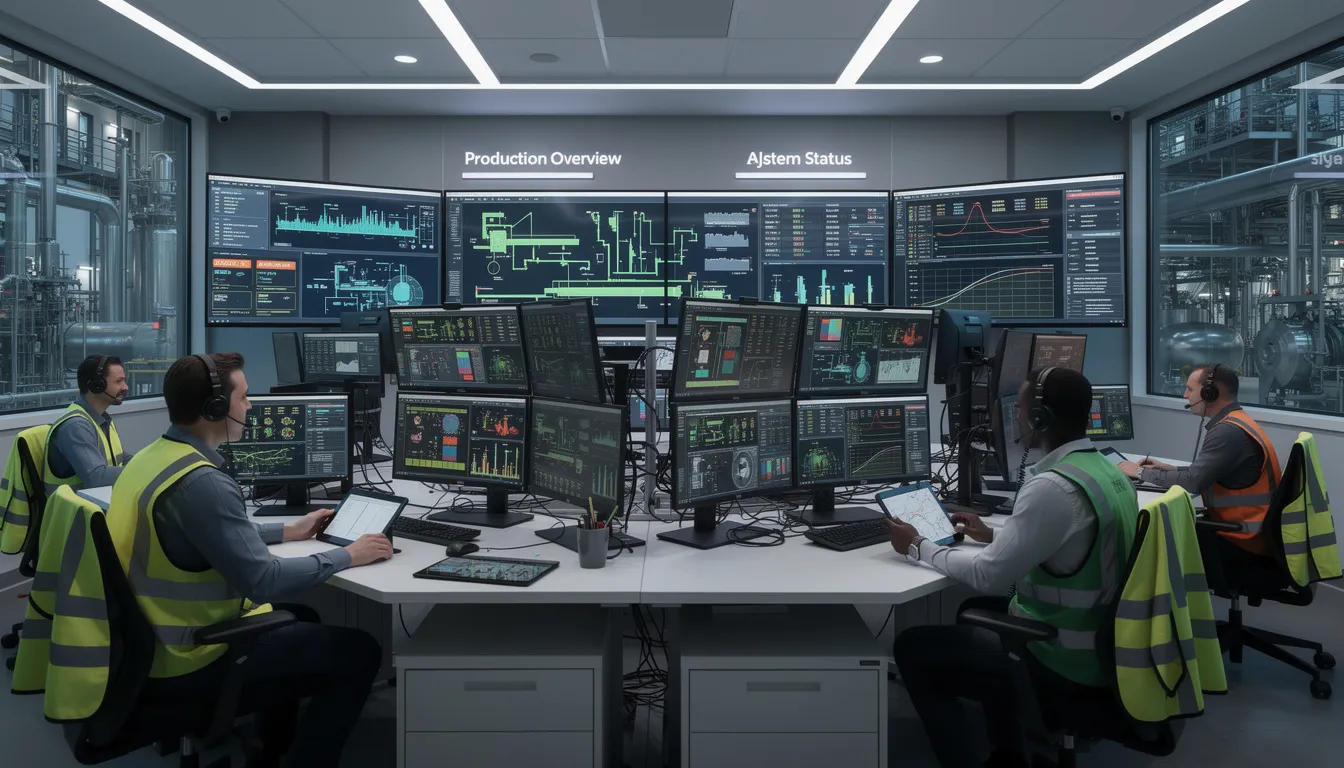
Digital transformation has fundamentally changed how manufacturing and MRO operations work. Production, quality, and supply chain processes have become information-intensive and interconnected. ERP systems, MES platforms, PLM tools, QMS software, and supplier collaboration platforms like Connect 981 now form the operational backbone of aerospace production.
This shift creates new information security risks. Production data, traceability records, work instructions, and supplier communications all flow through connected systems. Security incidents or data breaches can disrupt operations, compromise sensitive data, and expose organizations to regulatory consequences.
ISO 27001 is referenced in manufacturing and industrial contexts because it provides a recognized structure for managing these information security risks. Organizations use the standard to demonstrate governance across:
- Smart factory platforms and industrial IoT data flows
- Integrated ERP, MES, PLM, QMS, and supplier collaboration systems
- Documentation and traceability records required for AS9100, FAA, EASA, and ITAR-regulated operations
- Multi-site and multi-supplier production networks
Primes, Tier 1 suppliers, and regulators increasingly expect evidence of structured information security governance. ISO 27001 provides a security framework that is widely understood and internationally recognized. It offers a common language for discussing information security practices with business partners and customers.
ISO 27001 complements rather than replaces sector-specific standards. AS9100 addresses quality management for aerospace. ITAR and export control regulations address controlled technical data. FAA and EASA requirements focus on aviation safety. ISO 27001 specifically addresses how information security is managed across all of these operational contexts.
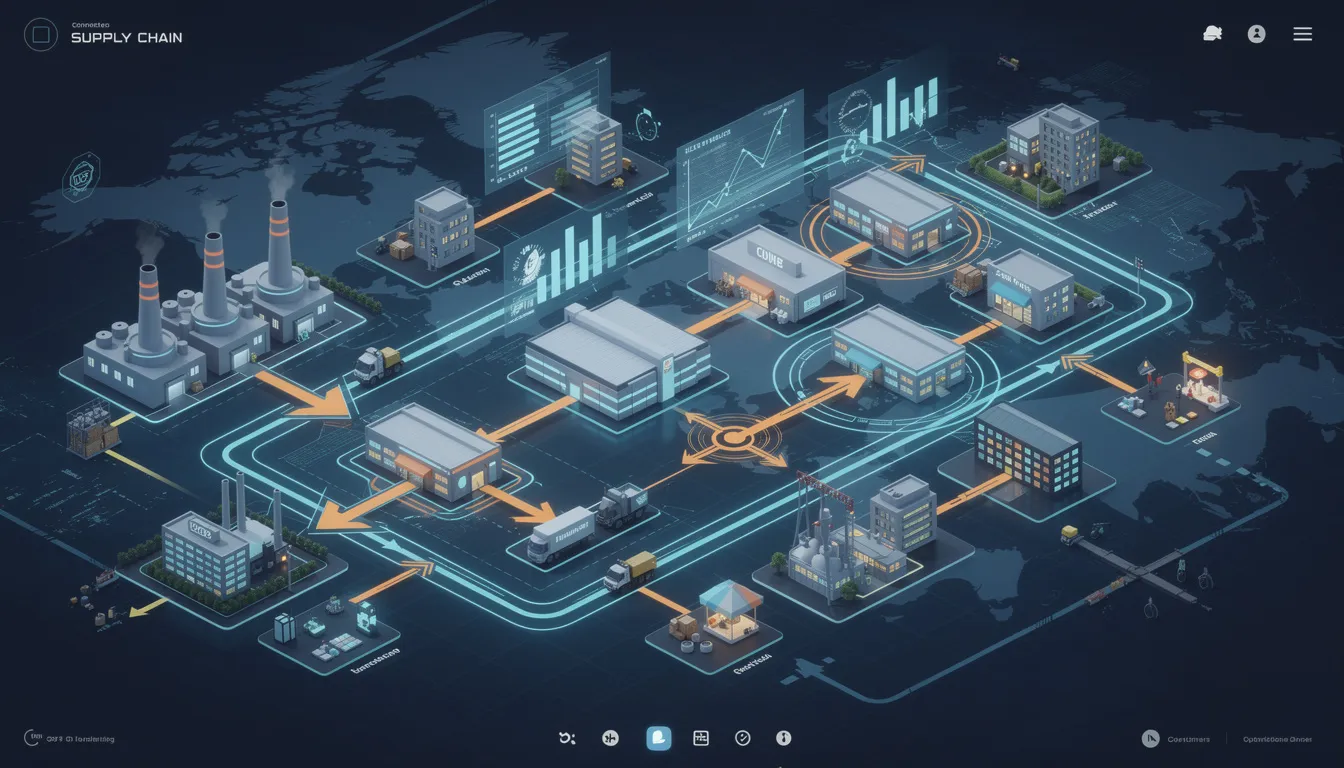
For organizations coordinating complex multi-site and multi-supplier production, an ISO 27001-aligned ISMS can provide a unifying structure. Even when not all entities in a supply chain are certified, the standard’s concepts support consistent governance over information security expectations across partners.
ISO 27001 in practice: certification, versions, and use in governance
Certification process
ISO 27001 certification is a formal verification by an accredited certification body that an organization’s ISMS conforms to the standard’s requirements. The certification audit typically occurs in two stages:
- Stage 1: Documentation review to verify the ISMS is designed to meet requirements
- Stage 2: On-site assessment to verify the ISMS is implemented and operating effectively
Certification is valid for three years, subject to periodic surveillance audits. Recertification requires a full audit at the end of each cycle.
Version history
Version
Key characteristics
ISO/IEC 27001:2005
Original international standard, based on BS 7799
ISO/IEC 27001:2013
Major revision with explicit leadership and planning clauses
ISO/IEC 27001:2022
Current version with Annex A reorganized to 93 controls across four themes, aligned with ISO/IEC 27002:2022
Organizations certified under the 2013 version have transition timelines to update their ISMS to the 2022 edition. The structural changes primarily affect Annex A control organization rather than the core management system requirements.
Approaches to using ISO 27001
Organizations approach ISO 27001 in different ways depending on their objectives:
- Internal reference framework: Using ISO 27001 concepts to structure information security governance without pursuing formal certification
- Formal certification: Seeking certification to provide external assurance to customers, regulators, and business partners
- Integrated management systems: Combining ISO 27001 with ISO 9001, AS9100, ISO 14001, or other standards under a shared governance structure
ISO 27001 is generally not mandated by law, though specific jurisdictions or sectors may reference it. More commonly, it becomes a contractual requirement in supply chains where primes or customers expect evidence of information security governance.
Relevance to digital operations platforms
For organizations operating digital platforms like Connect 981, alignment with ISO 27001 concepts supports customers’ own ISMS requirements. When production data, work instructions, quality records, and supplier collaboration flow through a shared platform, clear governance over that information becomes essential.
A platform designed with information security governance in mind enables aerospace and industrial organizations to:
- Maintain visibility over information assets across factories and suppliers
- Support traceability and documentation control requirements
- Provide evidence of information security practices for audits and customer reviews
- Integrate with broader ISMS processes already in place
ISO 27001 provides the reference framework. Operational platforms provide the capability to execute on information security requirements in practice. For organizations managing sensitive data, personally identifiable information, or ITAR-controlled technical data, this alignment matters.
Information security controls continue to evolve as threats change and industrial systems become more connected. ISO 27001 offers a stable governance structure that adapts through its risk-based approach, supporting security posture improvements without requiring wholesale changes to the management system itself.
For aerospace and industrial operations seeking to formalize information security governance, ISO 27001 provides a recognized starting point. Whether used as an internal framework or pursued through formal certification, the standard offers structure for managing information security in environments where production, quality, and supply chain data are increasingly interconnected.
To explore how Connect 981 supports governance over production data, documentation, and supplier workflows in aerospace and industrial operations, request a demo.



Related Blog

Related FAQ
Built for Speed, Trusted by Experts
Whether you're managing 1 site or 100, Connect 981 adapts to your environment and scales with your needs—without the complexity of traditional systems.
