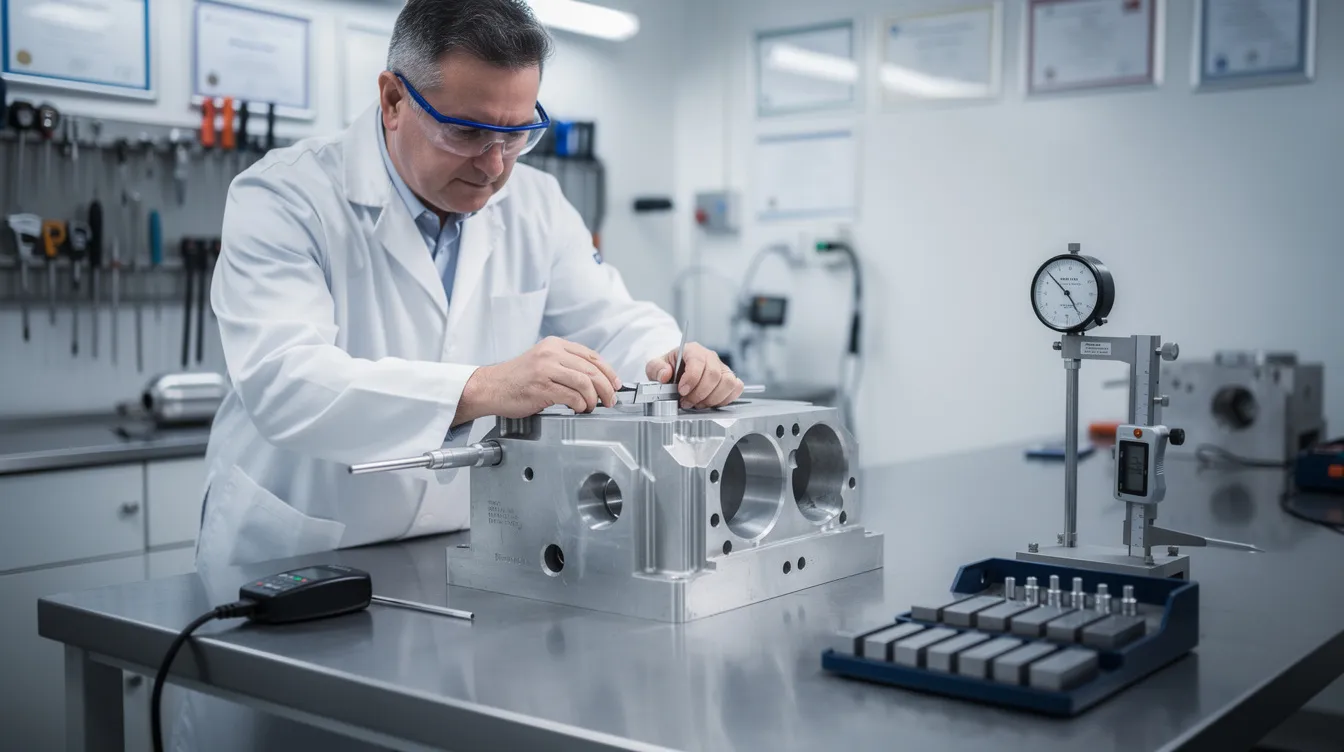
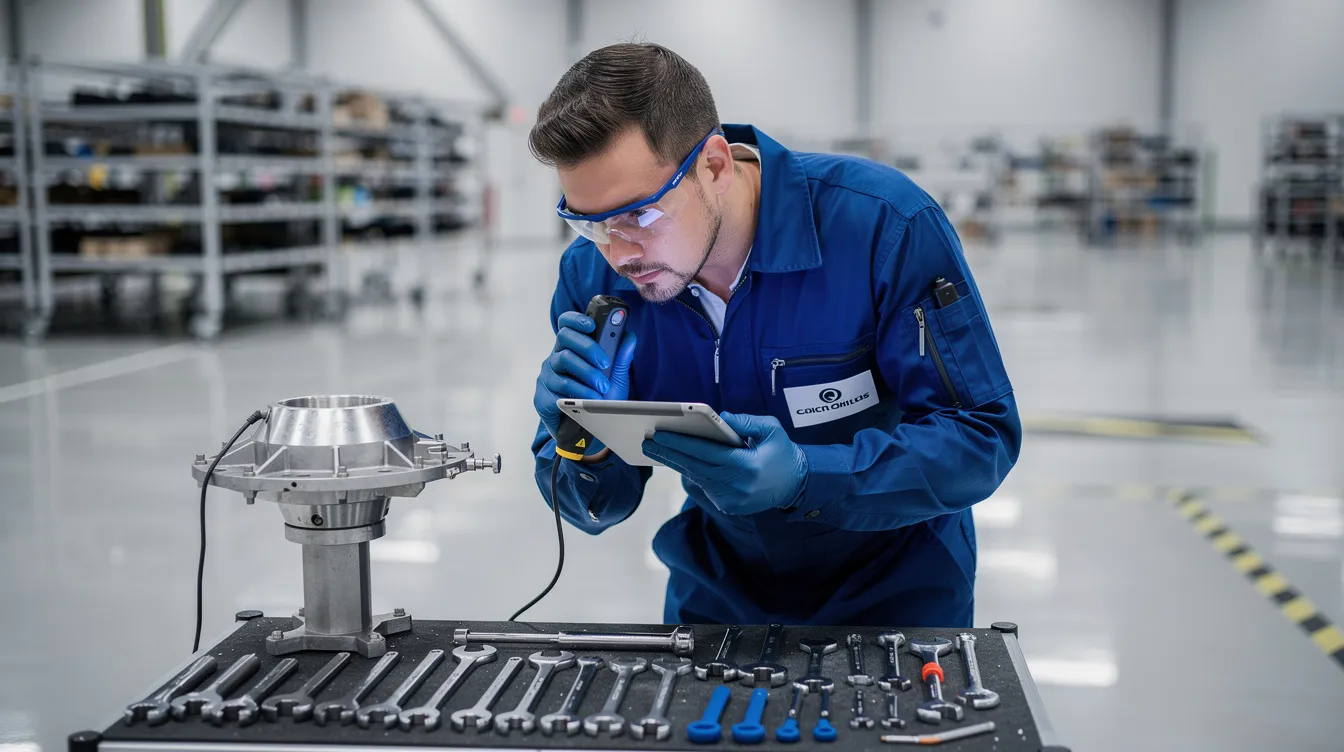
Usually, the first article should be produced using the approved production-intent process, including the equipment, tooling, planning, inspection methods, and controls that will be used for normal production. If the part is made on prototype equipment that will not be used for production, the first article may not demonstrate that the actual production process can produce conforming parts. In AS9102 and similar regulated manufacturing contexts, that is a serious limitation.
The practical answer is: use production machinery unless the contract, customer, engineering authority, or approved quality plan allows a different approach. Prototype equipment may be acceptable only when it is documented, technically justified, and representative enough for the intended FAI purpose. Even then, a later move to production machinery often requires a partial or full FAI, depending on the degree of change and customer requirements.
A first article is not only a dimensional check of one part. It is evidence that the planned production process can produce the required characteristics. Equipment affects that evidence.
Machine stiffness, fixturing, software versions, CNC programs, environmental conditions, operator setup methods, inspection access, cutting dynamics, cure profiles, torque systems, and automated test behavior can all differ between prototype and production equipment. A conforming prototype part does not necessarily prove that the production cell can repeatedly make conforming parts.
Prototype equipment is sometimes used when the production asset is not yet available, the program is in an engineering development phase, or the customer has authorized a limited build. That does not automatically make the resulting part acceptable as the formal first article for production release.
If prototype equipment is used, the organization should be clear about:
The burden is on the manufacturer to avoid implying that a prototype build validates a production process it did not actually use.
The most common problem is treating a successful prototype build as if it retires production risk. It may not. Once the part moves to production machinery, process parameters, tooling, inspection sequence, setup controls, and operator work instructions may change.
Another failure mode is weak traceability. If the FAI package, router, MES record, inspection report, or QMS record does not clearly show what equipment and process were used, the organization may struggle to defend the result during customer review or audit. This does not mean the part is automatically nonconforming, but it does mean the evidence is weaker.
A third issue is configuration drift. Prototype builds often use temporary work instructions, manually approved deviations, non-released tooling, engineering-only programs, or inspection workarounds. Those conditions need to be visible and controlled. They should not be hidden inside a production FAI record.
In many plants, the evidence is split across MES, ERP, PLM, QMS, maintenance, calibration, and inspection systems. The ERP work order may show the build, the MES may show the router and machine, PLM may hold the released design, and QMS may manage the FAI or deviation. If those systems do not agree, the FAI decision becomes harder to support.
This is why replacement of every system is rarely the right near-term answer in regulated brownfield environments. The more realistic requirement is controlled linkage: approved routing, released configuration, equipment identity, calibration status, CNC or process program revision, inspection results, deviations, and customer approvals must be traceable enough to explain what was actually built.
If the production process will use different machinery, tooling, programs, or controls from the prototype build, assume the FAI scope must be revisited. The exact requirement depends on the customer contract, AS9102 applicability, internal procedures, risk assessment, and the significance of the process change. Do not rely on a prototype first article as production evidence unless that position has been explicitly reviewed and documented.


Whether you're managing 1 site or 100, Connect 981 adapts to your environment and scales with your needs—without the complexity of traditional systems.



Whether you're managing 1 site or 100, C-981 adapts to your environment and scales with your needs—without the complexity of traditional systems.