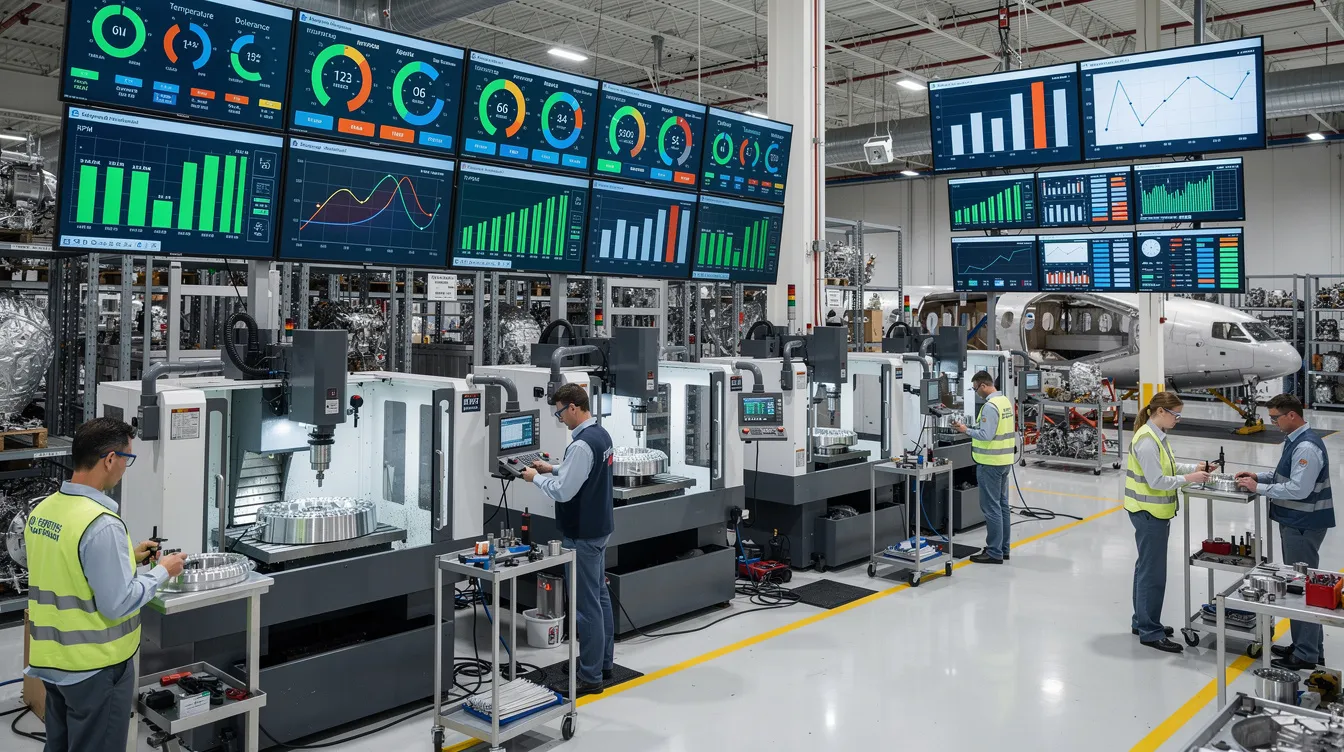
Safety stock is usually a response to uncertainty: unreliable lead times, poor schedule adherence, quality variation, and weak visibility of work-in-progress. MES can help by reducing some of this uncertainty and exposing it earlier, which makes lead times more predictable and safety stock calculations less conservative. In practice, MES does not eliminate the need for safety stock, but it can justify lowering buffers where performance, data, and integration are proven and validated. Any reduction should be based on measured improvements, not assumptions about what the software “should” do. Plants in highly regulated environments typically move in small steps to avoid jeopardizing service levels or compliance.
One of the most direct ways MES helps is by tightening the link between the schedule and real-time execution, so planned lead times are closer to actuals. Detailed dispatching, constraint-aware sequencing, and visibility into resource status can reduce unplanned waiting, changeover delays, and priority conflicts. As schedule adherence improves and variability narrows, planning teams can recalculate safety stocks with shorter and more stable lead times. However, this only holds if the MES is properly configured, operators actually use the dispatching logic, and maintenance, materials, and quality processes are aligned. In brownfield environments with multiple legacy schedulers and informal workarounds, these gains are often partial and uneven across lines or value streams.
MES typically exposes real-time WIP location, status, and quantity, which reduces the need to carry extra finished goods just to compensate for poor visibility. When planners and customer service can see what is in-process, waiting for test, or in rework, they can rely less on conservative safety stock and more on the actual pipeline. This is only effective if the MES is consistently updated at the point of work and integrated with ERP so on-hand, WIP, and planned orders form a coherent picture. Barcode or RFID scanning gaps, offline work centers, and parallel shadow spreadsheets will quickly erode trust in the data. In regulated plants, traceability requirements often mean that manual or semi-automated data capture persists, which can limit how much you can tighten stocks.
High or unpredictable scrap and rework rates are a major driver of inflated safety stock, especially in complex assemblies or special processes. MES can help by enforcing electronic work instructions, capturing process parameters, and linking nonconformances to specific operations and materials. Over time, this can improve first-pass yield and make residual defects more predictable, allowing planners to reduce the extra inventory held to buffer quality risk. The benefit depends heavily on the maturity of your quality processes, the integration between MES, QMS, and LIMS (if applicable), and whether corrective actions actually change behavior on the floor. In regulated industries, additional inspections or mandatory holds can offset some of the gains and keep effective lead times longer.
MES can support smaller, more frequent runs by improving setup coordination, material availability, and line readiness, which in turn allows you to respond faster to demand changes and hold less finished goods. Electronic checklists, staged kitting, and better alignment between maintenance windows and production plans can reduce changeover variability. However, if your equipment is inherently slow to change over or requalification is required after certain changes, MES alone will not make small batch scheduling economical. Safety stock targets should reflect these physical and regulatory constraints, not just software capabilities. In many brownfield plants, a hybrid model emerges where some families move toward leaner buffers while others remain tied to large, validated campaign runs.
MES only influences safety stock meaningfully when it is tightly integrated with ERP and planning tools so that improved execution data flows into planning parameters. Without this, planners continue to use legacy lead times, yields, and lot sizes, and safety stocks remain inflated regardless of execution improvements. Robust interfaces, consistent master data, and validated data flows are all prerequisites, and they are often non-trivial to achieve in mixed-vendor landscapes. You also need governance so that when measured lead time performance improves, the planning team systematically updates safety stock and related settings. In aerospace-grade and similar environments, any change to planning logic or parameters may require documented risk assessment and change control, which slows down how fast you can capture MES-derived benefits.
MES is an enabler, not a guarantee, of lower safety stock. If upstream suppliers are unreliable, qualification cycles are long, or regulatory release steps add fixed time, you will still need buffers even with excellent shop-floor execution. Aggressively cutting safety stock based solely on an MES rollout is risky; reductions should follow demonstrated improvements in schedule adherence, yield, and response time, confirmed over sufficient history. There is also a tradeoff between inventory and other costs: tighter stocks may expose issues faster but can increase expediting, overtime, and customer risk if performance backslides. In long-lifecycle, validated environments, many sites choose targeted reductions on stable, high-volume products while retaining traditional buffers on critical, low-volume, or highly regulated items.
In existing regulated facilities with legacy MES/ERP/QMS stacks, the most practical approach is to pick a specific value stream and baseline current variability and service levels. Use MES to improve data capture, stabilize the schedule, and tighten execution, then re-estimate safety stocks for that scope based on observed performance, not theoretical gains. Expect integration and behavioral issues to surface: operators bypassing terminals, mismatched master data, and parallel planning spreadsheets. Treat any safety stock reduction as a controlled change with clear monitoring metrics and rollback criteria. Over time, this disciplined, incremental approach can reduce safety stocks where justified, without compromising traceability, qualification status, or customer commitments.


Whether you're managing 1 site or 100, Connect 981 adapts to your environment and scales with your needs—without the complexity of traditional systems.



Whether you're managing 1 site or 100, C-981 adapts to your environment and scales with your needs—without the complexity of traditional systems.