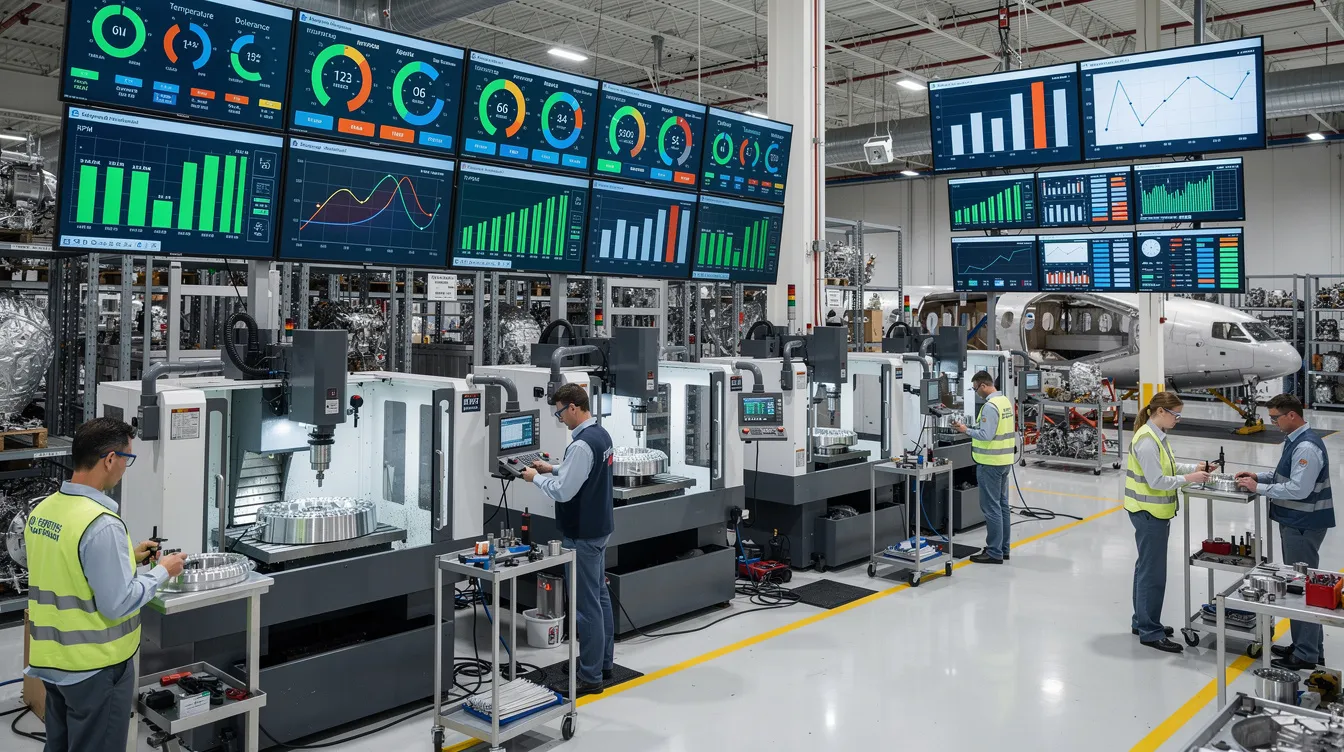
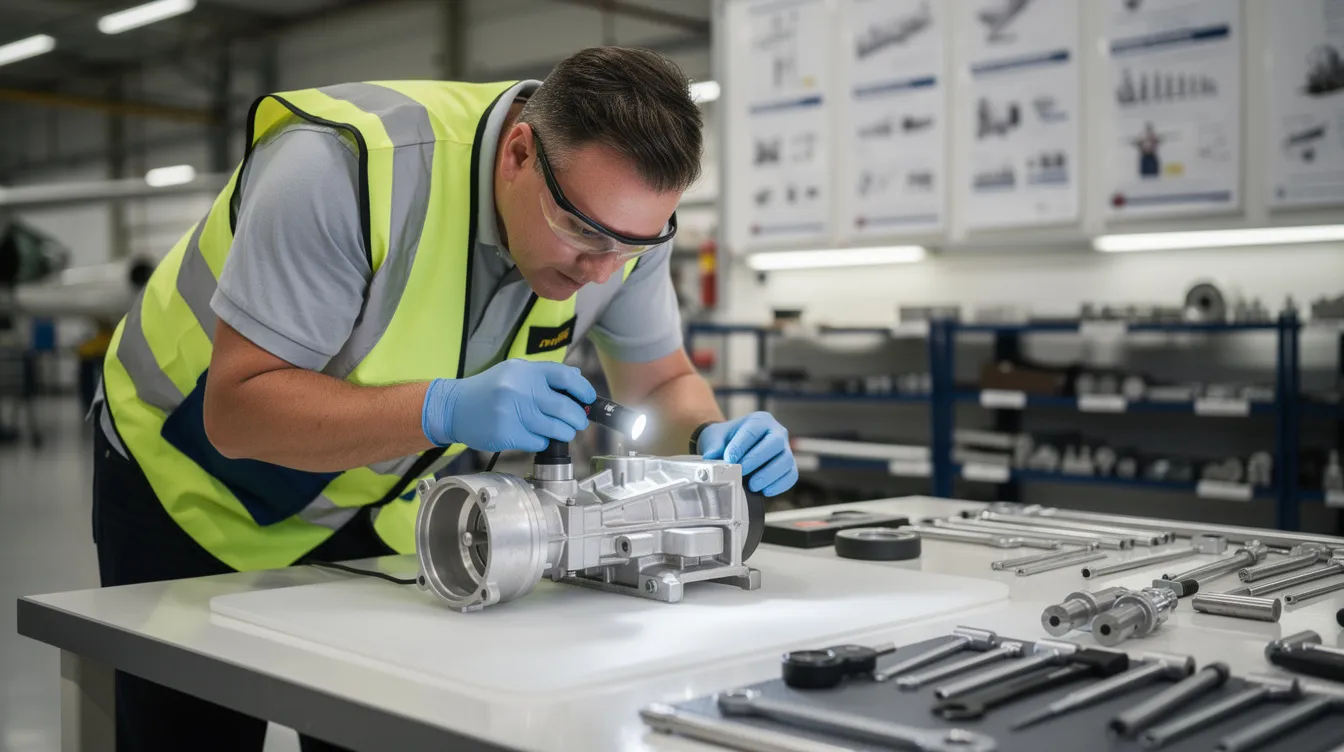
There is no single universal rule for how far back traceability must go for safety-critical components. The required depth is driven by safety risk, product domain, customer and regulatory requirements, and what your validated systems can reliably maintain over the full lifecycle.
Typical depth of traceability for safety-critical parts
For most aerospace, defense, and other safety-critical environments, you should expect traceability to cover at least:
- Finished assembly level: Link each serial number to its full build history, including work orders, routers/travelers, applicable revisions of drawings, specifications, and work instructions.
- Key subassemblies and safety-critical components: For items whose failure could affect safety, maintain serial/lot-level genealogy, including how they were assembled, tested, repaired, or replaced.
- Special processes: Full trace to process parameters and certifications for items like heat treat, welding, nondestructive testing, coatings, and bonding, often to individual batch or lot.
- Raw materials that affect structural integrity or safety: Trace from the finished part back to material heat/lot, material certification, and any re-test results, especially for structural, pressure-retaining, or flight-critical parts.
- Inspection and test results: Link all critical characteristics and tests (dimensional, NDT, functional test) to the specific part/serial, inspector, equipment, and date.
In practice, this means you should be able to start with a fielded serial number and navigate back through the entire manufacturing and inspection chain, at least for any characteristic or component that has safety significance.
Factors that drive how far back you must go
The exact boundary of traceability depends on:
- Regulatory context: Aviation, medical devices, nuclear, and defense programs typically require deeper, longer retention of genealogy than commercial industrial products.
- Safety assessment and criticality: Parts classified as flight safety–critical, life-limited, or safety class often require material heat-level trace and process-parameter trace, where less critical hardware may only need lot-level trace.
- Customer and contract requirements: Prime contractors and OEMs often specify minimum traceability level and retention period in contracts or quality clauses.
- Standards and internal QMS: Standards such as AS9100, AS9102, and domain-specific rules drive expectations for as-built records, FAI documentation, and configuration control.
- System capability and validation: You can only credibly claim traceability to the depth your MES/ERP/PLM/QMS and shop-floor processes actually capture, manage, and retain in a validated, audited way.
Brownfield reality: how deep can you practically go?
In brownfield plants with mixed legacy systems, the theoretical depth of traceability is often deeper than what is actually achievable without destabilizing operations. Common constraints include:
- Fragmented data: Genealogy may be split across MES, ERP, PLM, standalone test systems, paper travelers, and external supplier records.
- Limited serialization: Older lines may only track lots or batches, not individual serial numbers, making part-level genealogy impossible without redesign and revalidation.
- Retrofitting sensors and data collection: Capturing process parameters (e.g., torque, temperature profiles) for existing equipment can be intrusive and may require downtime and requalification.
- Long asset and product lifecycles: Systems must retain and retrieve records for long periods without breaking trace chains, even as software platforms are upgraded or replaced.
Because full replacement of legacy systems carries high validation cost, integration complexity, and downtime risk, most organizations extend traceability in stages, focusing first on safety-critical processes and components, and building interfaces between existing systems rather than replacing all of them at once.
Practical baseline for safety-critical traceability
As a practical baseline for safety-critical components, many regulated organizations target the ability to:
- Identify every safety-critical component and subassembly installed on a given serial-numbered end item.
- Trace those components back to their manufacturing work orders, inspection/test records, and, where relevant, special process lots and raw material heats.
- Trace forward from a suspect material heat, process lot, or supplier lot to all affected in-process and fielded end items.
- Provide auditable, time-stamped records showing who did what, when, under which revision of specifications and work instructions.
Where legacy constraints prevent this level of trace, you should clearly document the limits, mitigate with additional inspection or controls where needed, and plan incremental improvements rather than assuming full digital genealogy exists.
Time horizon and record retention
“How far back” also has a time dimension. Safety-critical products frequently require traceability over:
- Product life + defined retention period: Often the full operational life of the platform plus a specified number of years (for example, 7 to 30+ years depending on sector and contract).
- Support and spares: For MRO and sustainment, traceability must span initial manufacture, maintenance events, repairs, and part replacements.
- System migrations: When upgrading MES/ERP/PLM/QMS, you must preserve continuity of traceability across platforms, typically via controlled data migration or frozen legacy archives under change control.
Long-term retention planning is as important as initial depth, since broken links due to system changes, data loss, or uncontrolled format changes can effectively erase historical traceability.
Coexistence with suppliers and external records
For many safety-critical components, complete traceability requires supplier and sub-tier data. In a multi-tier supply chain you should:
- Define in contracts which traceability elements suppliers must maintain and for how long.
- Ensure certificates, test reports, and special process records from suppliers are reliably linked into your internal genealogy (not just stored as disconnected PDFs).
- Recognize that your traceability depth is limited by the weakest link in the external data chain and plan risk controls accordingly.
How to decide your minimum acceptable trace depth
For a given product family or program, defining “how far back” should typically involve:
- Safety and risk analysis: Use your system safety, FMEA, or similar analyses to identify which components, characteristics, and processes need part- or heat-level traceability.
- Requirements review: Interpret customer, regulatory, and standard requirements into explicit traceability rules (e.g., serial vs lot-level, required linkages, retention years).
- System capability assessment: Map your existing MES/ERP/PLM/QMS and paper processes to see what depth and duration of genealogy they actually support today.
- Gap and impact assessment: Identify what would be required (technical, process, validation effort, downtime) to close gaps for safety-critical areas first.
- Governance and change control: Implement any changes via formal change control, with attention to data integrity, validation, and auditability.
The result should be a documented, justified traceability model that is realistic for your brownfield environment, meets applicable requirements, and clearly states its limits.