There is no single globally accepted standard that defines exactly “5 levels of automation” for factory operations. Different vendors, standards bodies, and consulting frameworks use different cuts. In regulated, brownfield environments, it is more realistic to think of five practical bands of automation maturity rather than a rigid, certifiable scale.
A pragmatic 5-level view
The following 5-level model is commonly used to describe how work is split between people, equipment, and software in operations:
-
Level 1: Manual operations with digital visibility
- Execution is essentially manual: operators follow paper or static digital work instructions, set up machines, record data by hand or basic terminals.
- Automation is limited to local machine functions (simple PLC logic, interlocks, basic CNC programs).
- IT/OT systems (ERP, QMS, LIMS, historians) may exist but do not drive real-time decision-making on the shop floor.
- Constraints: Data is often incomplete or delayed. Traceability and genealogy may exist, but reconstruction is effortful. Error proofing relies heavily on training and supervision.
-
Level 2: Operator-assisted automation
- Work is still primarily manual, but systems support operators more directly: electronic batch records, digital work instructions, guided data entry, simple checks.
- Equipment has more sophistication: recipes, parameter limits, basic alarms, and local sequences are automated.
- MES or similar systems may orchestrate orders and collect data, but operators still make most decisions and resolve most exceptions.
- Constraints: Benefits depend heavily on interface design, data integrity, and how well the system reflects actual shop-floor realities. Poorly designed workflows simply digitize paperwork without reducing error or cycle time.
-
Level 3: Semi-automated workflows
- Key process steps are automated, with human operators supervising, performing changeovers, and handling edge cases.
- MES / SCADA / equipment controllers coordinate sequences: recipe downloads, setpoint management, interlocks, and in-process checks.
- Human-machine interfaces guide the operator through exceptions (deviations, holds, rework paths) with structured decision trees.
- Constraints: Integration quality becomes critical. Incomplete or brittle integration across MES, QMS, ERP, and equipment often causes workarounds that erode the expected gains. Every change now touches multiple validated systems.
-
Level 4: Highly automated production
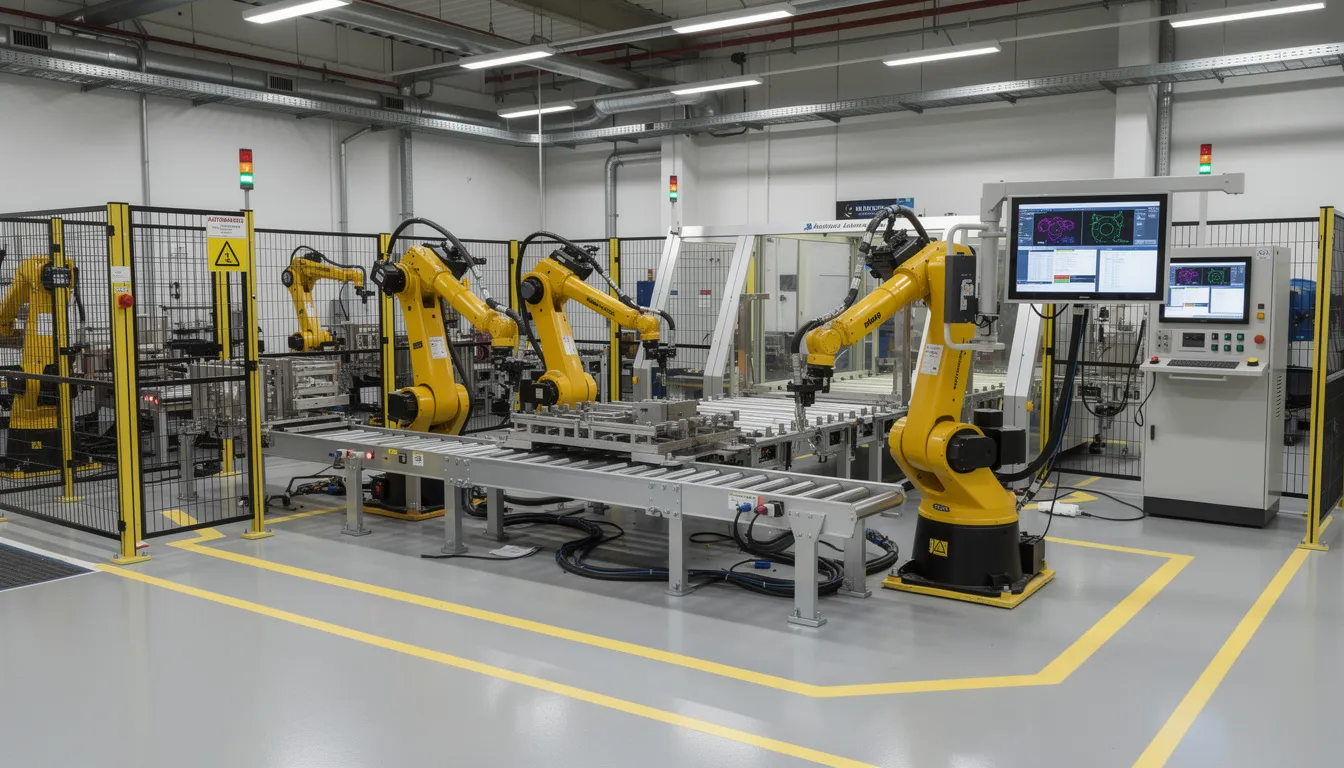
- Most steady-state operations run automatically: lines start, run, and stop under control of PLC/DCS systems, orchestrated by MES or equivalent.
- Scheduling, sequencing, material handling, and in-line quality checks are largely system-driven, with operators focused on oversight, maintenance, and non-routine interventions.
- Data flows across systems: order data from ERP, execution and genealogy in MES, quality records into QMS, process data into historians.
- Constraints: Downtime risk and change-control burden increase sharply. Modifying recipes, logic, or interfaces typically requires formal impact assessment, validation, and coordination across multiple stakeholders.
-
Level 5: Autonomous & adaptive operations (narrow scope)
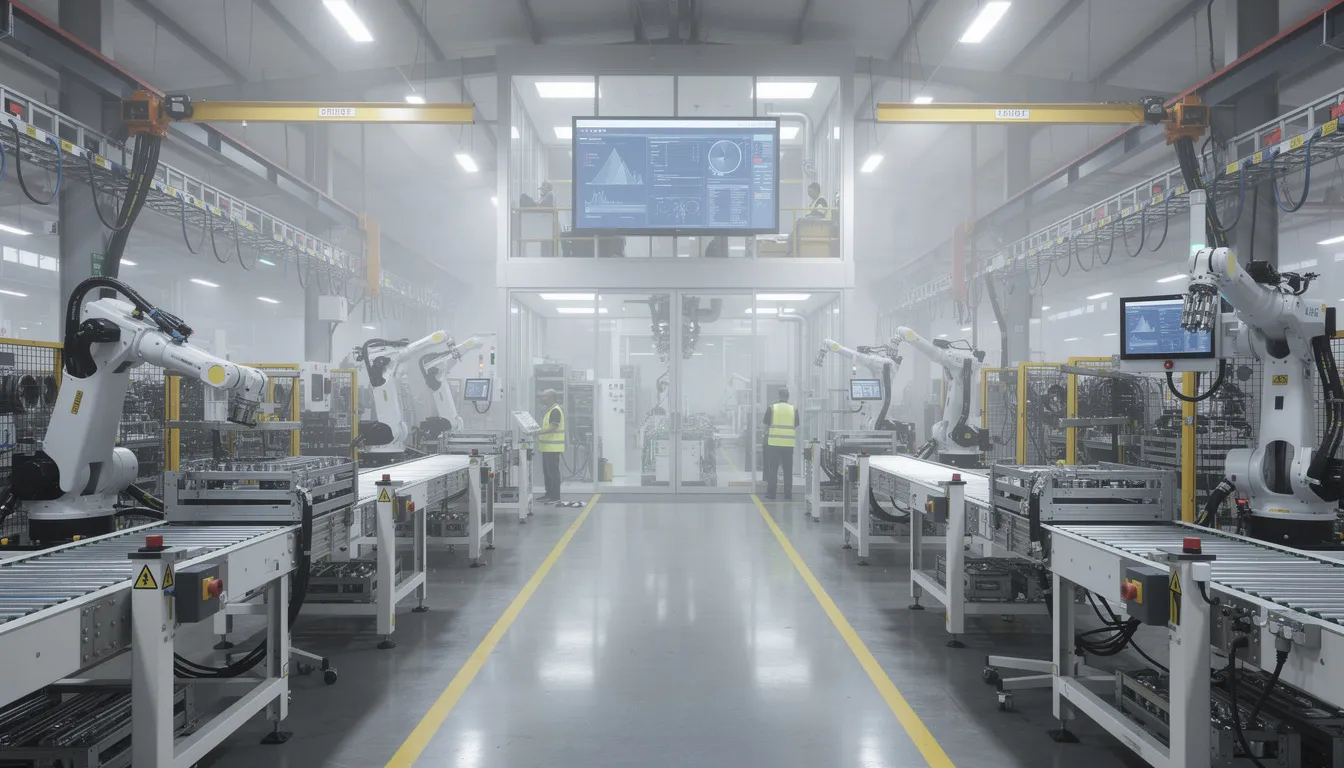
- Systems not only execute but also adapt within predefined constraints: closed-loop control, model-predictive control, automated setpoint optimization, and limited forms of AI-driven decision support.
- Examples include automatic parameter tuning based on real-time quality measurements, dynamic rescheduling in response to disturbances, or condition-based maintenance triggering work orders.
- Human roles focus on oversight, exception management, model maintenance, and continuous improvement of the automation logic.
- Constraints: In regulated environments, the degree of autonomy is tightly bounded by validation, documented logic, explainability, and auditability. Fully autonomous “black box” decision-making is rarely acceptable for critical decisions impacting product quality or safety.
How this maps to real factories
Most plants are not at a single level across the board. It is common to find:
- Highly manual operations (Level 1–2) in assembly, setup, and inspection.
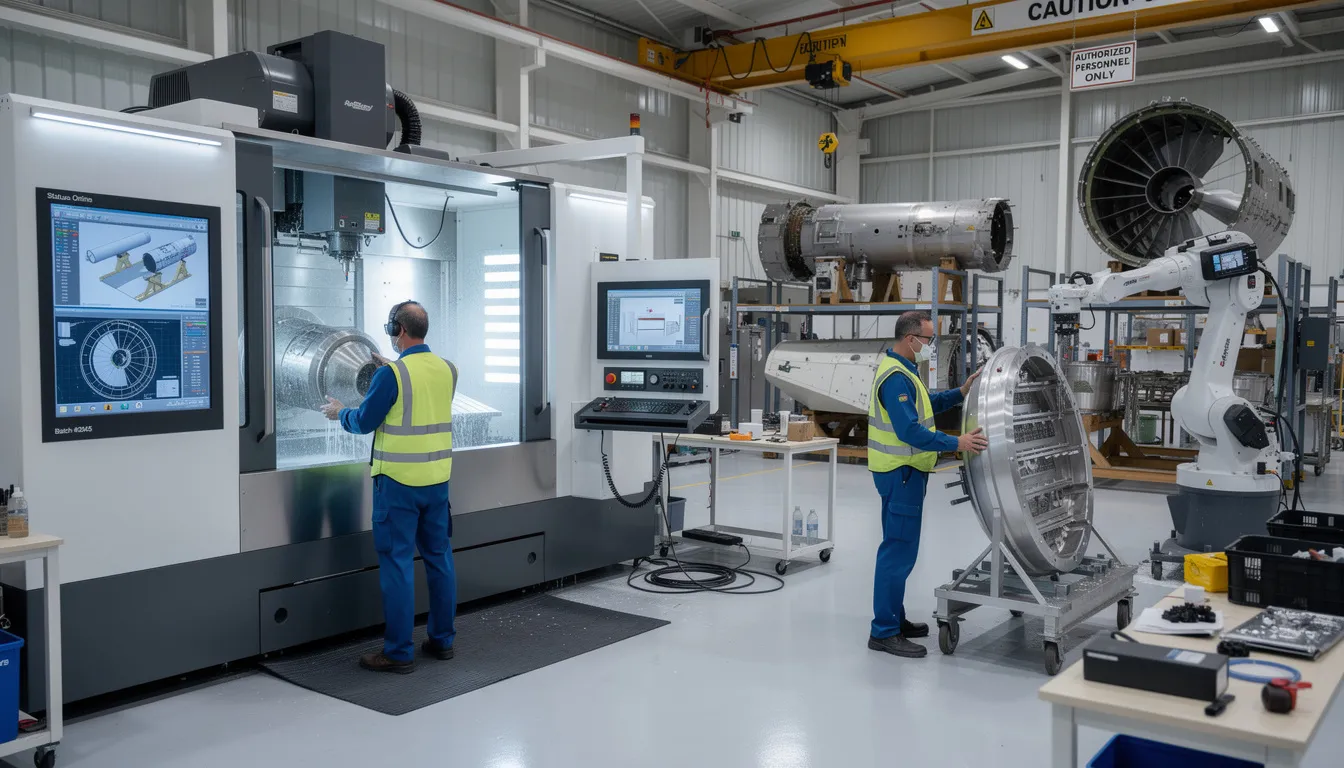
- Semi-automated or highly automated steps (Level 3–4) in machining, filling, testing, or packaging.
- Targeted “Level 5” capabilities for specific control loops or scheduling functions, but not plant-wide autonomy.
Brownfield realities mean that older equipment, legacy MES/ERP/QMS stacks, and integration constraints often lock specific areas at lower levels for long periods. Replacing everything to “jump” multiple levels at once is rarely feasible because of:
- Qualification and validation burden for new systems and interfaces.
- Downtime risk for critical assets that cannot be offline for extended modernization projects.
- Integration complexity with existing data flows, reporting, and regulatory evidence chains.
- Traceability and change-control requirements that make aggressive redesign risky and slow.
Common misinterpretations and limits
- No automatic maturity score: These levels are descriptive, not a certification or compliance metric. Being at “Level 4” does not imply any particular audit outcome.
- Level ≠ value: Higher automation is not uniformly better. In high-mix, low-volume or heavily customized work, pushing for Level 4 or 5 everywhere can add rigidity and validation overhead without commensurate benefit.
- Safety and quality constraints: In regulated industries, many critical decisions must remain human-controlled or at least human-reviewed, regardless of technical feasibility to automate.
- Data dependency: Progression beyond Level 2–3 is limited by data quality, master data discipline, and consistent use of structured digital records across MES, QMS, ERP, and equipment.
How to use this model in practice
Instead of treating the 5 levels as a checklist, they are more useful as a way to:
- Classify current state by line, cell, or process step.
- Identify constraints that prevent safe movement up one level (e.g., lack of integration, validation gaps, poor data lineage).
- Prioritize targeted investments where automation has clear impact on quality, throughput, or compliance evidence.
- Align stakeholders (operations, engineering, quality, IT) on realistic expectations of what each increase in automation entails in terms of testing, change control, and operational risk.
Most sustainable roadmaps focus on moving specific value streams one level at a time, with clear validation and change-control plans, rather than aiming for plant-wide “Level 5” autonomy.