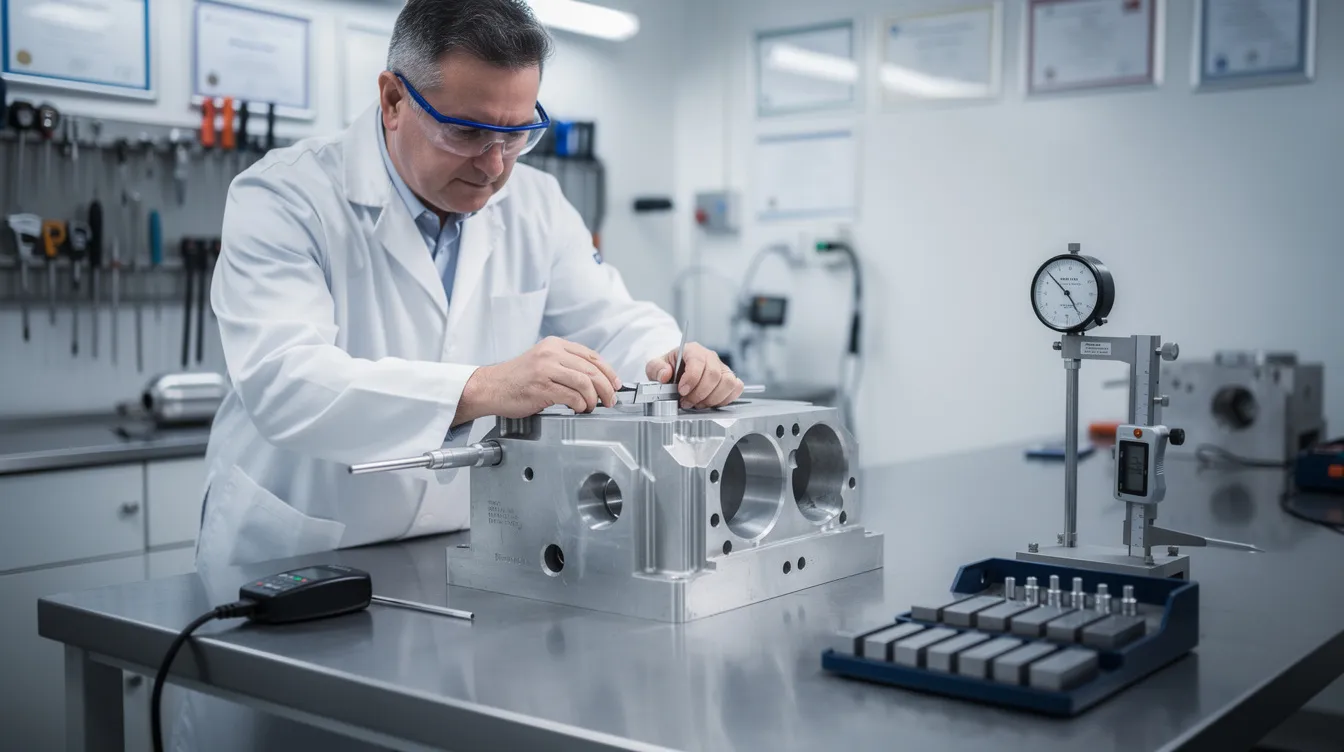
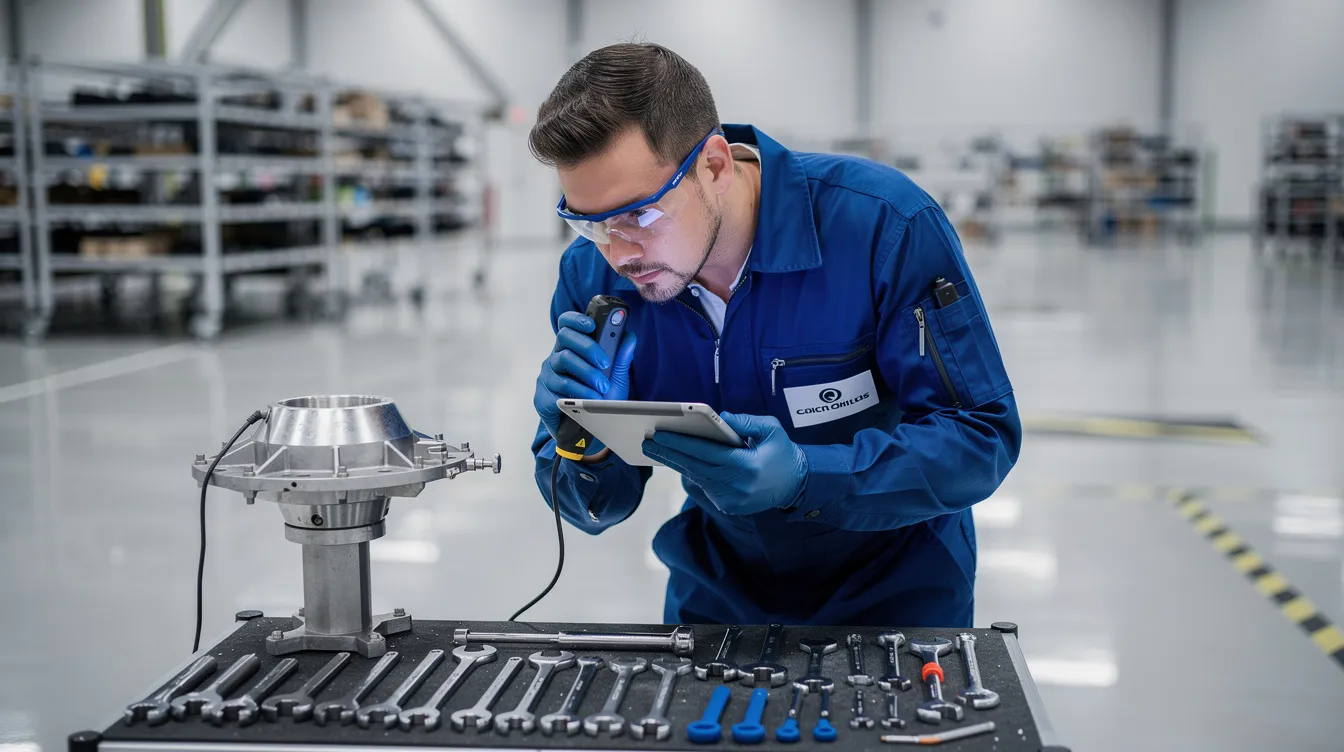
FAI, or First Article Inspection, is a formal verification that a part or assembly produced under defined production conditions conforms to the applicable drawing, specifications, and purchase order requirements. In-process inspection is an ongoing production control activity used to check selected characteristics while work is being performed. They are related quality activities, but they serve different purposes and one does not replace the other.
In aerospace and other regulated manufacturing environments, FAI is commonly used to establish documented evidence that the manufacturing process can produce conforming product. Under AS9102-driven practices, this usually involves ballooned characteristics, measured results, material and special process evidence, and review of configuration requirements.
FAI is typically triggered by events such as a new part number, a design change, a process change, a supplier change, tooling changes, a long production lapse, or other changes defined by customer, procedure, or contract. The exact trigger rules are site-specific and customer-specific.
In-process inspection happens during normal manufacturing or assembly operations. It may verify dimensions, torque values, visual conditions, process parameters, documentation steps, or other control points before the work moves forward.
The goal is not to re-prove the entire product baseline every time. The goal is to detect drift, prevent downstream defects, confirm critical steps, and provide evidence that the controlled process was followed. The frequency may be 100 percent inspection, sampling, first-piece checks, operator self-verification, quality hold points, or automated data capture, depending on risk, process capability, customer requirements, and the control plan.
In brownfield environments, FAI records may live in an AS9102 tool, supplier portal, quality system, PLM attachment, or customer-mandated platform. In-process inspection may be executed in MES, paper travelers, digital work instructions, SPC software, test systems, or inspection equipment. ERP may hold routing, purchase order, and lot context, while QMS may manage nonconformances and corrective actions.
This separation creates a common failure mode: the FAI proves one configuration, but production inspection plans, MES routings, or work instructions are not updated after engineering or process changes. That is a change control and data governance problem, not just an inspection problem.
A mature system does not make FAI and in-process inspection the same thing. It connects them so that design characteristics, production controls, inspection evidence, nonconformance records, and change history remain traceable. In many regulated plants, that means integration and governance across existing MES, ERP, PLM, and QMS systems rather than a full replacement of the stack, which is often unrealistic because of validation cost, qualification burden, downtime risk, and long equipment lifecycles.


Whether you're managing 1 site or 100, Connect 981 adapts to your environment and scales with your needs—without the complexity of traditional systems.



Whether you're managing 1 site or 100, C-981 adapts to your environment and scales with your needs—without the complexity of traditional systems.