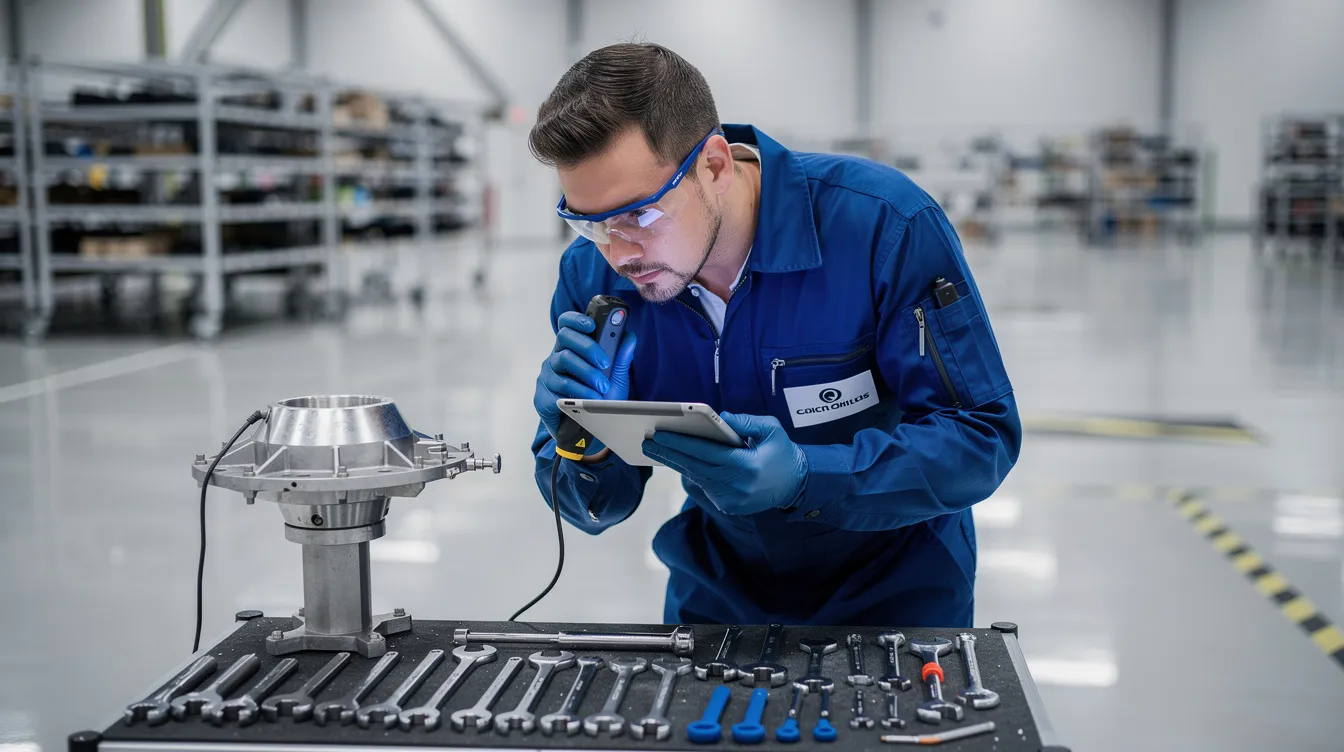
Digital standard work usually affects operator productivity in two opposing ways: it can reduce friction (less time searching, clearer steps, fewer re-runs) but can also introduce overhead (screen taps, log-ins, system delays). In mature implementations, you often see productivity gains from less rework, fewer interruptions, and faster onboarding, rather than from operators simply moving their hands faster. In early or poorly designed deployments, cycle times can go up because operators are waiting on screens, navigating cluttered UIs, or compensating for unreliable devices. The net effect is highly dependent on how well the digital instructions match real work, local constraints, and the existing system landscape. You should expect a learning curve and mixed results by line and product family before things stabilize.
Most measurable productivity gains come from reduced variability rather than individual speed. Clear, unambiguous digital instructions can cut the time lost to finding the right revision of a work instruction, asking supervisors for clarification, or redoing work due to missed steps. Embedded checks (e.g., required confirmations, inline spec limits, pictures) can reduce defects that would otherwise show up in test, inspection, or customer returns, effectively increasing productive output for the same hours. Context-aware guidance, such as auto-filtered instructions by model, serial number, or configuration, can reduce cognitive load in high-mix environments. However, these benefits depend on accurate master data, maintained routings, and reliable integration with MES, ERP, and QMS.
Digital standard work can easily reduce productivity if the design assumes more stability and cleanliness than your actual environment provides. Slow log-in processes, poorly placed terminals, or tablets that frequently lose Wi-Fi add non-value-added time to every job. Overly rigid workflows can force experienced operators through unnecessary clicks and confirmations, turning the system into a bottleneck instead of support. If work instructions are not kept in sync with actual practice, operators will either ignore the system or spend time reconciling differences, which undermines both productivity and trust. In low-volume, highly variable work, the time spent authoring, validating, and maintaining granular digital instructions may outweigh the direct productivity gains, making the primary benefit traceability rather than speed.
In regulated environments, the impact on productivity is tightly coupled to how digital standard work is integrated and controlled. If every minor adjustment to a step requires full validation, formal review, and cross-system updates (MES, QMS, training records), change latency increases and local improvements slow down. Weak integration to MES/ERP often yields duplicate data entry, manual reconciliations, and inconsistent routings, all of which consume operator and supervisor time. System performance and availability matter: even short but frequent delays in screen loading, e-signature prompts, or data writes will be felt immediately on the line. These realities mean that you cannot assume productivity improvements are automatic; they depend on disciplined configuration management, realistic validation approaches, and infrastructure that can keep up with the takt time.
Most plants deploy digital standard work into brownfield environments, where legacy work instructions, paper travelers, and older MES or DCS systems already exist. Attempting a full, big-bang replacement of all existing instructions and paperwork often fails because of validation burden, downtime risk, and the difficulty of touching every legacy machine and process at once. In practice, you see a long coexistence period: some steps on-screen, some still on paper, some embedded in machine HMIs, and some in tribal knowledge. During this phase, operator productivity may temporarily decrease due to context switching between systems and uncertainty about the “real” source of truth. Careful scoping (e.g., starting with specific product families, stations, or high-defect operations) helps limit disruption and lets you refine the model before wider rollout.
To see positive productivity impact, digital standard work must be designed around operator workflows, not IT or compliance convenience alone. Screens should match the sequence and physical layout of the work, minimize scrolling and clicks, and be usable with gloves or PPE where relevant. Visuals (photos, diagrams, short clips) can reduce reading time and misinterpretation, but only if they load quickly and are clearly linked to the current step. Feedback from experienced operators is critical; they will quickly point out unnecessary steps, ambiguous phrasing, and timing issues that slow them down. Without that feedback loop, the system can become an administrative layer that meets documentation needs while undermining line performance.
Digital standard work can accelerate problem solving and continuous improvement, which has an indirect but real impact on productivity over time. Structured, time-stamped execution data can help teams see where operators consistently pause, backtrack, or deviate, guiding targeted improvements to both process and instructions. However, this depends on disciplined use of the system, accurate timestamps, and careful interpretation; not every pause is a problem, and not every deviation is waste. If the data is used primarily for policing rather than learning, operators will find ways to work around the system, reducing both data quality and productivity. A realistic approach is to treat early deployments as experiments, measure effects on cycle time, first-pass yield, and rework, and then adjust content and workflows iteratively rather than assuming immediate, linear gains.


Whether you're managing 1 site or 100, Connect 981 adapts to your environment and scales with your needs—without the complexity of traditional systems.



Whether you're managing 1 site or 100, C-981 adapts to your environment and scales with your needs—without the complexity of traditional systems.