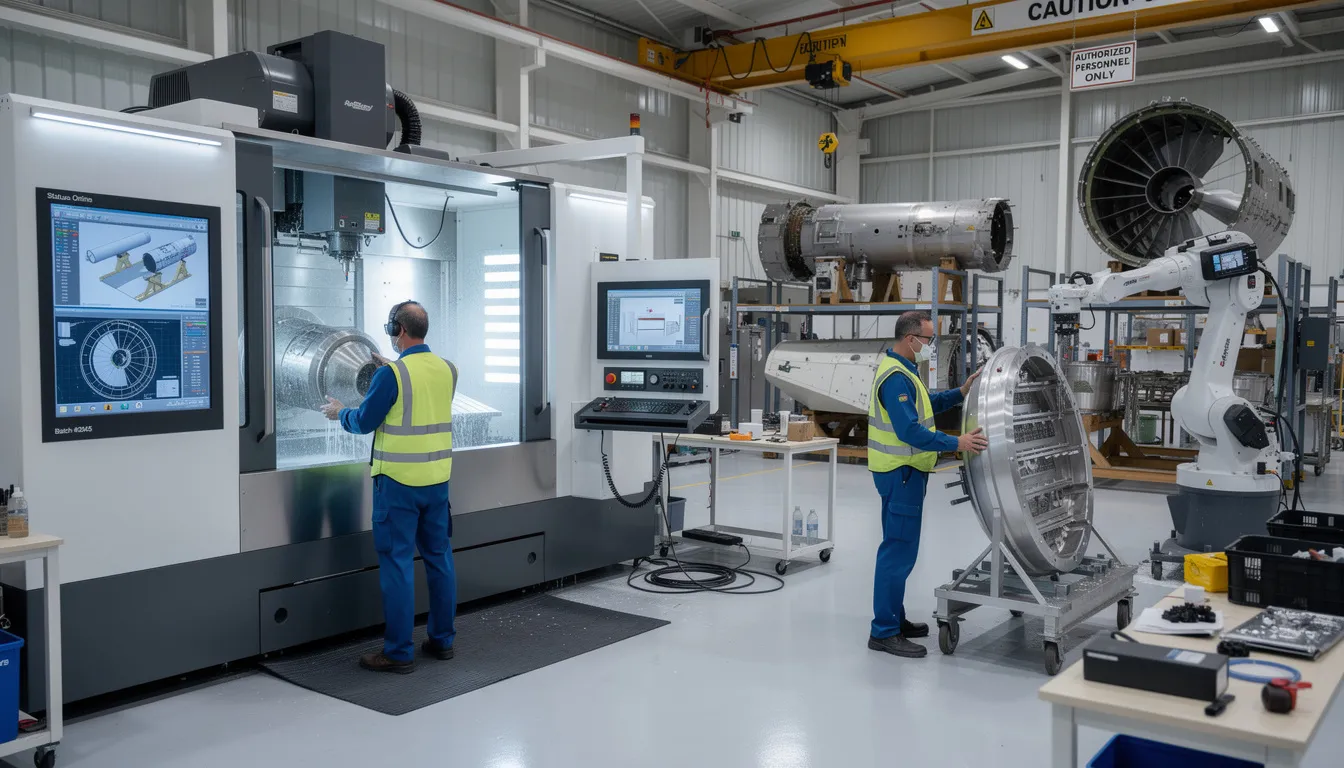
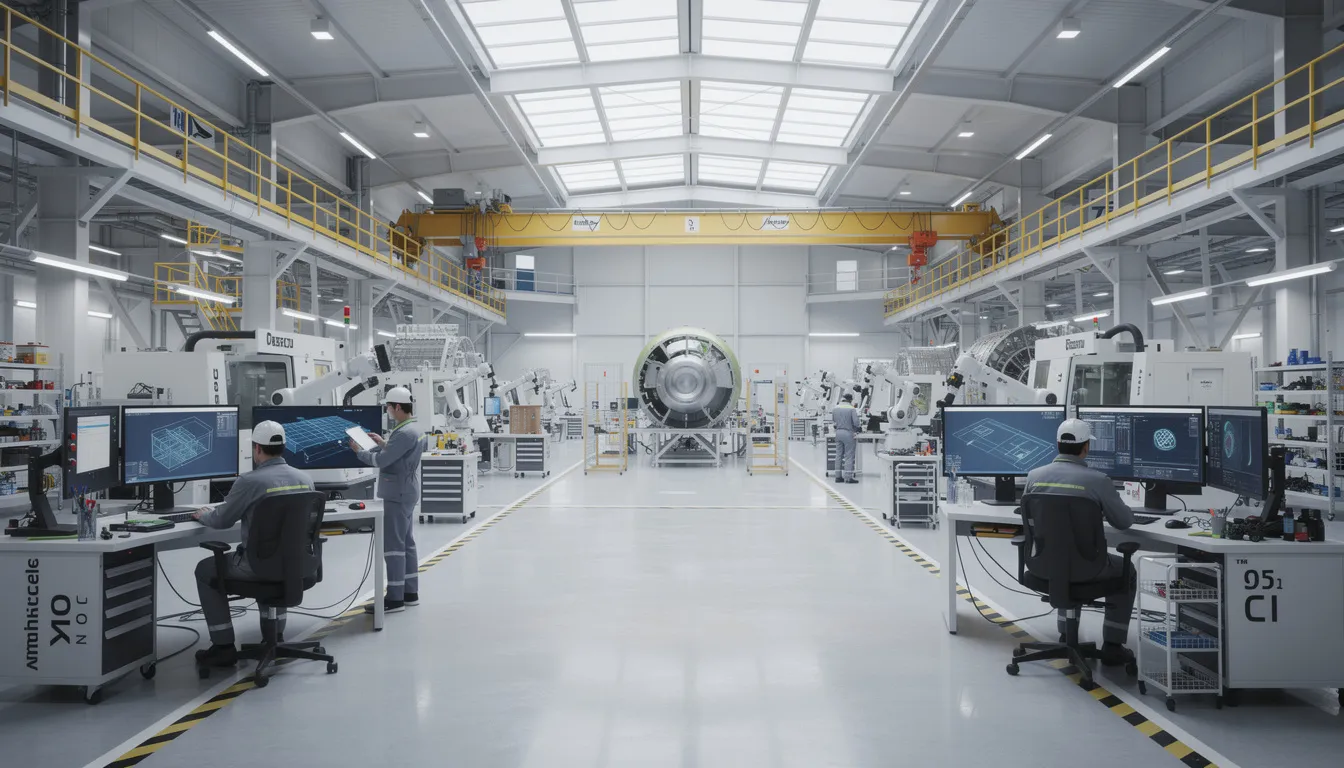
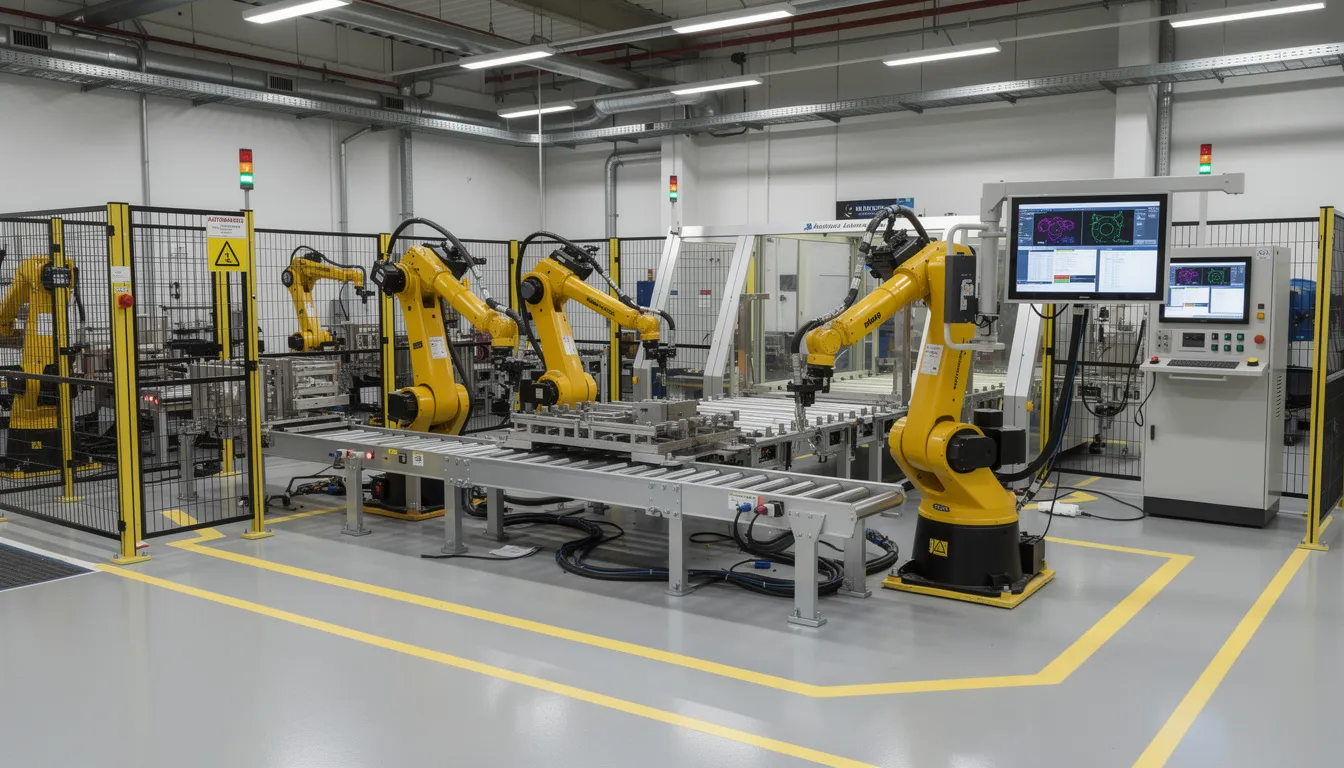
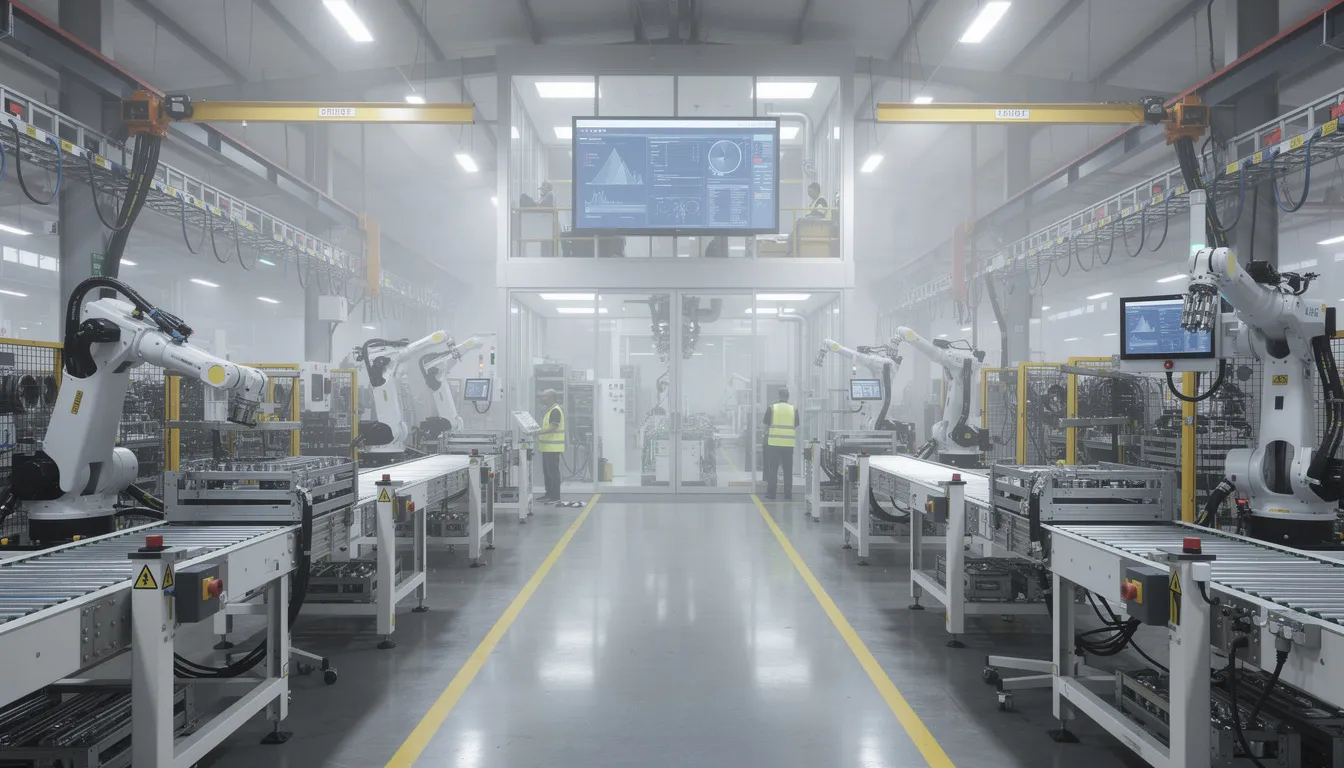
The most relevant OEE metrics for aerospace production cells are constrained-resource availability, unplanned downtime, setup and changeover loss, performance against a realistic planned cycle, first-pass yield, rework and scrap, NCR or MRB-driven interruption, and queue or hold time. A single composite OEE percentage is often not enough in aerospace because high-mix, low-volume work, inspections, engineering holds, customer requirements, and long routings can make “ideal cycle time” and “quality loss” difficult to define consistently.
Classic OEE works best when the product mix is stable, cycle times are well understood, and quality status is available quickly. Aerospace production cells often violate those assumptions. Operations may be low-volume, long-cycle, inspection-heavy, revision-controlled, and dependent on qualified personnel or customer-specific process requirements.
The common failure mode is using one OEE number as a management scorecard without agreeing on the denominator. If planned downtime, engineering holds, waiting for inspection, material shortages, or rework loops are classified differently by site or program, cross-cell comparisons become weak and sometimes counterproductive.
Useful OEE in aerospace depends on disciplined definitions and reliable event capture. The MES, ERP, PLM, QMS, and maintenance systems may each hold part of the truth: routings and work orders in ERP or MES, revisions and configurations in PLM, NCR and MRB status in QMS, and asset downtime in maintenance or EAM systems.
In brownfield environments, full system replacement is usually unrealistic because of qualification burden, validation cost, downtime risk, integration complexity, traceability obligations, and long equipment lifecycles. A more practical approach is often to standardize loss codes, integrate the minimum required events, validate calculations, and maintain change control over KPI definitions.
For aerospace cells, use OEE as one lens on capacity and loss, not as the only operational truth. The most credible dashboards show the OEE components separately, preserve traceability to work order and operation, and distinguish equipment downtime from quality holds, planning issues, material shortages, and inspection constraints.


Whether you're managing 1 site or 100, Connect 981 adapts to your environment and scales with your needs—without the complexity of traditional systems.



Whether you're managing 1 site or 100, C-981 adapts to your environment and scales with your needs—without the complexity of traditional systems.