nonconforming product
A nonconforming product is any material, part, or finished item that does not meet specified requirements, limits, or standards.


A nonconforming product is any material, component, assembly, or finished item that does not meet specified requirements. The nonconformance can relate to drawings, specifications, work instructions, regulatory requirements, customer contracts, or internal quality standards.
What it includes
Nonconforming product commonly refers to items that have one or more of the following:
- Dimensional, functional, or performance characteristics outside defined limits
- Incorrect or missing features, parts, or configuration
- Defects in workmanship or surface condition
- Incorrect material, heat treatment, revision level, or software version
- Incomplete or incorrect identification, labeling, or traceability data
- Deviations from validated process parameters that could affect quality
The term applies to in-process work, finished goods, returned products, and sometimes tooling or test fixtures if they fail to meet their own defined requirements.
What it does not include
Nonconforming product does not generally include:
- Products that fully meet requirements but are slow to produce or costly
- Process excursions that have been proven not to affect the product and are covered by approved deviations or waivers
- Scrap that has already been formally identified, recorded, and removed from the production flow
Operational meaning in manufacturing environments
In industrial and regulated environments, nonconforming product is usually subject to defined controls, which may include:
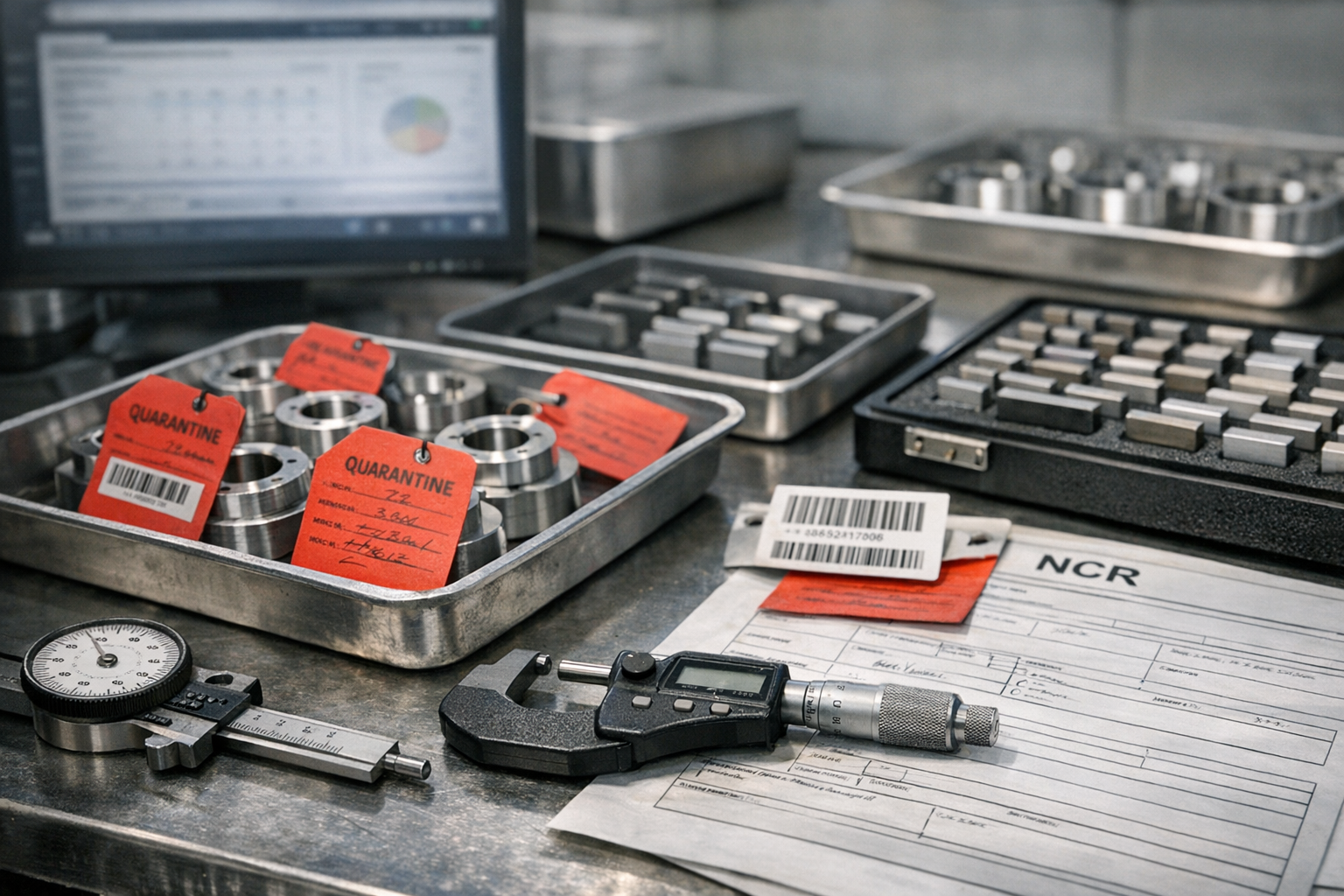
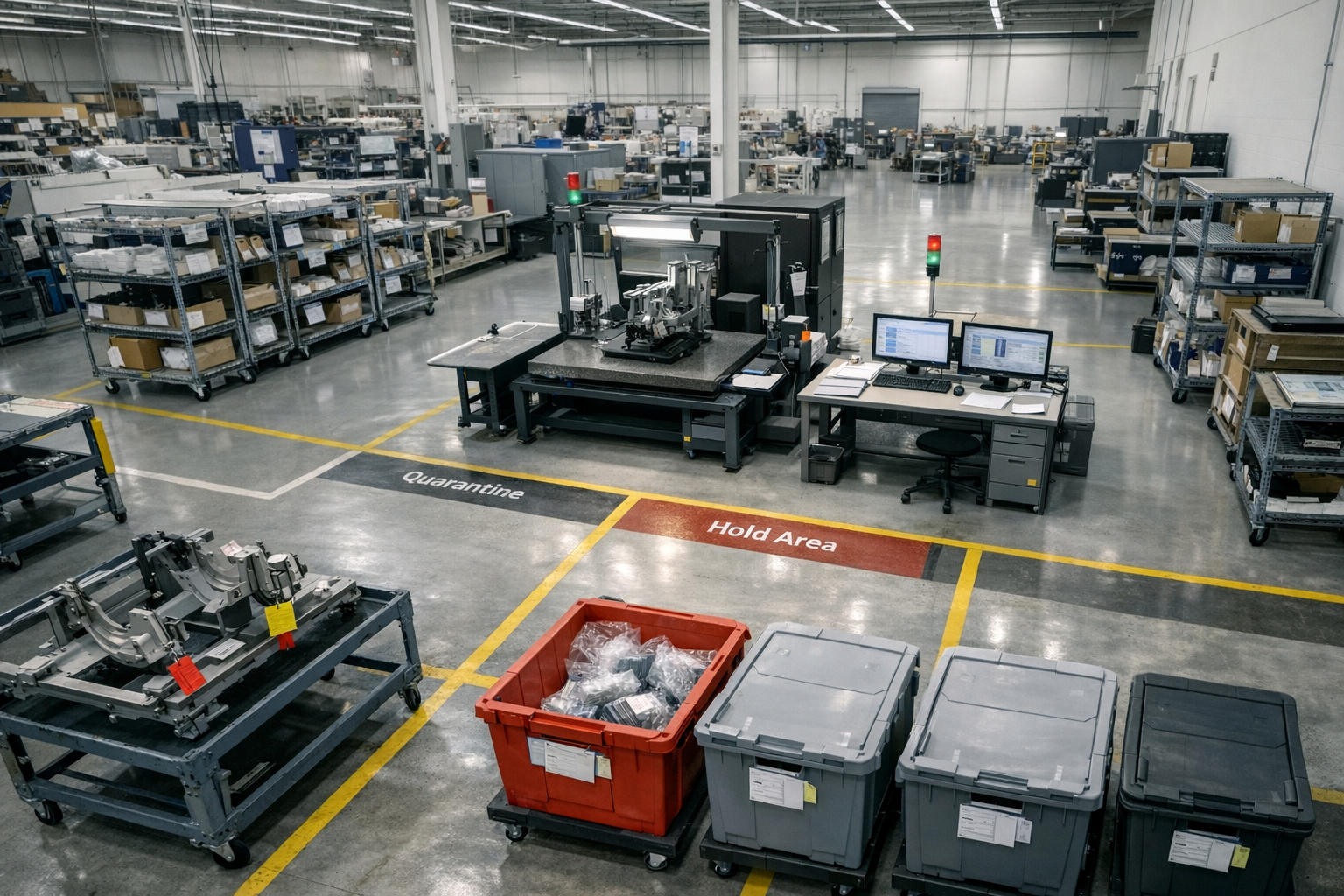
- Identification and segregation to prevent unintended use or shipment
- Documented nonconformance reports (NCRs) or quality notifications
- Evaluation and disposition, such as rework, repair, use as is under deviation, or scrap
- Root cause analysis and corrective and preventive action (CAPA) when warranted
- Traceability updates so affected lots, serial numbers, or batches can be tracked
In MES, ERP, and quality systems, nonconforming product is often represented by specific status codes, holds, or quality records. In standards such as ISO 9001 and AS9100, organizations are expected to define how nonconforming product is detected, recorded, controlled, and dispositioned.
Common confusion
- Nonconforming product vs. defect: A defect is a specific flaw or non-fulfillment of a requirement. Nonconforming product is the item that contains one or more defects.
- Nonconforming product vs. nonconformity: A nonconformity is a broader term for any failure to meet a requirement, including process or system failures. Nonconforming product refers specifically to physical or digital items that do not meet product requirements.
- Nonconforming product vs. out-of-spec process data: Process parameters outside limits are not always nonconforming product by themselves, but they often trigger product review to determine if a nonconformance exists.
Link to AS9100 and other quality standards
In aerospace and other regulated sectors, standards such as AS9100 and ISO 9001 require documented control of nonconforming product. This typically involves procedures for detection, containment, disposition, and communication, including when customer or regulatory approval is required for use as is or for repair.
Examples in practice
- A machined aerospace bracket that exceeds a critical hole diameter tolerance
- A pharmaceutical batch produced with a raw material lot not on the approved list
- An electronic assembly built to the wrong revision of the design or firmware
- A medical device shipped with incomplete labeling or missing required documentation
In all such cases, the item is treated as nonconforming product until it is evaluated and dispositioned according to the organization's quality system.


Related Blog Articles


Related FAQ
Related Glossary
Ready to See How C-981 Can Accelerate Your Factory’s Digital Transformation?

