
use-as-is
A nonconformance disposition that allows a part or product to be accepted without bringing it fully back to the original specification.


In regulated manufacturing and aerospace, use-as-is is a formal nonconformance disposition that allows a part, assembly, or product to be accepted and released without restoring full conformance to the original specification or drawing, provided it is judged acceptable for its intended use.
What use-as-is includes
Use-as-is disposition typically means:
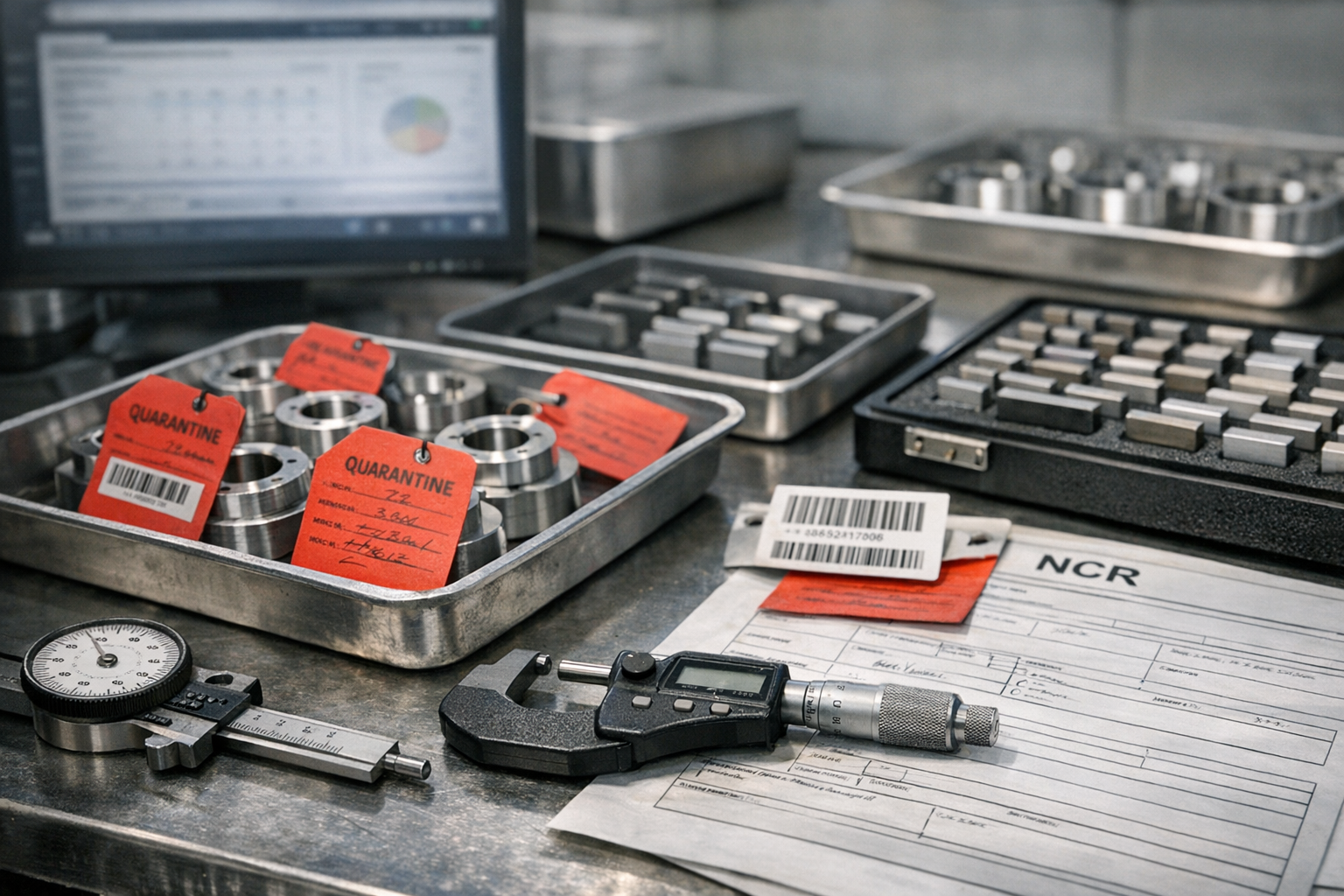
- The nonconformance is documented on a nonconformance report (NCR) or similar record.
- Technical authorities (often quality, engineering, and sometimes the design or customer authority) have reviewed the deviation.
- The part or product is determined to be functionally acceptable, safe for its intended application, and compatible with system performance requirements.
- No rework or repair will be performed to bring it back exactly to the original specification, although minor administrative updates (such as records or markings) may still occur.
What use-as-is does not include
Use-as-is does not mean:
- Ignoring or hiding the nonconformance.
- Automatically accepting all deviations without engineering or quality review.
- Rework or repair actions to change the physical condition of the item (those are separate dispositions).
- A permanent design change. If the design itself is updated, that is handled through configuration or change control, not just a use-as-is decision.
Operational context in manufacturing
In production environments, especially aerospace, defense, automotive, and other regulated sectors, use-as-is is one of several standard dispositions on an NCR, alongside options such as rework to specification, repair, or scrap. MES, QMS, and ERP systems often implement use-as-is as a selectable code or status, tied to workflows for:
- Routing the NCR to appropriate approvers (e.g., quality, design engineering, customer or regulatory representative).
- Recording justifications, risk assessments, and any conditional limitations (for example, limited life, restricted application, or traceability notes).
- Linking the disposition to affected serial numbers, lots, or work orders for traceability.
Common confusion
- Use-as-is vs. rework to spec: Rework to spec involves processing the item so it fully meets the original requirements. Use-as-is accepts the deviation without restoring full conformance.
- Use-as-is vs. repair: Repair typically introduces a controlled deviation from the original design (often requiring specific repair instructions). Use-as-is does not change the item further; it accepts the current condition.
- Use-as-is vs. waiver/deviation: A waiver or deviation is a formal authorization to depart from a requirement. A use-as-is disposition may rely on a waiver or deviation, but the terms are not identical. Waiver/deviation refers to the requirement; use-as-is refers to how the specific nonconforming item is handled.
Link to aerospace NCR processes
In aerospace, use-as-is dispositions often require approval from quality and design engineering, and sometimes from the customer or regulatory design authority, depending on configuration control, contract terms, and the criticality of the nonconforming feature. Local procedures define who is authorized to approve use-as-is and how such decisions are documented for audit and traceability.


Related Blog Articles


Related FAQ
Related Glossary
Ready to See How C-981 Can Accelerate Your Factory’s Digital Transformation?
