From Stand-Alone FAI Tools to Connected Aerospace Operations Platforms
Learn how aerospace manufacturers can evolve from paper and stand-alone AS9102 FAI tools to fully connected operations platforms, and how to choose the right approach for your digital maturity, volume, and compliance strategy.
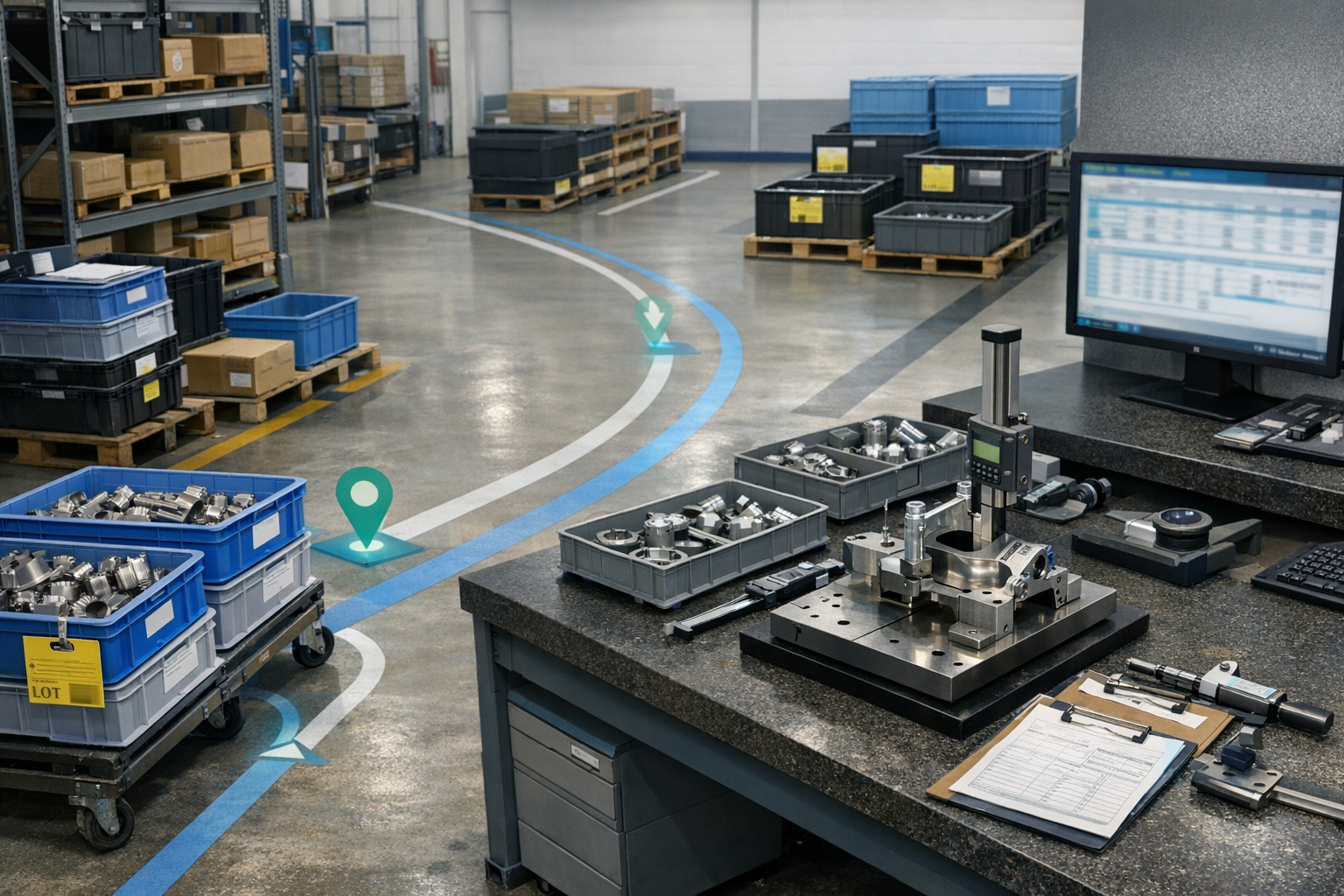
From Stand-Alone FAI Tools to Connected Aerospace Operations Platforms
Digital AS9102 software platforms now sit at the center of how aerospace organizations manage first article inspection (FAI), new part introduction, and regulatory compliance. But not every company is ready to jump straight from spreadsheets to a fully integrated operations platform. Many teams start with stand-alone ballooning and FAIR tools before they connect FAI to the broader digital thread.
This article explains the digital maturity journey from paper-based FAI to point solutions and, ultimately, to connected aerospace operations platforms. It outlines the trade-offs at each stage and helps you decide which approach aligns with your programs, customer mix, and long-term digital strategy.
For teams putting this topic into daily operation, digital AS9102 FAI help connect the concept to traceability, work-order reality, and audit-ready evidence.
For teams putting this topic into daily operation, digital AS9102 FAI, a connected execution platform, Connect 981’s aerospace execution solutions help connect the concept to traceability, work-order reality, and audit-ready evidence.
The same operating model also depends on real aerospace execution examples, Connect 981’s aerospace operations guidance, practical aerospace operations FAQs, especially when decisions have to move across quality, production, suppliers, and program leadership without losing context.
If you need a broader grounding in AS9102 and digital FAI before diving into architecture choices, see our AS9102 software and digital FAI overview.
The Three Maturity Levels of FAI Digitalization
Most aerospace organizations follow a recognizable path in how they manage AS9102 FAI:
Paper and spreadsheets
At the earliest stage, FAI is executed with manual tools:
- Printed drawings ballooned by hand
- Excel-based FAIR templates managed on shared drives
- Certificates and special process records collected via email
- Approvals captured through signatures on paper or static PDFs
This approach can work for low volumes, but it tends to break down when any of the following factors appear:
- Hundreds of characteristics per drawing
- Frequent engineering changes (delta FAI)
- Multiple customer-specific FAIR formats
- Multi-site operations or complex supply chains
Cycle times stretch to days or weeks, and error rates (missed balloons, wrong revisions, duplicated data entry) create repeated FAIR rejections and audit pain.
Stand-alone FAI tools
The next step is adopting dedicated point solutions that automate ballooning and FAIR creation:
- Import drawings and generate balloon numbers digitally
- Auto-populate Form 3 rows from extracted characteristics
- Standardize AS9102 Forms 1, 2, and 3 templates
- Store FAIRs in a local or cloud repository
This sharply reduces the time spent on manual ballooning and basic data entry. For single plants or small quality teams, it can be a high-ROI improvement, often cutting a typical full FAIR from 8–24 hours to a few hours or less.
The limitation: these tools often remain disconnected from ERP, MES, PLM, and broader quality workflows. FAI becomes more efficient locally but still operates as an island.
Integrated digital operations platforms
At the highest maturity level, FAI lives inside a connected aerospace operations platform, where:
- Work instructions, in-process inspections, nonconformances, and FAIRs share a unified data model
- FAI requirements are triggered automatically by part configuration, routing, and change events
- Measurement data can flow directly from CMMs or shopfloor inspection tools into Form 3
- Multi-site and supplier FAIRs are governed via common templates and workflows
The step up from stand-alone tools to platforms is about connecting FAI to everything around it: design, planning, execution, and compliance. It typically requires more upfront design and change management, but delivers compounding benefits as programs and sites scale.
Pros and Cons of Stand-Alone FAI Tools
Before committing to a full platform, many organizations evaluate or adopt stand-alone AS9102 point solutions. Understanding their strengths and constraints helps you decide whether they are a long-term answer or a stepping stone.
Speed of adoption and localized benefits
Stand-alone FAI tools are attractive because they:
- Can often be deployed by a single plant or even a single quality engineer
- Require relatively limited IT involvement compared to platform projects
- Provide quick wins in ballooning speed and standard form generation
- Are familiar to users who already work with desktop or office tools
For organizations that:
- Run a few FAIs per month
- Have predominantly single-site production
- Face moderate rather than extreme audit pressure
these tools can represent a practical and cost-effective solution.
Data silos and manual bridges to other systems
The main drawback of stand-alone FAI tools is that they often operate as a data silo. Typical pain points include:
- Double data entry: Part numbers, revisions, and order data manually copied from ERP or MES into the FAI tool
- Attachment hunting: Material certs, process records, and approvals scattered across emails and file shares
- Limited traceability: Difficult to navigate from a nonconformance or audit finding back to the originating FAIR and related shopfloor context
- Isolated analytics: FAI measurements not easily aggregated with in-process or final inspection data
Teams compensate with manual bridges—spreadsheets, copy-paste, and ad hoc reports. These workarounds tend to reintroduce errors and drag down the efficiency gains achieved by the tool itself.
Suitability for specific plant sizes and part portfolios
Stand-alone tools are usually best suited to environments with:
- One or a few manufacturing sites
- Lower volumes of FAI events
- Relatively simple customer requirements
- Limited need for cross-site reporting or standardized global governance
If your portfolio is dominated by build-to-print work with stable designs and predictable FAI demand, a point solution may remain viable for years. As soon as you face frequent design changes, multi-site collaboration, or tighter digital thread expectations from primes, the limitations become more visible.
What Connected Operations Platforms Add
Connected aerospace operations platforms treat AS9102 FAI as one component of a coordinated production and quality system. This changes both the scope and the impact of your digital FAI investment.
Unified data model for work instructions, FAI, and inspections
A platform creates a shared context for all execution and quality activities. For example:
- Each operation in a routing has linked work instructions and inspection steps
- FAI characteristics are tied to the same features and operations used for in-process checks and final inspections
- Nonconformances reference specific characteristics, work orders, serials, and suppliers
This unified data model enables:
- Automatic population of FAIR fields from existing master data
- Direct reuse of FAI characteristics for ongoing inspection plans
- Elimination of inconsistencies between what was planned, what was built, and what was inspected
Cross-site standardization and governance
For OEMs and multi-site suppliers, consistency is as important as efficiency. With a connected platform, you can:
- Define standard AS9102 templates and workflows once and roll them out globally
- Enforce common rules for full, partial, and delta FAI, including how change notices are interpreted
- Support customer-specific formats while retaining a single underlying data structure
- Govern permissions, approvals, and electronic signatures centrally
This reduces variability between plants and suppliers, which is particularly valuable when primes or regulators review FAIRs across your network.
Analytics and continuous improvement across processes
Because platforms integrate FAI with in-process inspections, NCRs, and corrective actions, you can analyze patterns that are invisible in stand-alone tools, such as:
- Characteristics that repeatedly appear in both FAI and production nonconformances
- Operations, machines, or suppliers associated with clusters of FAI issues
- Programs where delta FAI volume indicates design instability or process risk
Over time, this supports targeted improvements in design-for-manufacturability, process capability, and supplier development—turning FAI data into a strategic asset instead of a one-time compliance artifact.
Decision Factors: Which Approach Fits Your Organization?
Choosing between stand-alone FAI tools and integrated AS9102 software platforms is not only a technology decision. It is a question of timing, priorities, and organizational capacity.
Volume, complexity, and customer mix
Consider your current and future workload:
- FAI volume: How many full and delta FAIRs do you execute per month and per site?
- Part complexity: How many characteristics per drawing, and how many special processes and certs per part?
- Customer mix: Do you serve multiple primes with different FAIR formats and quality clauses?
- Supply chain structure: Are you coordinating FAIs across multiple internal plants and tiered suppliers?
Low volumes and simple programs can be well served by stand-alone tools. Complex, high-volume environments usually benefit from a platform approach that avoids duplicated work and fragmented records.
IT strategy and digital thread roadmaps
Your company’s broader digital strategy should also guide the choice:
- If you are standardizing on a digital thread connecting PLM, ERP, MES, and quality, it is usually more effective to select an AS9102 solution that can integrate natively into that architecture.
- If your IT roadmap is still emerging and budgets are tight, a stand-alone tool can function as an interim step while you design the longer-term ecosystem.
Either way, it is wise to evaluate how easily today’s choice can evolve—whether data can be migrated, and whether the vendor’s roadmap aligns with your future integration needs.
Change management capacity and timeline
Implementing a connected operations platform requires more than software installation:
- Process harmonization across plants and teams
- Training engineers, inspectors, and supervisors on new workflows
- Aligning quality, manufacturing, and IT stakeholders
If you need relief immediately for a single site under intense FAI pressure, a focused tool can stabilize the situation while you build support for a broader platform. If you already have sponsorship for digital transformation and cross-functional governance, going directly to a platform can help you avoid rework and tool sprawl.
Transitioning from Tools to Platforms Without Disruption
Many organizations will not choose between stand-alone FAI tools and platforms in a single step; they will move through a transition where both coexist. Managing that transition thoughtfully reduces risk and protects ongoing production.
Migrating historical FAIRs and templates
Historical AS9102 data has real value for audits, change analysis, and future delta FAIs. When moving to a platform, consider:
- Which FAIRs must be migrated (e.g., active programs, key customers, recent serials)
- How to convert existing Forms 1–3 into structured records that maintain characteristic accountability
- How to map old template variations into a standardized platform model without losing required customer fields
Not every legacy FAIR needs full conversion. Many teams choose a risk-based approach—migrating high-criticality programs and leaving older or low-risk FAIRs in an archived, read-only state.
Training and process harmonization
Platform rollouts are an opportunity to clean up inconsistent practices:
- Agree on standard rules for when full, partial, and delta FAI are required
- Define naming conventions for parts, revisions, and FAIR identifiers
- Align how key characteristics, critical characteristics, and special process indicators are flagged
Training should focus not only on button clicks, but on why these rules matter for auditability and traceability. This helps teams see FAI as part of an integrated quality system rather than another compliance burden.
Hybrid approaches during the transition phase
During migration, it is common to run a hybrid model:
- Some legacy programs continue using the stand-alone tool until completion
- New programs and high-visibility customers start in the platform from day one
- Bridges (e.g., CSV imports or APIs) transfer essential data between systems
Clear scoping and communication are key. Define which parts and customers are in which system, how approvals work in each, and when a given program will transition fully to the platform.
Future-Proofing Your AS9102 Digital Strategy
Choosing between stand-alone FAI tools and connected operations platforms is ultimately about future-proofing. Aerospace compliance and digital expectations will continue to evolve; your AS9102 software platforms need to keep pace.
Preparing for MBD, AI, and advanced analytics
Over the coming years, leading aerospace organizations are likely to expand:
- Model-based definition (MBD) and 3D PMI as primary design authorities
- AI-assisted inspection planning, suggesting which characteristics warrant tighter controls
- Advanced analytics correlating FAI data with process capability and field performance
A future-ready AS9102 solution should be able to:
- Handle both 2D drawings and 3D model inputs
- Expose FAI data in a way that analytics tools and data scientists can easily consume
- Support incremental automation, such as automatic anomaly detection in measurement results
Ensuring scalability for new programs and suppliers
As you win new programs or expand globally, your FAI system will need to scale without multiplying manual work. Consider:
- How quickly new sites, suppliers, and customers can be onboarded
- Whether FAIR templates and workflows are configurable without custom code
- How licensing and infrastructure models support growth across regions
Platforms are generally better positioned for this kind of scaling because they centralize governance while allowing local teams to operate within defined frameworks.
Governance and ownership of FAI data long term
Finally, clarify who owns and stewards FAI data as a strategic asset:
- Which roles are accountable for data quality and template changes?
- How are customer-specific requirements and revisions controlled?
- How is data retained for long-term regulatory and contractual obligations?
Whether you remain on a stand-alone tool or move to a connected platform, explicit governance prevents FAI from slipping back into ad hoc practices as organizations and programs evolve.
Putting It All Together
The path from manual FAI to connected operations is not one-size-fits-all. A practical way to plan your AS9102 digitalization journey is to:
- Map your current maturity: Paper, stand-alone tool, or partially integrated platform.
- Quantify the pain: Cycle time, rejection rates, audit findings, and late deliveries tied to FAI.
- Align with strategy: Ensure your FAI approach fits your company’s digital thread and smart factory roadmap.
- Design a staged plan: Stabilize urgent bottlenecks quickly, then move toward platform-level integration as capacity and sponsorship grow.
AS9102 software platforms that embed FAI into a unified operations environment offer the strongest long-term leverage—especially for organizations managing complex programs, multi-site networks, and demanding prime customers. Stand-alone tools can still play a useful role, particularly as transitional solutions or for focused use cases.
By viewing FAI not just as a compliance requirement but as a core node in your digital operations strategy, you can unlock better schedule performance, lower quality costs, and stronger customer confidence across your aerospace programs.



Related Blog


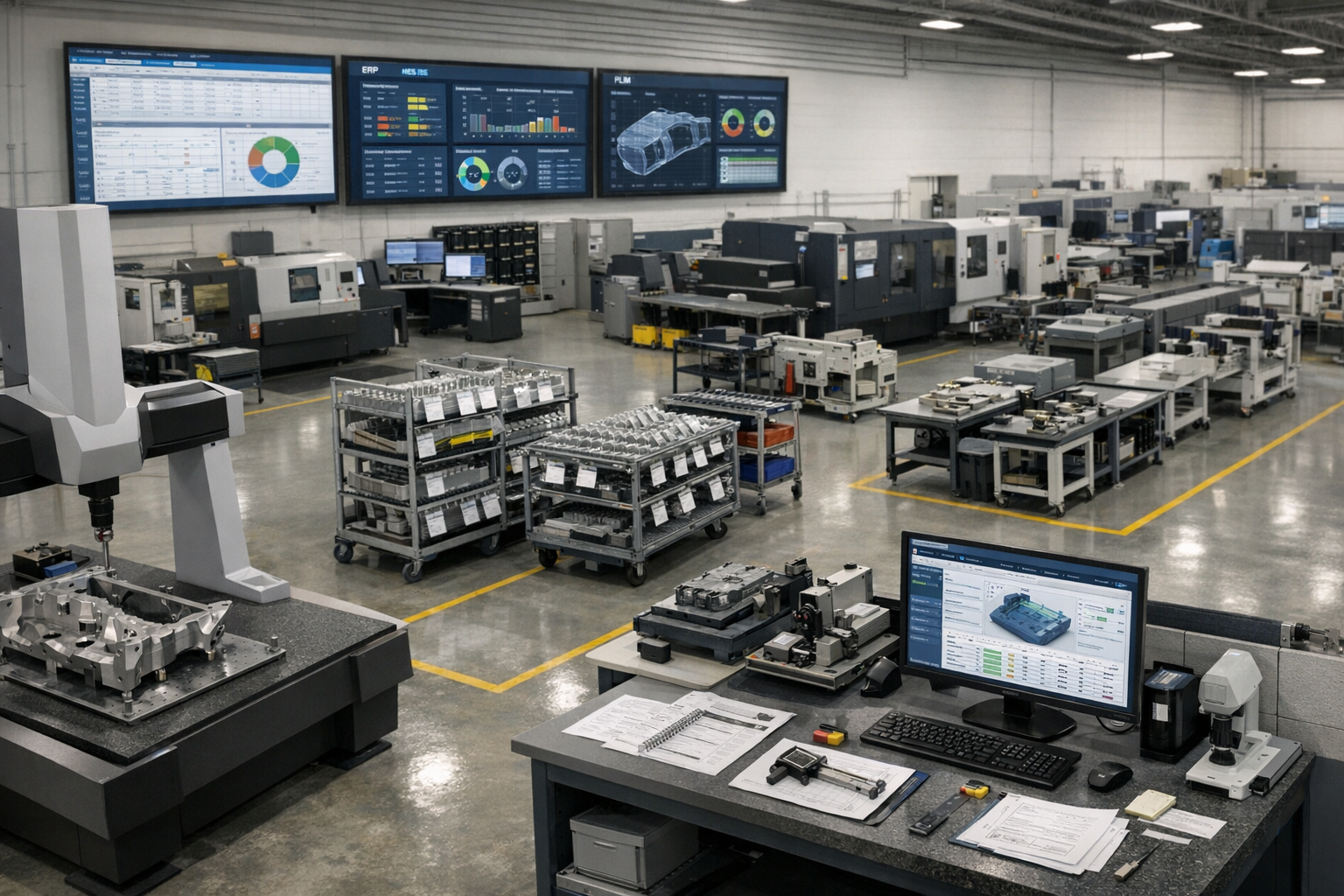
Built for Speed, Trusted by Experts
Whether you're managing 1 site or 100, Connect 981 adapts to your environment and scales with your needs—without the complexity of traditional systems.
