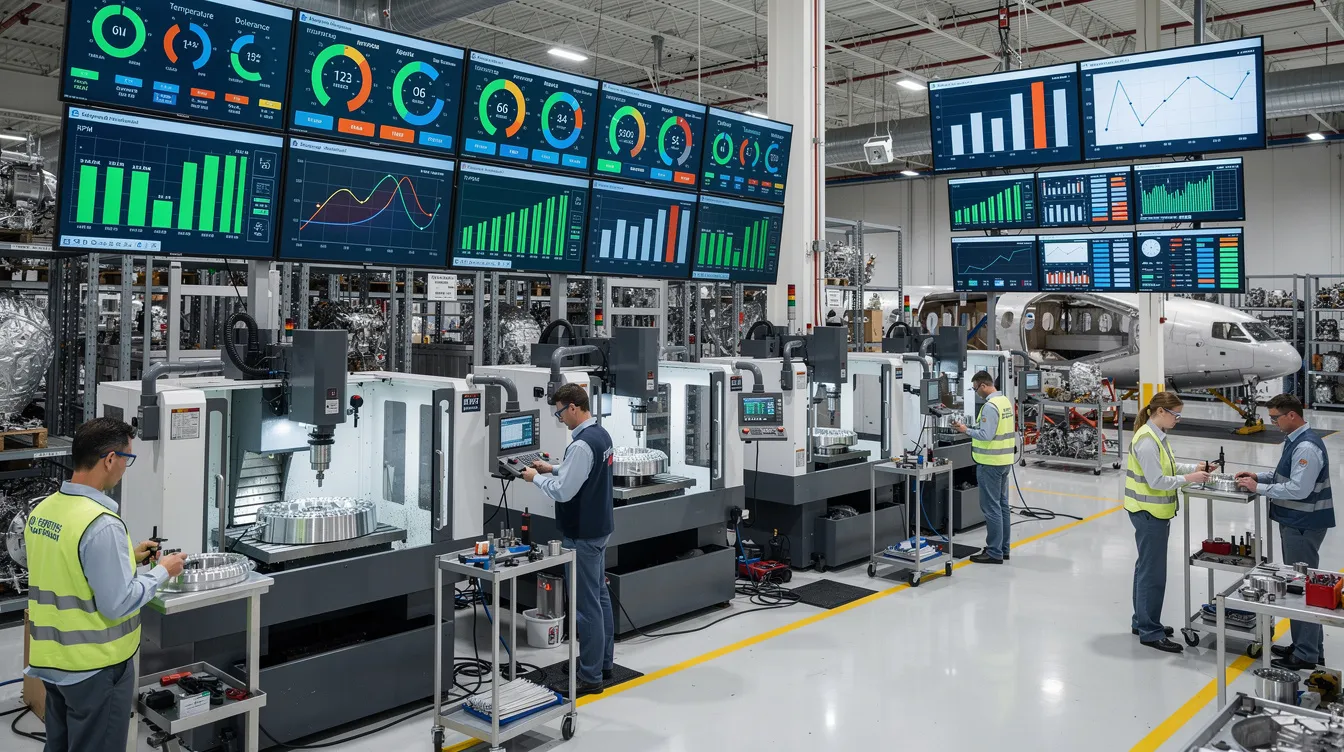
Connect 981 generally fits between ERP, MES, PLM, and QMS as an operational execution and traceability layer, not as a full replacement for those systems. In aerospace, that distinction matters because ERP, MES, PLM, and QMS often remain the systems of record for orders, routings, product definition, quality events, approvals, and regulated records. Connect 981 should be positioned around the workflows it controls or coordinates, with clear boundaries for what data it may create, consume, update, or only reference.
In a typical brownfield aerospace environment, Connect 981 may sit above, beside, or between existing systems to support connected shop-floor execution, digital workflow control, evidence capture, and traceability across systems that were not originally designed to work together cleanly.
That role is useful when ERP, MES, PLM, and QMS all contain part of the operational truth, but none of them provides a complete, usable execution layer for a specific process. It is not useful if it creates a second uncontrolled source of truth for the same data.
The exact boundary is site-specific. In one plant, Connect 981 may support digital travelers and operator guidance around an existing MES. In another, it may coordinate quality evidence, inspection workflow, or exception handling where the MES and QMS have gaps. In a third, it may mainly act as an integration and traceability layer across legacy systems.
Connect 981 should not bypass PLM release control, override ERP inventory authority, silently change MES production status, or close QMS records outside approved quality workflows. If it does, the plant may gain short-term convenience but lose data integrity, auditability, and confidence in which system is correct.
The safer pattern is controlled synchronization: pull released definitions from PLM, receive work and material context from ERP or MES, guide or capture execution activity where assigned, and send status, evidence, exceptions, or quality triggers back to the appropriate system of record.
In aerospace, replacing ERP, MES, PLM, or QMS outright is usually unrealistic unless the organization is already running a major transformation program. These systems are tied to validated processes, customer requirements, export-controlled data handling, inspection records, supplier flows, long-lived assets, and years of integration debt.
Full replacement can introduce qualification burden, validation cost, downtime risk, retraining load, integration complexity, and traceability gaps. For that reason, Connect 981 is more credibly evaluated as a coexistence and execution layer first, not as a rip-and-replace strategy.
These are not Connect 981-specific risks. They are common failure modes in aerospace integration programs. Connect 981 can reduce friction only if the implementation respects system authority, validation requirements, and operational realities on the floor.
Before positioning Connect 981 between the core systems, the team should define which system owns each record, which events trigger updates, what evidence must be retained, who approves changes, and how exceptions are handled when systems disagree.
The implementation also needs a controlled data model, interface monitoring, access controls, role design, change control, and test evidence appropriate to the process risk. Without that foundation, the project may create another layer of integration debt rather than a reliable digital thread.


Whether you're managing 1 site or 100, Connect 981 adapts to your environment and scales with your needs—without the complexity of traditional systems.



Whether you're managing 1 site or 100, C-981 adapts to your environment and scales with your needs—without the complexity of traditional systems.