eQMS
An eQMS is a software-based quality management system used to manage, automate, and document quality processes in regulated manufacturing.


An eQMS, or electronic Quality Management System, is a software-based platform used to plan, execute, track, and document quality management activities in a structured and controlled way. It replaces or supplements paper-based and spreadsheet-driven quality systems with configurable electronic workflows, centralized data, and electronic records.
What an eQMS typically includes
While implementations vary, an eQMS commonly provides electronic workflows and records for:
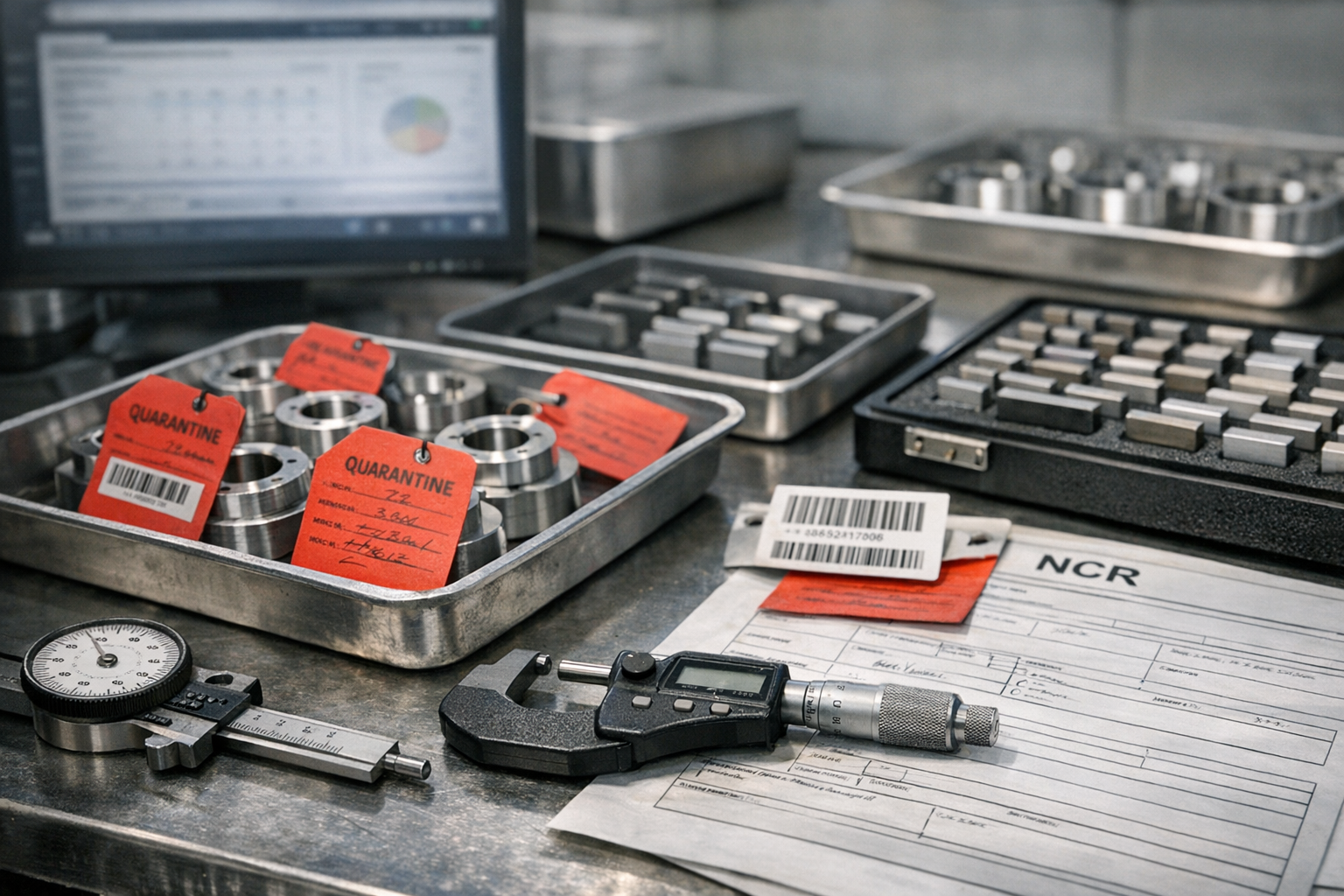
- Nonconformance and deviation management (including NCR logging, review, and disposition)
- CAPA management (corrective and preventive actions, investigations, and effectiveness checks)
- Document control (procedures, work instructions, forms, version control, and approvals)
- Change control (impact assessment, approvals, implementation tracking)
- Training records (role-based training, completion tracking, and periodic retraining)
- Audit and inspection management (internal audits, findings, and follow-up actions)
- Complaints and field quality (intake, triage, investigation, and closure)
- Quality metrics and reporting (dashboards and trend analysis for quality data)
In regulated environments, the eQMS is used to maintain consistent, reviewable records of quality-related decisions and to support traceability, data integrity, and audit readiness. Configuration, access control, and change history are typically managed within the system.
How an eQMS fits into manufacturing operations
In industrial and regulated manufacturing, an eQMS usually operates alongside systems such as ERP, MES, LIMS, PLM, and maintenance systems. Typical interactions include:
- From shop floor to quality: Nonconformances and deviations created in MES or on the line are recorded or synchronized with the eQMS for investigation and closure.
- From quality to production: Controlled documents, process changes, and CAPA actions managed in the eQMS drive updates to work instructions, routings, or master data in MES/ERP.
- Data for analysis: NCRs, CAPAs, audit findings, and complaints stored in the eQMS are exported or integrated into BI or analytics tools for trending and root cause analysis.
An eQMS may be implemented as a standalone quality platform, as a module of a larger enterprise suite, or as a cloud-based service. The scope ranges from basic document and CAPA control to comprehensive, integrated quality management across the product lifecycle.
What an eQMS is not
- It is not the same as an MES, which focuses on real-time production execution and data collection at the shop-floor level.
- It is not only a document repository; document control is one function among many quality processes.
- It is not by itself proof of regulatory compliance; it is a tool used to implement and document quality processes.
Common confusion
- QMS vs eQMS: “QMS” refers to the overall quality management framework, including people, processes, and tools. “eQMS” usually refers specifically to the electronic software platform that supports those processes.
- eQMS vs LIMS: A LIMS focuses on laboratory samples, test methods, and results. An eQMS focuses on wider quality processes such as CAPA, audits, and document control. In some plants, these systems are integrated.
Connection to NCR trending context
When trending and analyzing nonconformance (NCR) data, the eQMS often serves as the system of record for NCRs, CAPAs, and related quality events. Data may be analyzed within built-in eQMS reporting modules or exported to external BI and analytics tools, depending on integration, data structure, and validation needs.


Related Blog Articles


Related FAQ
Related Glossary
Ready to See How C-981 Can Accelerate Your Factory’s Digital Transformation?

