How can aerospace teams structure nonconformance workflows to support AS9100 and customer audits?
Guidance for designing aerospace nonconformance workflows that align with AS9100 requirements and withstand customer audits.


In aerospace manufacturing, structuring nonconformance (NC) workflows to support AS9100 and customer audits means designing a repeatable, fully documented process that shows how the organization identifies, evaluates, contains, disposes of, and corrects nonconforming product or processes.
Core elements of an AS9100-aligned nonconformance workflow
An aerospace nonconformance workflow commonly includes the following stages:
- Detection and initiation
A clear trigger and entry point whenever a nonconformance is found on the shop floor, in inspection, in supplier receipts, or during field returns. The workflow should define who can initiate an NC, what minimum data must be captured at creation, and how unique identifiers are assigned for traceability. - Containment and segregation
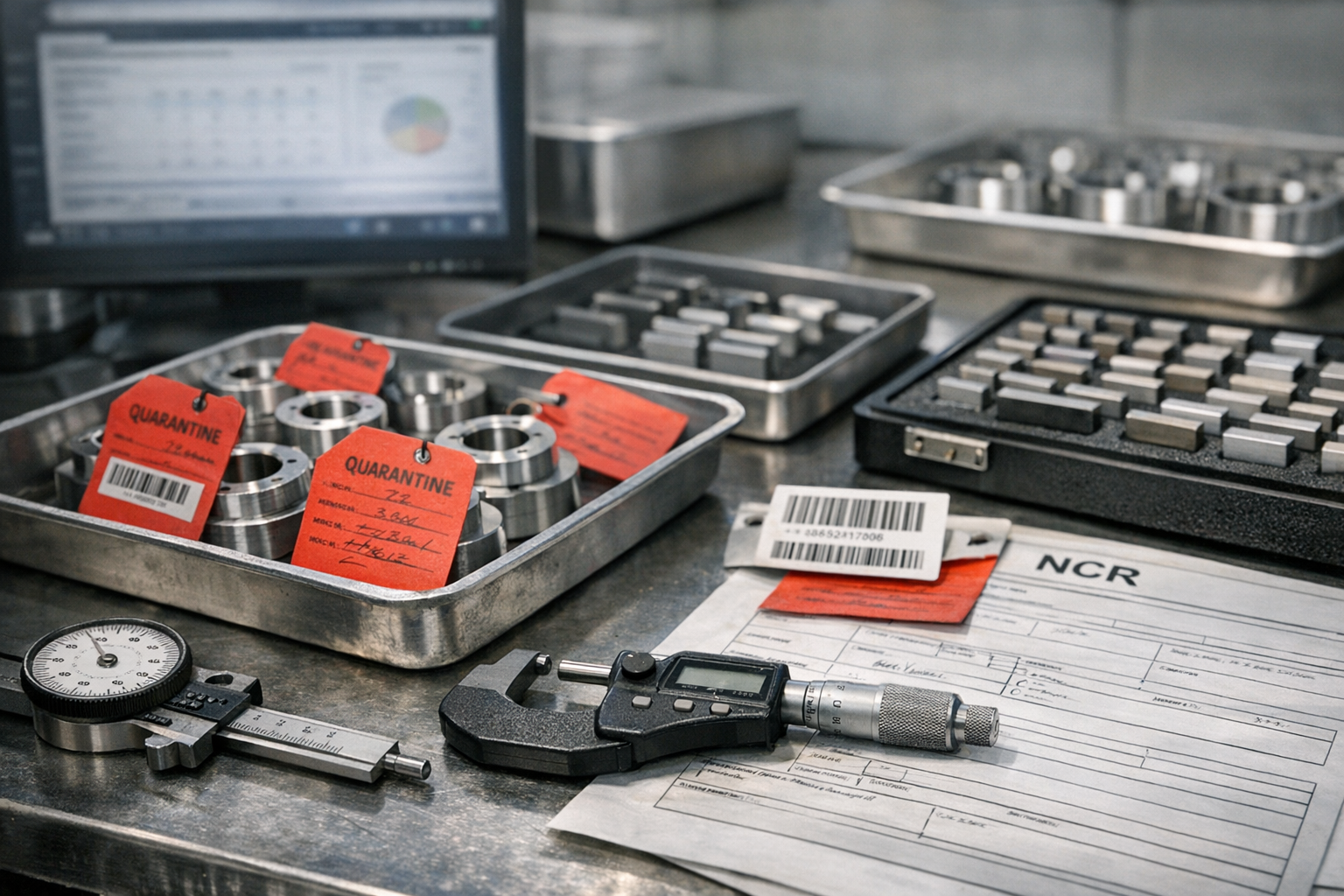
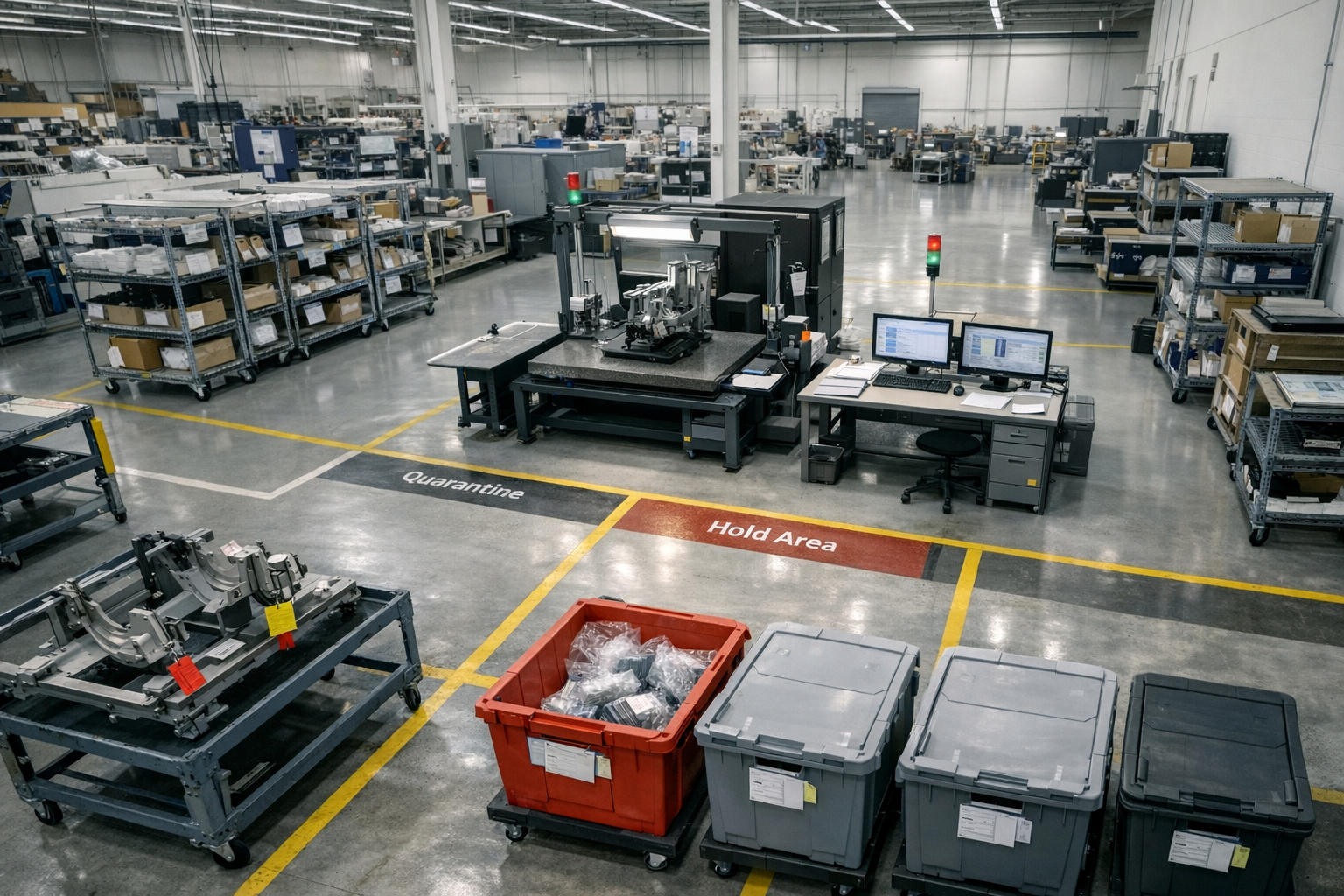
Immediate actions to prevent unintended use or shipment of suspect material. The workflow should capture how nonconforming items are identified, labeled, and physically or logically segregated, including quarantine locations and system status changes in MES/ERP. - Evaluation and disposition
A structured review to determine impact and disposition, including roles such as MRB (Material Review Board) or designated engineering authority. Disposition options are typically rework to meet requirements, repair with approved concessions, use-as-is under defined conditions, or scrap. Criteria and authorization levels for each disposition type should be defined and recorded. - Risk and impact assessment
Evaluation of potential impact on safety, reliability, configuration, and regulatory or customer requirements. The workflow should include prompts to check affected batches, serial numbers, assemblies, or deliveries and to determine whether fielded product or in-transit goods may be affected. - Corrective action linkage
Rules to determine when an NC triggers formal corrective action and root cause analysis (for example, repeated issues, high severity, or customer-impacting events). The workflow should link each eligible NC to a CAPA record or equivalent, without duplicating data. - Verification and closure
Confirmation that dispositioned items have been processed as approved, that corrective actions (if any) are implemented and verified, and that affected documentation and configurations are updated. Closure criteria, approvals, and objective evidence should be clearly defined. - Data collection and analytics
Systematic capture of metadata such as defect type, source process, part number, supplier, root cause category, and cost of poor quality. This supports trending, risk assessment, and management review as expected in aerospace quality systems.
Structuring the workflow for AS9100 expectations
To align with AS9100 expectations, aerospace teams typically:
- Define process ownership for the overall NC process and for key decision points such as MRB and approvals.
- Standardize key records and forms so that every NC captures consistent fields required for traceability and audit trails.
- Integrate with configuration management so that nonconformances referencing specific part numbers, revisions, and serial numbers maintain alignment with engineering and production baselines.
- Establish clear criteria for when a nonconformance remains a localized event and when it must escalate to formal corrective action, customer notification, or regulatory reporting.
- Ensure training and access control so personnel understand how and when to initiate NCs, and only authorized roles can evaluate and approve dispositions.
- Maintain revision-controlled procedures and work instructions describing the NC workflow and how it is used within MES, QMS, or ERP systems.
Designing for customer and regulatory audits
Customer and other external audits in aerospace often test both the design of the NC process and the consistency of its use. To support these audits:
- Make the workflow visible and simple to follow, for example through documented process maps, digital workflows, or guided forms that match the procedure.
- Preserve complete history, including who created, reviewed, and approved each step, with dates, dispositions, and any changes made after initial entry.
- Link evidence to records, such as inspection results, photos, concessions, repair instructions, and test reports, so auditors can see how decisions were made.
- Support traceability queries, allowing users to quickly show all NCs for a part, order, serial number, supplier, or time period, and to demonstrate that similar issues are being trended and acted on.
- Align terminology used in the workflow (e.g., nonconformity, disposition, concession) with internal procedures and with common aerospace usage to reduce confusion in audits.
- Prepare example cases that demonstrate how significant NCs were handled, including escalation, customer communication when required, and verification of corrective action effectiveness.
Systems and integration considerations
For aerospace teams, nonconformance workflows often span multiple systems such as MES, QMS, PLM, and ERP. When structuring the workflow:
- Clarify where the authoritative NC record lives and how related data (work orders, serials, inspection results) are linked.
- Ensure consistent numbering and identification across systems to avoid duplicate or orphaned NCs.
- Automate status updates and holds on work orders, lots, or serials where possible to prevent unapproved use of nonconforming product.
- Provide role-based access so that external auditors and customers can be shown needed evidence without exposing unrelated or restricted data.
By combining clearly defined stages, standardized records, and strong system integration, aerospace teams can create nonconformance workflows that both meet AS9100 expectations and provide reliable, accessible evidence for customer and external audits.


Related Blog Articles


Related FAQ
Related Glossary
Ready to See How C-981 Can Accelerate Your Factory’s Digital Transformation?

