nonconforming outputs
Nonconforming outputs are products, services, or process results that do not meet specified requirements and must be identified, controlled, and dispositioned.


Nonconforming outputs are products, services, or process results that do not meet specified requirements. In industrial and regulated manufacturing environments, the term commonly refers to any output from a process that fails to conform to customer, regulatory, engineering, or internal specification criteria.
Nonconforming outputs can occur at any stage of the value stream, including incoming material inspection, in-process operations, final inspection and test, and post-delivery service or repairs.
What nonconforming outputs include
In a manufacturing and quality management context, nonconforming outputs commonly include:
- Physical product that fails dimensional, functional, cosmetic, or performance requirements
- Assemblies or subassemblies built with incorrect or unapproved parts or configurations
- Documentation or records that do not meet required content, completeness, or revision status
- Process outcomes that do not meet defined parameters or control limits, when those are treated as formal requirements
- Services or field work that do not meet agreed work scope, technical requirements, or acceptance criteria
Nonconforming outputs are not limited to scrap. They also include items that may later be reworked, repaired, used as-is under concession, or regraded for a different application, provided this is formally evaluated and authorized.
How nonconforming outputs are controlled
Quality management systems typically require that nonconforming outputs be:
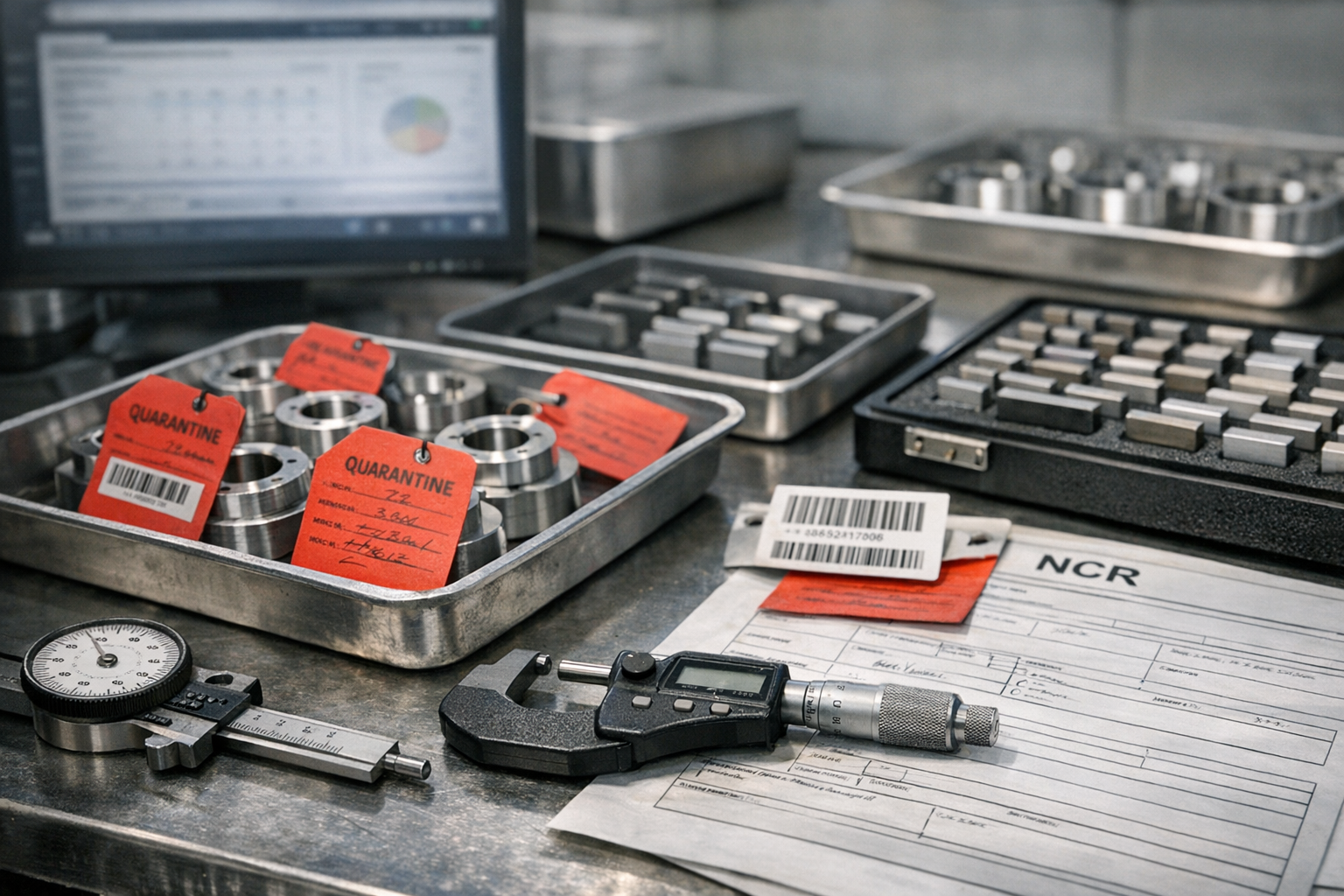
- Identified and documented with clear description of the nonconformance, applicable requirements, and traceability data
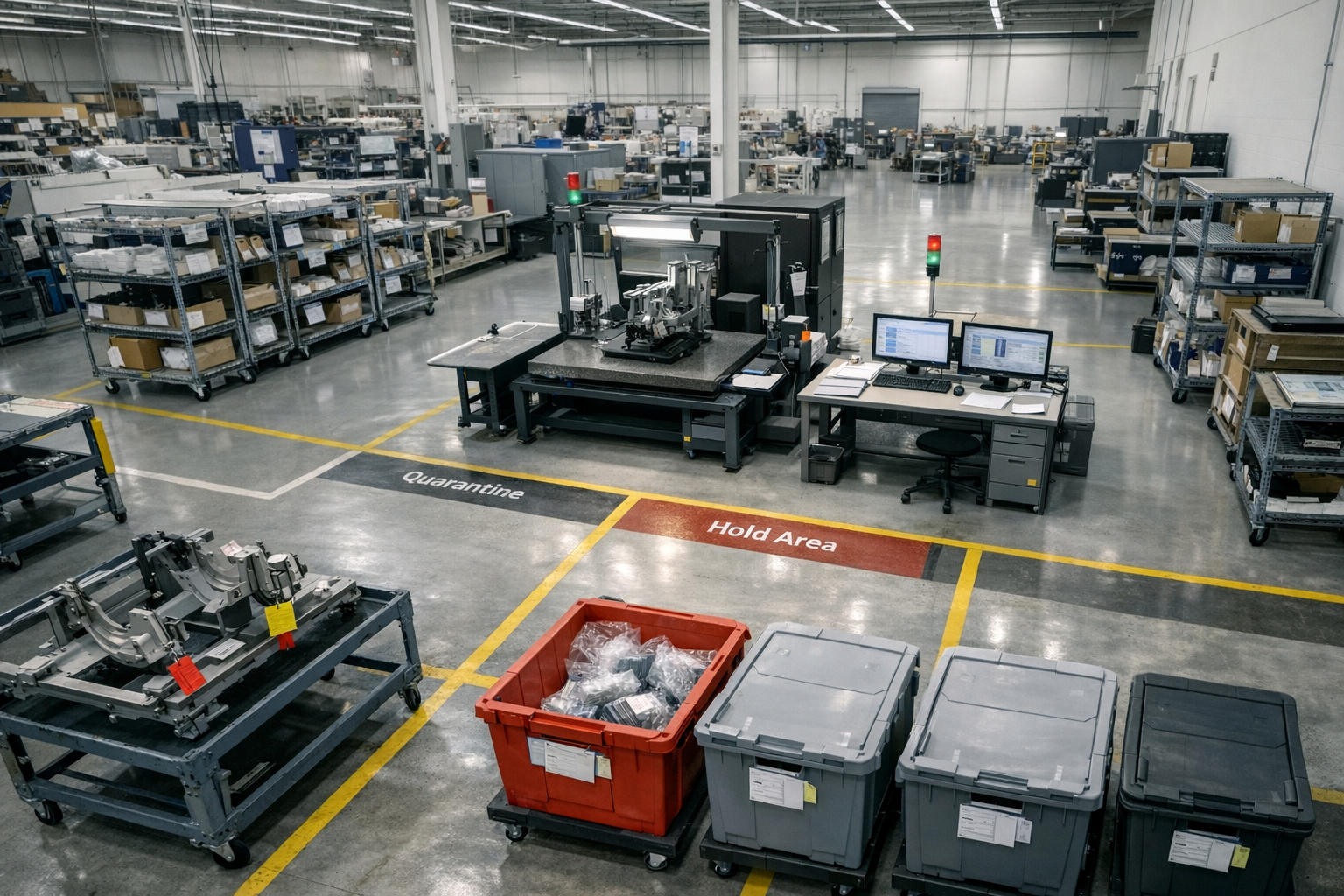
- Segregated or otherwise controlled to prevent unintended use, processing, or delivery
- Evaluated and dispositioned (for example: scrap, rework, repair, return to supplier, use-as-is under deviation, or regrade)
- Approved by authorized personnel according to defined roles, including customer or regulatory approval when required
- Recorded so data can be used for trend analysis, risk assessment, and potential corrective action
Operationally, nonconforming outputs are often managed through nonconformance reports (NCRs) or similar records in MES, QMS, ERP, or PLM systems. These records link the nonconformance to affected batches, serial numbers, lots, work orders, and suppliers to maintain traceability.
Relationship to standards and regulated environments
Quality and aerospace standards such as ISO 9001 and AS9100 use the term “nonconforming outputs” to describe items that must be identified and controlled when they do not meet requirements. Control of nonconforming outputs is typically associated with clauses on product realization, control of nonconformity, and corrective action, and it interacts with related topics such as configuration management, risk management, and traceability.
Common confusion
- Nonconforming outputs vs. nonconformities in the QMS: Nonconforming outputs are failures to meet product, service, or process output requirements. QMS nonconformities are failures of the management system itself (for example a missing procedure). One may lead to the other, but they are not the same.
- Nonconforming outputs vs. defects: “Defect” is often used informally for any failure. “Nonconforming output” is a formal term in many standards and includes all outputs that do not meet specified requirements, whether or not they are visible defects.
- Nonconforming outputs vs. scrap: Scrap is one possible disposition of a nonconforming output. A nonconforming output is not automatically scrap until formally dispositioned as such.
Link to the source context
In the context of AS9100 and similar aerospace requirements, nonconforming outputs are controlled under specific clauses on nonconformance control. Effective control usually involves additional clauses, such as those related to risk, configuration management, supplier control, and corrective action, but the core concept remains any product or process result that does not meet specified requirements and must be formally managed.


Related Blog Articles


Related FAQ
Related Glossary
Ready to See How C-981 Can Accelerate Your Factory’s Digital Transformation?

