CAPA (Corrective and Preventive Action)
A structured quality management process used to investigate issues, correct them, and prevent their recurrence or occurrence.


CAPA (Corrective and Preventive Action) is a structured quality management process used to identify, investigate, and address actual or potential problems in products, processes, or systems. In regulated manufacturing environments, CAPA is a central element of the quality management system and is typically documented, risk-based, and traceable.
Corrective action vs. preventive action
Although often discussed together, corrective and preventive actions address different situations:
- Corrective action focuses on problems that have already occurred, such as nonconforming product, repeated process failures, or audit findings. It targets both fixing the immediate issue and eliminating its root cause to prevent recurrence.
- Preventive action focuses on potential problems that have not yet occurred but are identified through risk assessments, trend analysis, near-miss events, or process monitoring. It aims to reduce the likelihood of future issues.
Typical CAPA workflow in manufacturing
In industrial and regulated environments, a CAPA process commonly includes:
- Initiation: Logging a CAPA record in a QMS, MES, or other quality system, often triggered by nonconformances, complaints, audit findings, deviations, or process trends.
- Containment / immediate actions: Short-term steps to control or limit impact (for example, blocking suspect lots, issuing rework instructions, or updating inspection frequency).
- Investigation and root cause analysis: Structured analysis to understand what happened or could happen and why, often using tools such as 5 Whys, fishbone diagrams, or 8D / RCCA methods.
- Action planning: Defining specific corrective and/or preventive actions, owners, due dates, and required approvals.
- Implementation: Executing changes, which may include updated work instructions, process parameters, training, supplier changes, or system configuration updates.
- Effectiveness check: Verifying that actions removed or reduced the issue or risk, typically by monitoring quality metrics, audits, or subsequent nonconformance data.
- Documentation and closure: Final review, documenting evidence and approvals, and formally closing the CAPA record for future traceability and audits.
CAPA in systems and data flows
In modern operations, CAPA records often integrate with other systems:
- QMS: Holds the primary CAPA records, workflows, and approvals.
- MES / shop-floor systems: Provide source data such as nonconformance reports, process parameters, and genealogy, and enforce updated process controls or work instructions.
- ERP: Connects CAPA-related decisions to inventory, cost tracking, and supplier actions.
- Document control: Manages revisions to procedures, work instructions, and forms resulting from CAPA actions.
What CAPA includes and excludes
CAPA typically includes:
- Systematic handling of significant quality or process issues.
- Documented root cause analysis and risk assessment.
- Changes to processes, documentation, training, and controls.
CAPA typically does not include:
- Routine day-to-day adjustments that do not address a defined problem or risk.
- Isolated corrections without analysis of underlying causes or systemic impact.
Common confusion
- CAPA vs. correction: A correction fixes an immediate defect (for example, reworking a part). CAPA goes further by addressing why the defect occurred and how to prevent it or reduce its likelihood.
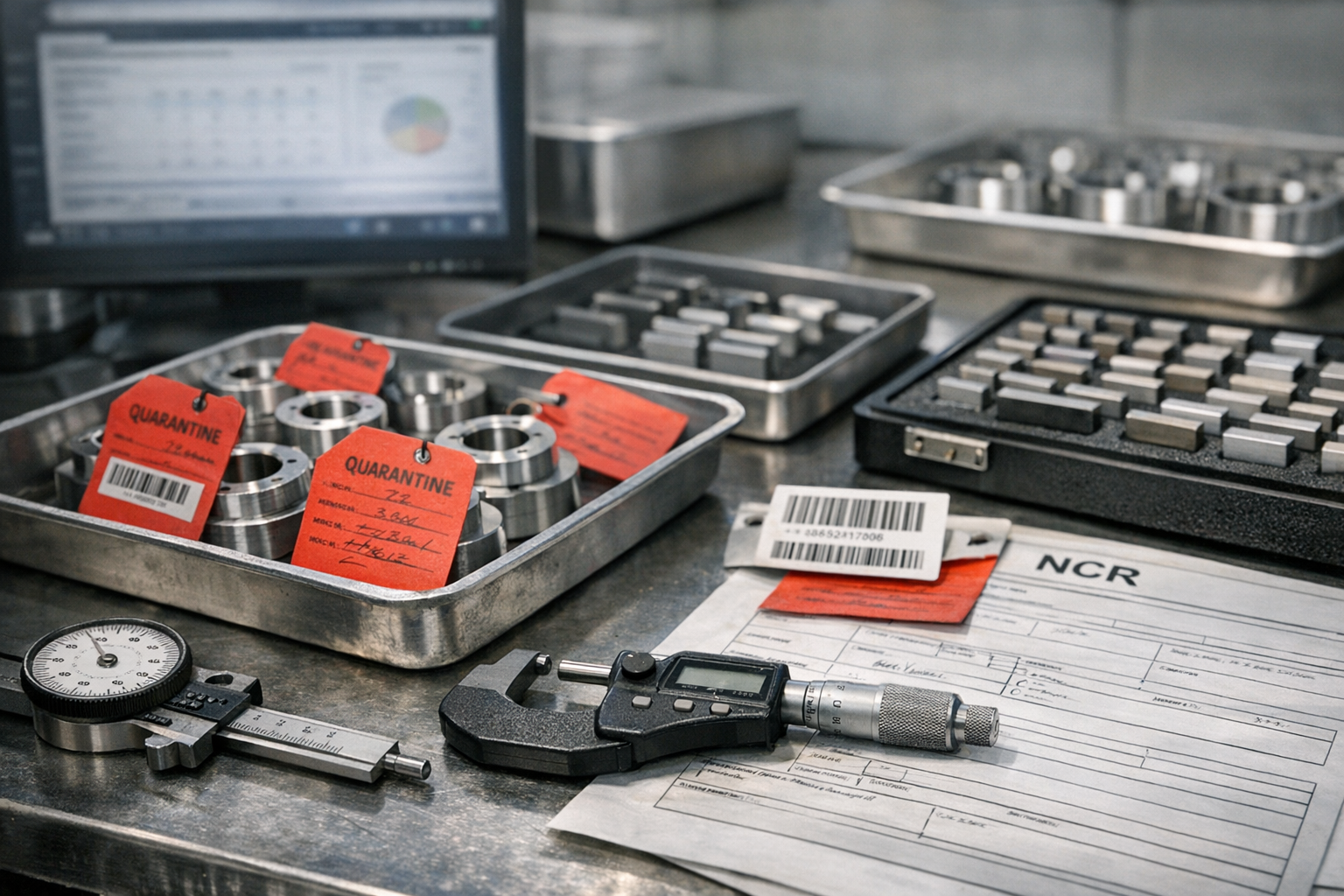
- CAPA vs. NCR: A nonconformance report (NCR) documents an out-of-spec condition. A CAPA may be opened as a result of one or more NCRs when the issue is systemic, recurring, or high risk.
- CAPA vs. continuous improvement: Continuous improvement can include many small, proactive changes. CAPA is a formal, traceable process typically reserved for issues with compliance, safety, or significant quality impact.


Related Blog Articles


Related FAQ
Related Glossary
Ready to See How C-981 Can Accelerate Your Factory’s Digital Transformation?

