Corrective Action Plan
A documented set of actions to remove identified nonconformities and their causes, with responsibilities, timelines, and verification steps.


A corrective action plan is a documented set of actions created to eliminate identified nonconformities and their causes, along with a defined approach to verify that the problem has been resolved. In industrial and regulated manufacturing environments, it is typically triggered by an audit finding, deviation, quality event, safety incident, or recurring performance issue.
What a corrective action plan includes
While formats vary, a corrective action plan commonly includes:
- A clear description of the issue or nonconformity, including reference to requirements, specifications, or procedures that were not met
- Initial containment or short-term actions to control the impact on product, process, or safety
- Root cause analysis or problem investigation results
- Defined corrective actions to remove the root cause(s) and prevent recurrence
- Assigned responsibilities and due dates for each action
- Verification and effectiveness checks (for example, follow-up inspections, metrics review, or audits)
- Documentation of approvals and closure, often within a CAPA, QMS, or EHS system
Use in manufacturing and regulated environments
In manufacturing operations, corrective action plans are often managed through a quality management system (QMS), CAPA workflows, or integrated MES/ERP tools. Typical applications include:
- Responding to internal or external audit findings
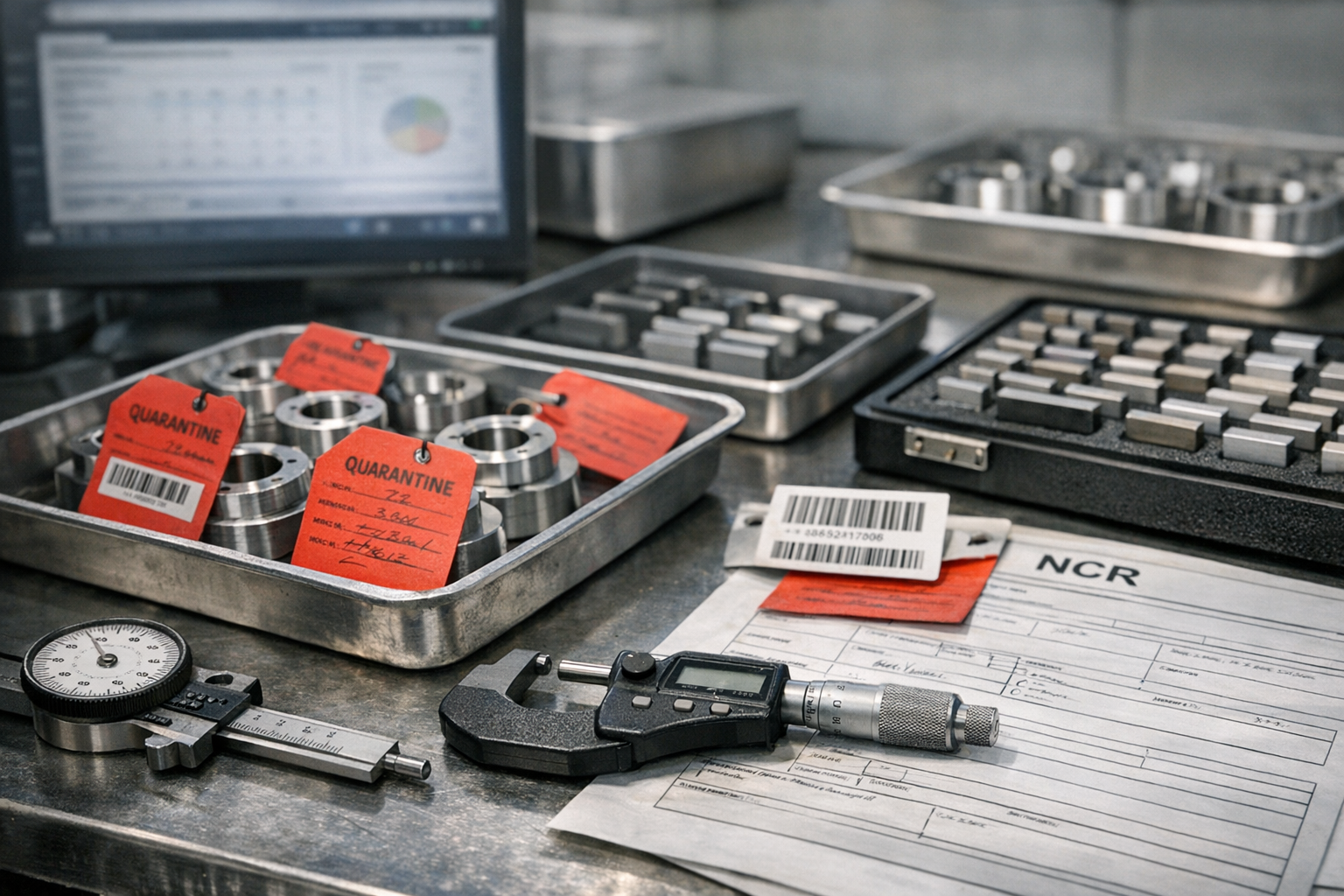
- Addressing nonconforming product, process deviations, or out-of-spec test results
- Resolving supplier quality issues or field returns
- Dealing with repeated machine downtime, safety issues, or data integrity problems in OT/IT systems
The plan provides a traceable record of how the issue was analyzed, what was changed in procedures, equipment, software, training, or controls, and how the organization confirmed that the nonconformity does not recur.
What a corrective action plan is not
- It is not the same as simple containment or rework instructions. Those deal with immediate impact, while the plan targets underlying causes.
- It is not limited to quality defects. It can apply to safety incidents, cybersecurity issues, data integrity gaps, and process performance problems.
- It is not only an audit artifact. It should be an operational tool used in daily problem-solving and continuous improvement.
Common confusion
Corrective action plan vs CAPA: A corrective action plan focuses on eliminating the causes of an identified nonconformity. CAPA (Corrective and Preventive Action) is a broader regulated quality process that may include both corrective actions (for problems that have occurred) and preventive actions (to avoid potential problems). A corrective action plan is often one component or output of a CAPA workflow.
Corrective action plan vs preventive action plan: A preventive action plan addresses potential issues that have not yet occurred, based on risk assessments, near misses, or trend data. A corrective action plan responds to a problem or nonconformity that has already been observed.
Relation to OT/IT and manufacturing systems
In integrated OT/IT landscapes, corrective action plans may be linked to:
- MES records for nonconforming product or process deviations
- ERP records for supplier or customer complaints
- LIMS or test systems for failed results or data integrity issues
- Maintenance or EHS systems for equipment failures and safety incidents
Linking the plan to these systems supports traceability, evidence collection, and follow-up review for audits and internal governance.


Related Blog Articles



Related FAQ
Related Glossary
Ready to See How C-981 Can Accelerate Your Factory’s Digital Transformation?

