Hold
A temporary status that prevents further processing, movement, or use of materials, products, data, or activities until release.


Operational meaning
In industrial and manufacturing contexts, **hold** commonly refers to a temporary status applied to materials, products, equipment, data, or activities that prevents further processing, movement, or use until a defined release action occurs.
A hold is typically used when there is uncertainty, suspected nonconformity, missing information, or an open review or approval. The status is usually recorded and controlled in digital systems such as MES, ERP, LIMS, QMS, or inventory management tools.
Typical characteristics of a hold status include:
– It is **temporary** and explicitly lifted (released) when conditions are met.
– It **blocks or restricts** one or more actions (e.g., shipping, further processing, consumption in production).
– It has a **reason code** or documented rationale.
– It is **traceable**, with who placed the hold, when, and under what conditions it can be released.
Common types of hold in manufacturing
While naming varies by organization, holds are often categorized by purpose:
– **Quality hold / QA hold**: Applied when quality concerns, deviations, out-of-spec results, or open investigations exist. Production lots, batches, or units cannot be used or shipped until evaluation and disposition.
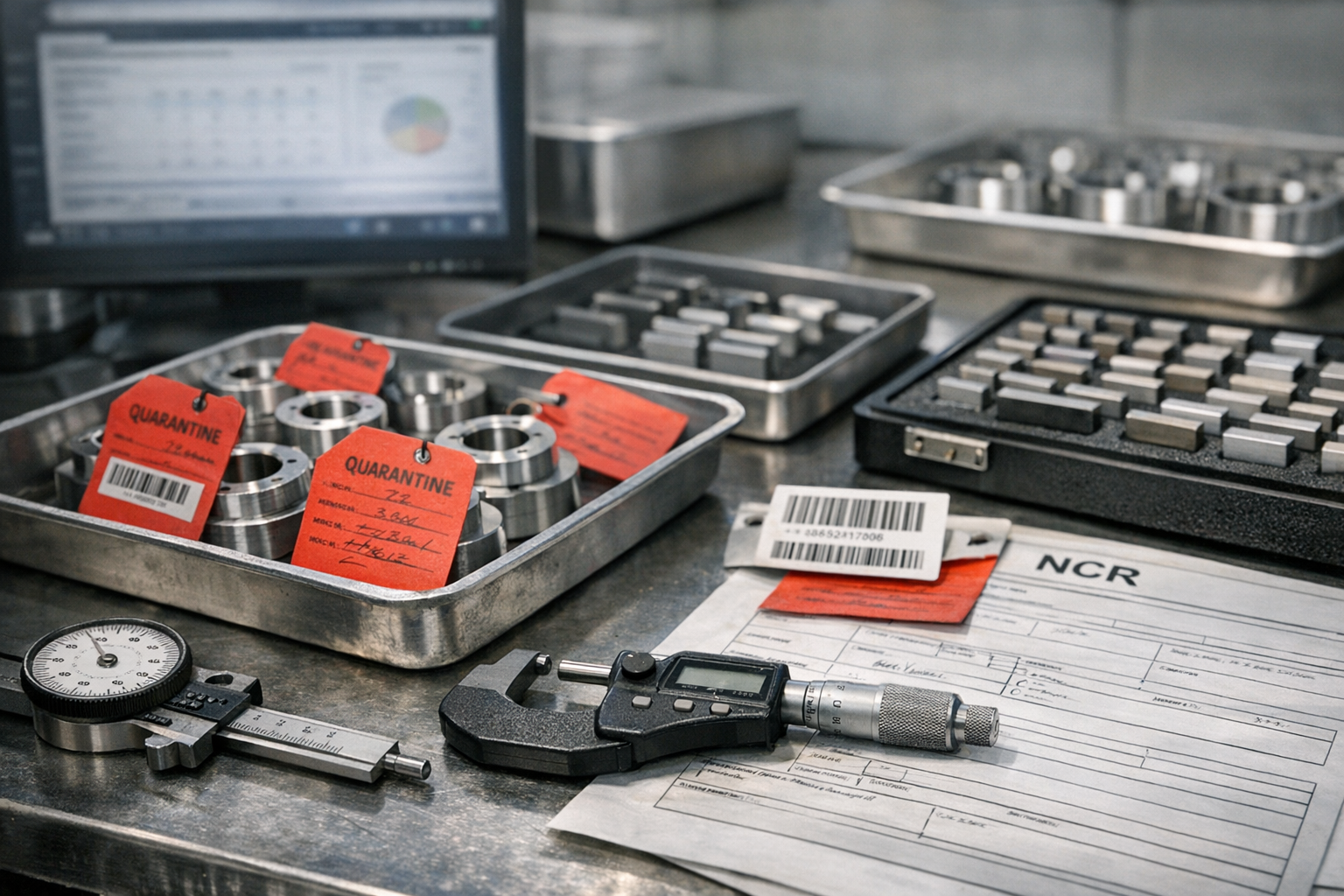
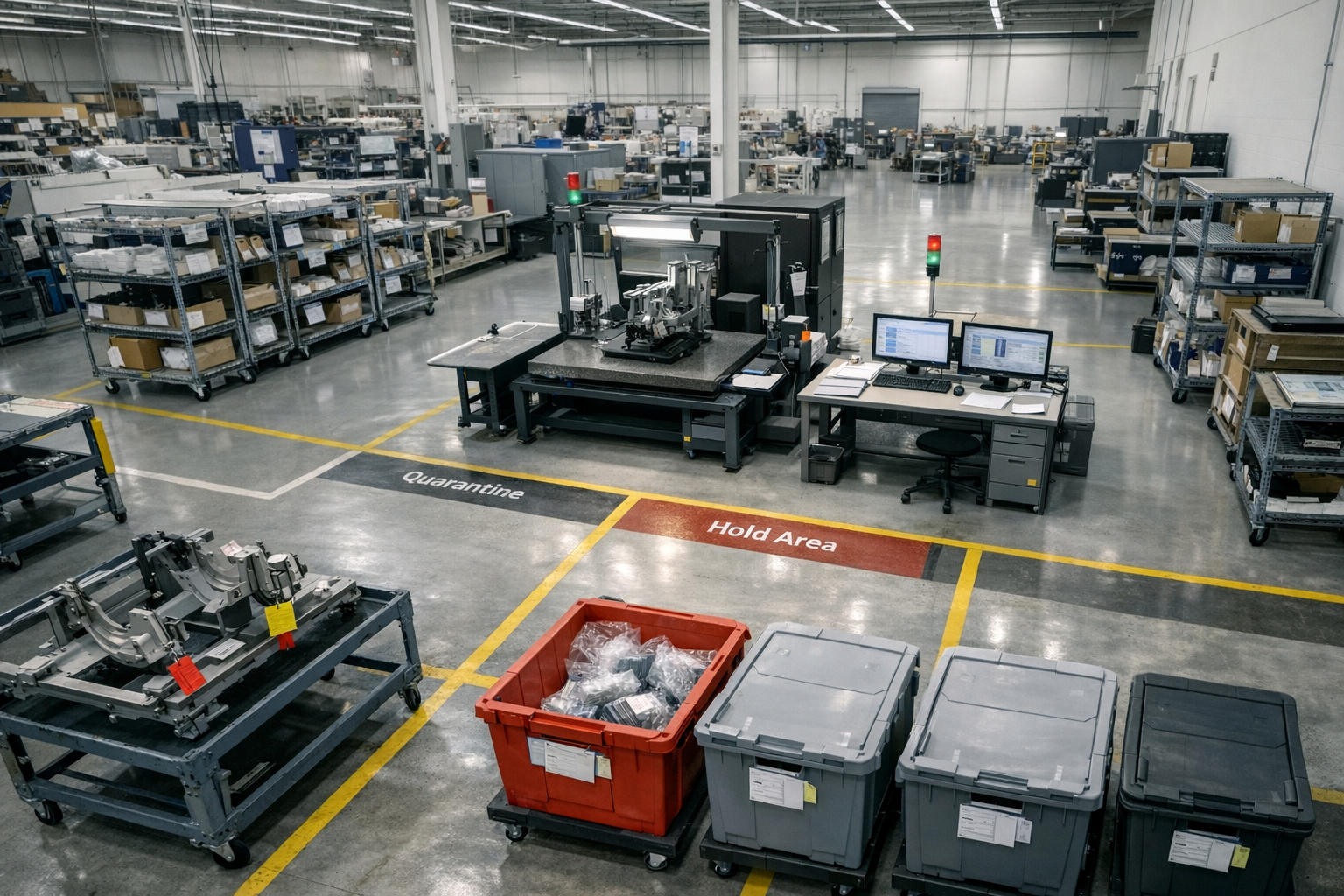
– **Quarantine hold**: Used for incoming materials or WIP awaiting inspection, testing, or documentation review. Items under quarantine are segregated physically and/or virtually.
– **Regulatory / compliance hold**: Used when documentation, approvals, or regulatory checks are incomplete or under review (for example, export checks, label review, or validation evidence).
– **Engineering hold**: Applied when pending engineering changes, design questions, or process changes may affect a product or order. Work may stop at a defined step until clarification.
– **Inventory hold / stock hold**: Used to prevent reservation, picking, or shipping of specific inventory (for example, due to shelf-life concerns, suspected damage, or administrative issues).
– **Process or equipment hold**: A status that prevents a process step or equipment from being used (for example, during maintenance, calibration review, or after a process alarm).
In many organizations, these types are controlled via standardized reason codes and workflows to support traceability and auditability.
How holds are used in workflows and systems
Holds appear across multiple OT/IT and business systems:
– **MES and shop-floor systems**: Lots, batches, work orders, or individual serial numbers can be placed on hold to stop processing at a specific operation or workstation.
– **ERP and inventory systems**: Inventory locations, batches, or serial numbers may be flagged as on hold or blocked, preventing allocation, transfer, or shipment.
– **QMS and LIMS**: Test results, nonconformances, and deviations can trigger automatic placement of affected material on hold pending investigation and disposition.
– **Document and change control systems**: Requests for change, unapproved work instructions, or obsolete procedures can be put on hold to prevent unintended use.
In regulated environments, the hold status and its release are typically documented, with electronic signatures, timestamps, and links to supporting records (for example, deviation reports or CAPA records).
Boundaries and what hold is not
To avoid confusion, it is useful to distinguish **hold** from related concepts:
– A hold is **not a final disposition** such as scrap, rework, or release; it is an interim state while a decision is pending.
– A hold does **not always mean nonconforming**; it may indicate incomplete information, documentation gaps, or process dependencies.
– A hold is **not the same as a physical location**, although quarantine or hold areas are often used; the status is logically applied and can span multiple locations.
– A hold is **not necessarily a complete stop of all activity**; in some workflows, holds block shipment but allow internal evaluation or limited processing.
Common confusion and misuse
Holds are sometimes confused or conflated with other statuses and controls:
– **Hold vs. block/lock**: In some systems “blocked” or “locked” is a system-enforced state that prevents transactions, while a “hold” may be more workflow-oriented. In other systems the terms are used interchangeably. Local definitions should be checked.
– **Hold vs. quarantine**: Quarantine is often a specific type of hold used primarily for material awaiting inspection. Not all holds are quarantine holds, and not all quarantined materials are suspected to be defective.
– **Hold vs. pause/stop in automation**: In control systems, a process “pause” or “stop” may be an immediate control action, while a hold typically implies a documented status in a quality or inventory context.
– **Hold vs. backorder or delay**: Commercial or planning delays (for example, backorders) may be described informally as being “on hold” but do not necessarily involve quality or regulatory controls.
Clear definition of hold types, authority to place and release holds, and system behaviours associated with each hold reason helps reduce ambiguity.
Site-context application
In the context of industrial operations and regulated manufacturing systems, **hold** is a core control concept used across MES, ERP, and QMS to:
– Prevent unintended use or release of materials, product, or data while investigations, approvals, or inspections are in progress.
– Provide a traceable status aligned with quality and regulatory requirements.
– Coordinate actions across functions (production, quality, planning, logistics) by making the hold state visible in integrated systems.
Holds are closely related to nonconformance management, CAPA, traceability, and audit readiness, because they create a controlled state for items under question until a documented decision is made.


Related Blog Articles


Related FAQ
Related Glossary
Ready to See How C-981 Can Accelerate Your Factory’s Digital Transformation?

