Incident investigation
Incident investigation is a structured process to understand what happened, why it happened, and how to prevent recurrence in industrial operations.


Incident investigation is a structured process used to understand what happened, why it happened, and how to reduce the likelihood or impact of similar events in the future. In industrial and regulated manufacturing environments, it is applied to safety incidents, quality incidents, process deviations, equipment failures, data integrity issues, IT/OT disruptions, and other unexpected events.
An incident investigation typically starts once an event is detected and recorded (for example, as a non-conformance, deviation, complaint, or safety report). The investigation gathers and analyzes evidence to establish facts, identify contributing factors and root causes, and define appropriate follow-up actions.
Key elements of incident investigation
While methods and depth can vary by organization and regulation, incident investigations commonly include:
- Event definition: Clarifying what happened, when, where, and under whose control, including impact on product, process, people, equipment, or data.
- Evidence collection: Gathering records and observations, such as batch records, non-conformance reports, equipment logs, MES/ERP data, maintenance history, training records, and environmental data.
- Analysis and root cause identification: Using structured techniques (for example, 5 Whys, fishbone diagrams, fault tree analysis, or timelines) to move from symptoms to underlying causes and contributing conditions.
- Risk evaluation: Assessing the actual and potential impact of the incident on safety, product quality, compliance, delivery, or cybersecurity.
- Corrective and preventive actions (CAPA): Defining, documenting, and assigning actions to contain the issue, correct immediate conditions, and reduce the chance of recurrence or escalation.
- Documentation and traceability: Maintaining a complete, auditable record of the investigation process, decisions, and evidence, often within a quality management system, EHS system, or MES-integrated workflow.
- Review and effectiveness checks: Reviewing the investigation outcomes, verifying implementation of actions, and checking whether recurrence has been reduced over time.
Operational context in manufacturing
In manufacturing, incident investigations are closely connected to operational and quality systems:
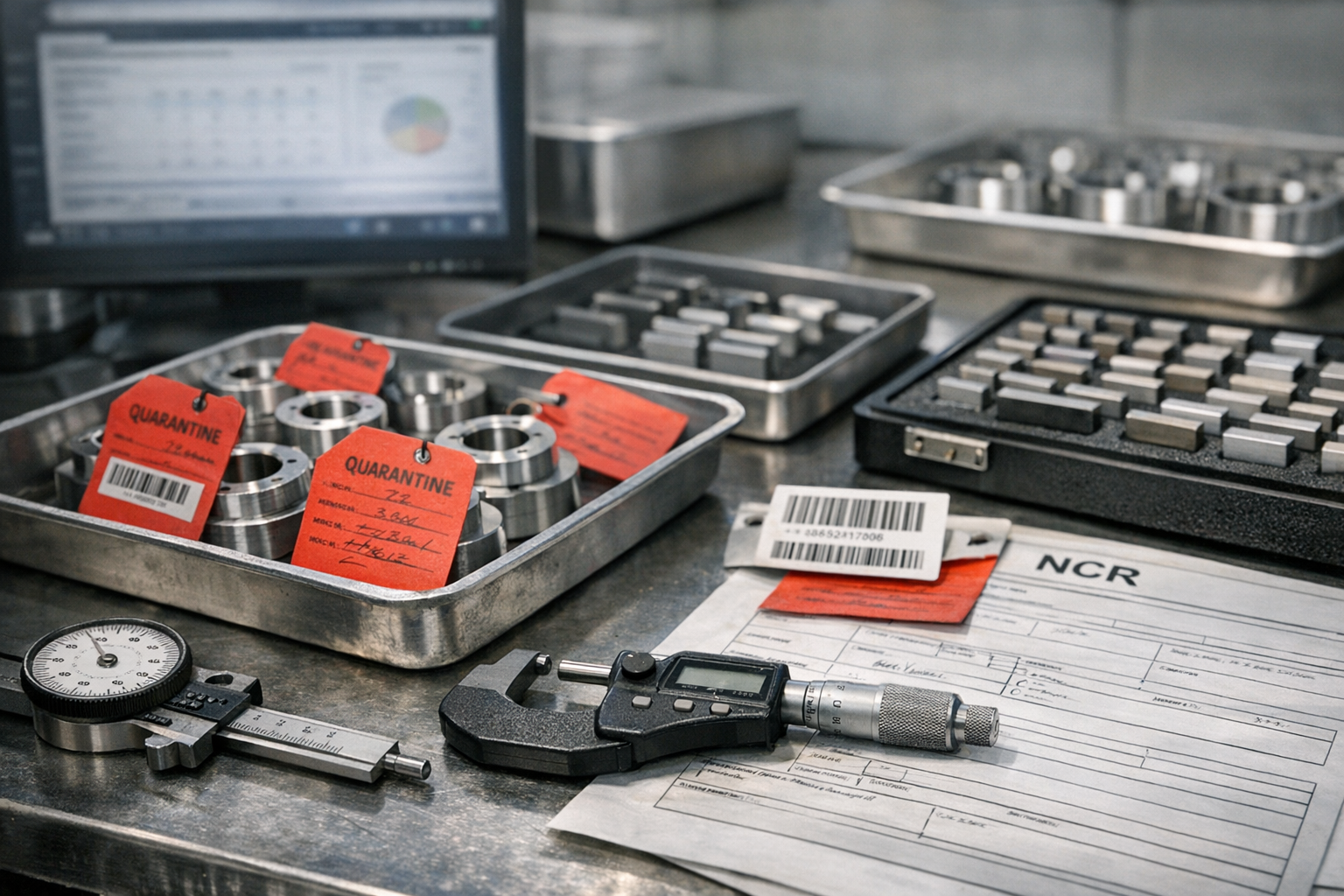
- Non-conformance and deviation records: Often serve as the primary trigger and evidence base, describing the deviation from specified requirements.
- MES and OT systems: Provide time-stamped production data, equipment states, alarm histories, and operator actions that help reconstruct the sequence of events.
- ERP and supply chain data: Support understanding of material flow, supplier lots, and downstream impact on customers or other sites.
- Quality and CAPA systems: Manage workflow, approvals, documentation, and linkage between incidents, risk assessments, and implemented actions.
- Regulatory frameworks: In regulated industries, incident investigations are often required for defined event types and must follow documented procedures with clear roles, timelines, and record-keeping practices.
Common confusion
Incident investigation is often discussed alongside related terms:
- Incident vs. accident: An accident usually implies harm or loss (for example, injury), while an incident can include near misses, quality deviations, or minor events without immediate damage. Investigations typically cover both, especially in proactive risk management.
- Incident investigation vs. root cause analysis (RCA): Root cause analysis is one component of an incident investigation. An investigation also includes evidence collection, risk evaluation, and action planning beyond the analytical step.
- Incident investigation vs. audit: Audits assess conformance to requirements over a defined scope and time period. Incident investigations are reactive to a specific event and focus on understanding that event and its drivers.
Link to non-conformance and CAPA (derived context)
Where incidents arise from deviations from specified requirements, non-conformance or deviation records often form the structured starting point for the investigation. They capture what deviated, when, and in what context. Effective incident investigations then link that record to root cause analysis, risk assessment, and CAPA, creating a connected and auditable chain from event detection through to follow-up actions.


Related Blog Articles


Related FAQ
Related Glossary
Ready to See How C-981 Can Accelerate Your Factory’s Digital Transformation?

