NCMR
NCMR stands for Nonconforming Material Report, a formal record used to document, segregate, and disposition nonconforming product or material.


NCMR stands for Nonconforming Material Report. It is a formal record used in manufacturing and quality systems to document, track, and disposition material, components, or finished product that do not meet specified requirements.
What an NCMR includes
An NCMR typically captures enough information to identify and control the nonconforming item and support investigation and decision making. Common elements include:
- Identification of the nonconforming material (part number, lot/batch, quantity, location)
- Description of the nonconformance (what requirement was not met, observed defects, test results)
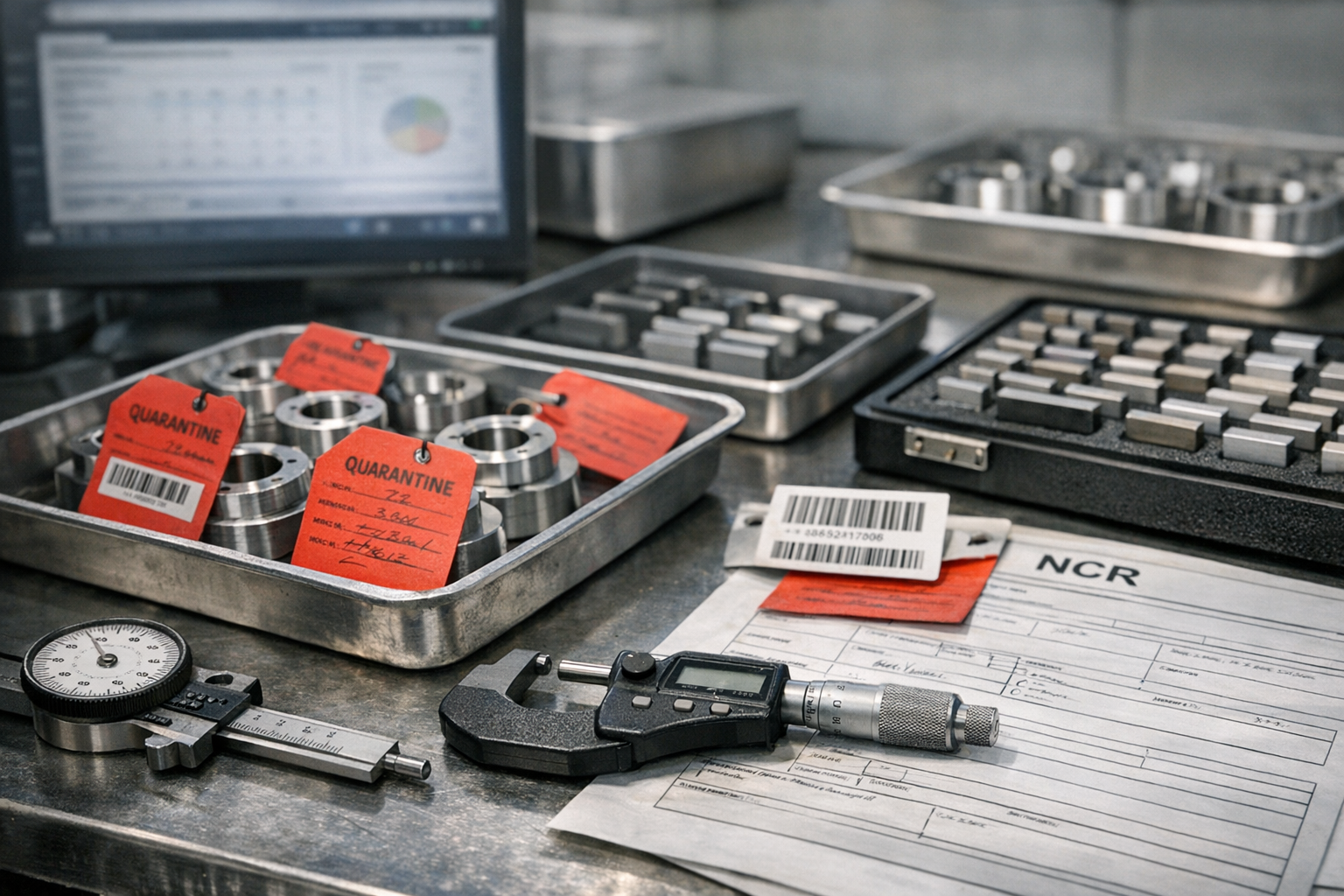
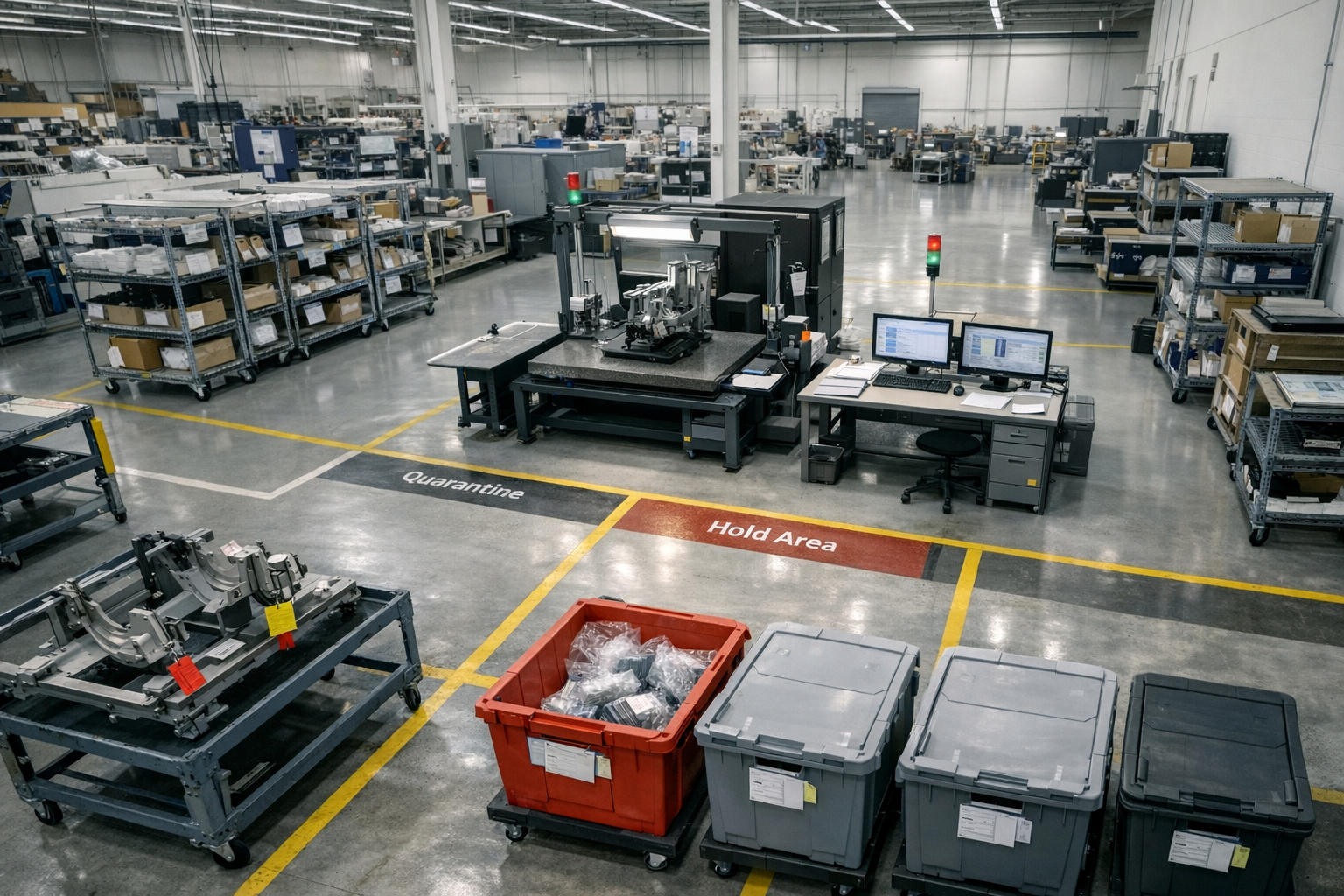
- Immediate containment actions (quarantine, segregation, labeling)
- Risk or impact assessment at a basic level (e.g., safety, fit, function, regulatory impact)
- Disposition decision (rework, repair, use-as-is under deviation, scrap, return to supplier)
- Links to related records, such as NCs, CAPAs, deviations, or supplier complaints
- Approvals, dates, and responsible personnel
Where NCMRs are used
In industrial and regulated manufacturing environments, NCMRs are part of the quality management system and often connect to IT and OT systems such as:
- MES or shop floor systems, which may trigger NCMRs when inspections fail or process limits are exceeded
- ERP or inventory systems, to place material on hold and prevent unintended use
- Electronic QMS platforms, where NCMRs feed into nonconformance, CAPA, or deviation workflows
NCMRs support traceability and provide evidence that nonconforming material is identified, controlled, and handled through defined procedures.
Relationship to nonconformance (NC)
An NCMR is related to, but not identical with, the broader concept of nonconformance (NC):
- Nonconformance (NC) is any failure to meet a specified requirement, which can involve product, process, documentation, or systems.
- NCMR is a specific record focused on nonconforming material or product, usually at the part, lot, batch, or unit level.
In many organizations, an NCMR may initiate or be linked to a higher level NC record or investigation in the QMS.
Operational role
Operationally, NCMRs are used to:
- Quarantine and track suspect material on the shop floor or in warehouses
- Coordinate decisions between production, quality, engineering, and supply chain
- Provide data for trend analysis, supplier performance monitoring, and cost of poor quality analysis
- Demonstrate traceable handling of nonconforming material during audits and inspections
Common confusion
- NCMR vs NC: NC is the general nonconformance concept; NCMR is a document or record specific to material/product nonconformance.
- NCMR vs CAPA: CAPA focuses on root cause and preventive/corrective actions at system or process level. An NCMR may feed into a CAPA if trends or risk justify deeper investigation.
- NCMR vs deviation: A deviation (or waiver) is an approved temporary departure from a requirement. An NCMR may reference a deviation when use-as-is of nonconforming material is formally authorized.


Related Blog Articles


Related FAQ
Related Glossary
Ready to See How C-981 Can Accelerate Your Factory’s Digital Transformation?

