NCR
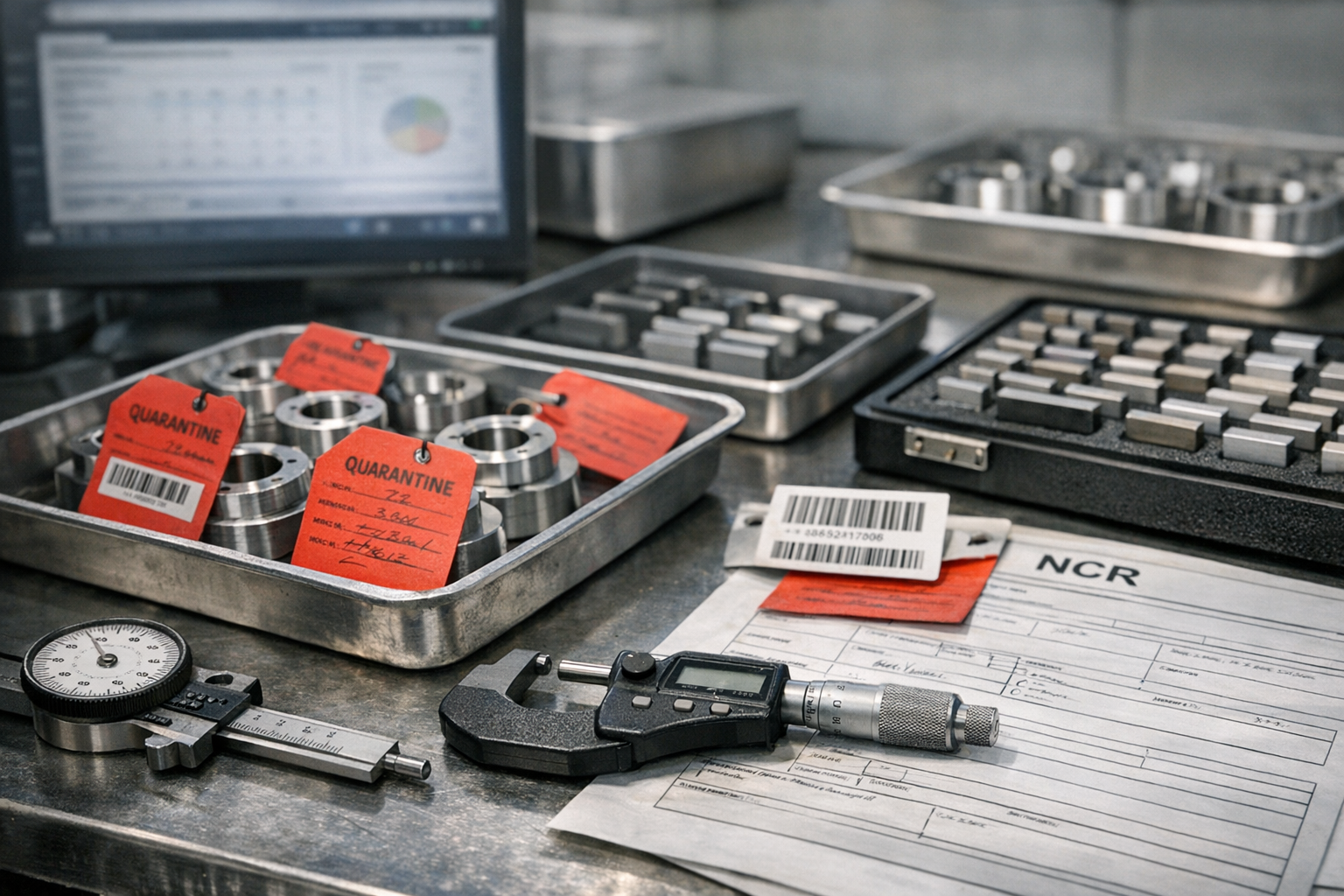
An NCR (Nonconformance Report or Non-Conformance Report) documents a product or process that does not meet specified requirements.


NCR in manufacturing and regulated operations
NCR commonly stands for **Nonconformance Report** or **Non-Conformance Report**. It is a formal record used to document any product, material, process, service, or documentation that does not meet specified requirements.
In industrial and regulated manufacturing environments, an NCR is part of the quality management and compliance record set. It captures what went wrong, how it was detected, the impact or suspected impact, and the immediate actions taken to contain the issue.
Typical contents of an NCR
While formats vary across organizations and systems, an NCR record commonly includes:
– Unique NCR identifier and date
– Description of the nonconformance (what failed and how it was detected)
– Reference requirements (drawing, specification, SOP, work instruction, contract, or regulation)
– Lot, batch, serial number, work order, or equipment reference
– Classification or severity (for example: minor, major, critical)
– Disposition decision (e.g., use-as-is, rework, repair, reject/scrap, return to supplier)
– Responsibilities and approvals (originator, quality, engineering, customer where applicable)
– Linkage to related records (deviations, waivers, CAPA, change controls, complaints)
The NCR may also capture supporting evidence such as measurements, test results, photos, or attached documentation.
Role of NCRs in operational workflows
In practice, NCRs are used to:
– Record nonconforming material or process events as they are detected on the shop floor, in incoming inspection, in-process inspection, final inspection, or field returns
– Enable review and decision-making on product disposition by quality, engineering, and other responsible functions
– Provide traceable evidence for audits and regulatory inspections
– Feed trend analysis used to identify recurring issues and potential systemic problems
NCRs often originate in systems such as MES, QMS, ERP, or supplier portals, and may be linked to work orders, production orders, purchase orders, or service records.
Relationship to CAPA and deviations
An NCR documents that **a specific nonconformance occurred**. It does not, by itself, guarantee investigation or corrective action beyond immediate containment.
– **NCR vs. CAPA**: An NCR is an event record for a particular nonconformance. A CAPA (Corrective and Preventive Action) is a structured investigation and action plan intended to eliminate the cause of one or more nonconformances and prevent recurrence. One CAPA can be triggered by multiple NCRs showing a pattern.
– **NCR vs. deviation/waiver**: A deviation or waiver is an approved, intentional departure from a requirement, usually requested **before** or during production. An NCR is normally raised **after** a nonconformance is detected. However, in some organizations, NCRs and deviation/waiver processes are tightly integrated or combined in the same workflow.
Boundaries and exclusions
The term NCR in this context:
– **Includes**: records for nonconforming products, components, raw materials, documents, software builds, and manufacturing or test processes that do not meet defined requirements
– **Includes**: NCRs raised internally (e.g., production, quality) or externally (e.g., supplier NCRs, customer-return NCRs) when managed through a formal quality process
– **Excludes**: financial term “Net Cash Requirement” or vendor-specific product names unrelated to quality nonconformance
An NCR is typically not the same as a general incident, near miss, or safety report, although nonconforming conditions can overlap with safety concerns.
Use in digital manufacturing systems
In OT/IT and MES/QMS/ERP integration, NCR records are usually:
– Created automatically or manually when inspection or test results fall outside specification
– Associated with material genealogy and traceability records (e.g., lot and serial tracking)
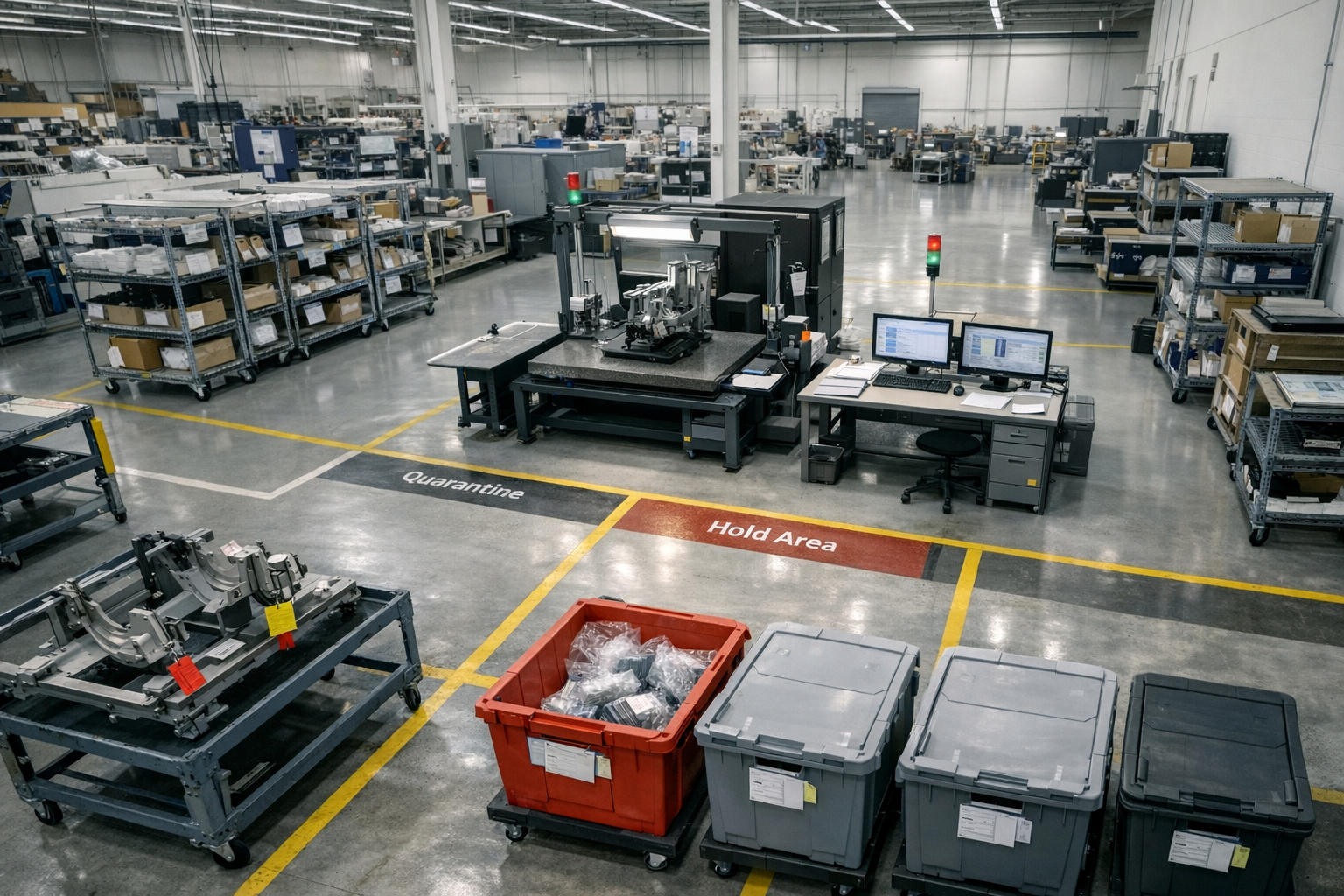
– Used as triggers for workflow steps such as quality holds, additional inspections, rework routing, or engineering review
– Queried and trended as part of quality metrics such as nonconformance rates, cost of poor quality (COPQ), and supplier performance
Common confusion and alternative meanings
“NCR” is also the name of a well-known technology company and may be used as a financial or banking acronym in other industries. In manufacturing and regulated operations:
– **Correct usage** refers to Nonconformance Report / Non-Conformance Report
– To avoid ambiguity, many organizations spell out “Nonconformance Report” in formal documents and use the acronym NCR mainly in internal systems and forms
When systems or documents might be read by mixed audiences, it is common to define the term on first use (e.g., “Nonconformance Report (NCR)”).


Related Blog Articles


Related FAQ
Related Glossary
Ready to See How C-981 Can Accelerate Your Factory’s Digital Transformation?

