NCR (Nonconformance Report)
A formal record used to document, track, and disposition product or process nonconformances in manufacturing and quality systems.


Operational meaning
An **NCR (Nonconformance Report)** is a formal record used to document and control any instance where a product, material, process, service, or documentation does not meet specified requirements. In industrial and regulated manufacturing environments, NCRs are a key element of the nonconformance control process within a quality management system.
An NCR typically captures:
– Identification of the nonconforming item or process
– The specific requirement that was not met (specification, drawing, SOP, standard)
– Description and classification of the nonconformance (e.g., critical, major, minor)
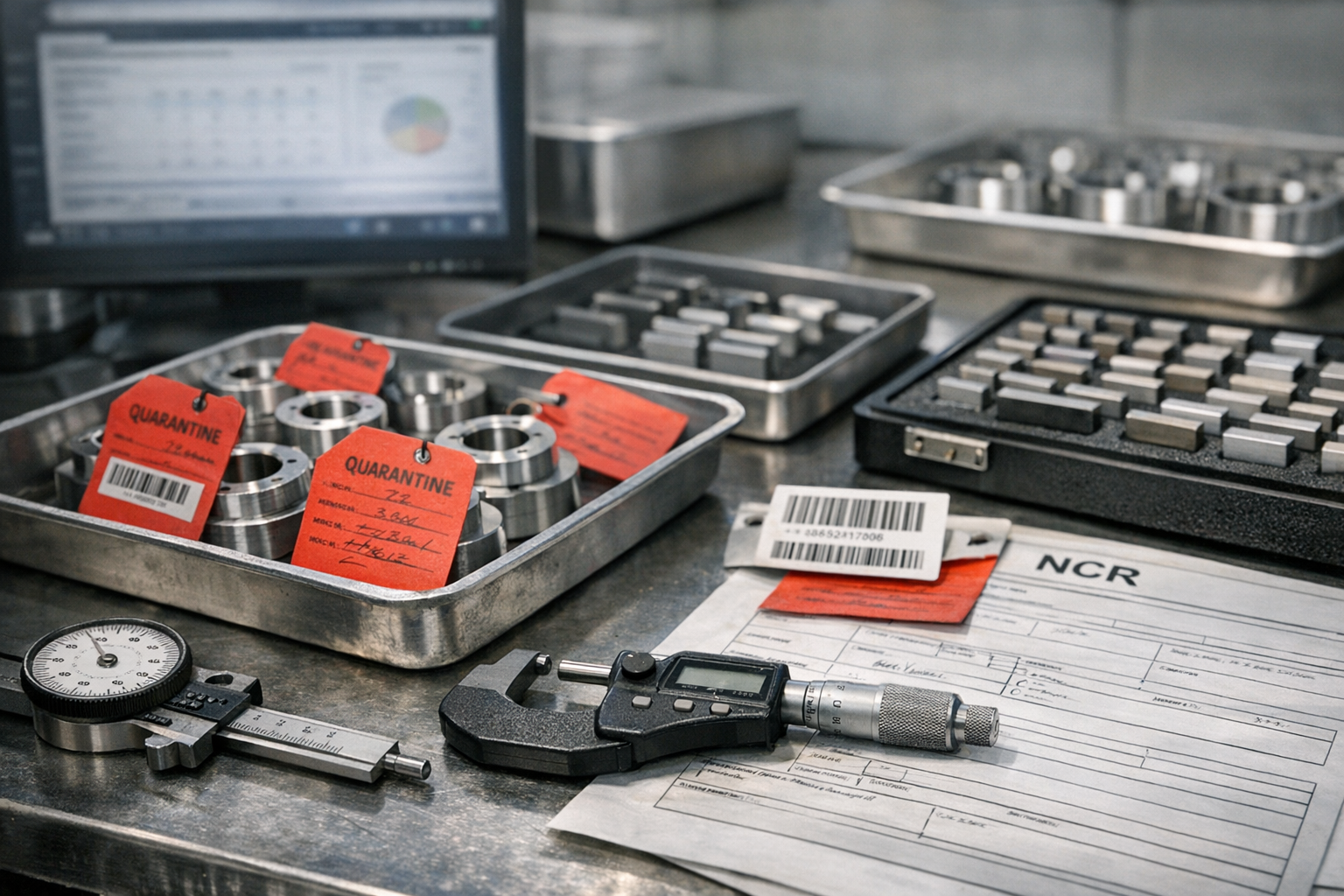
– Containment actions (e.g., quarantine, hold tags, line stop)
– Disposition (e.g., use-as-is, rework, repair, scrap, return to supplier)
– Approvals and sign-offs by authorized personnel
– Traceability information (lot/batch, equipment, operator, work order)
NCRs may be implemented on paper forms or in electronic systems such as MES, QMS, or ERP modules.
Use in manufacturing and regulated environments
In manufacturing operations, an NCR commonly:
– Is triggered when inspection, in-process checks, alarms, or operators detect a deviation
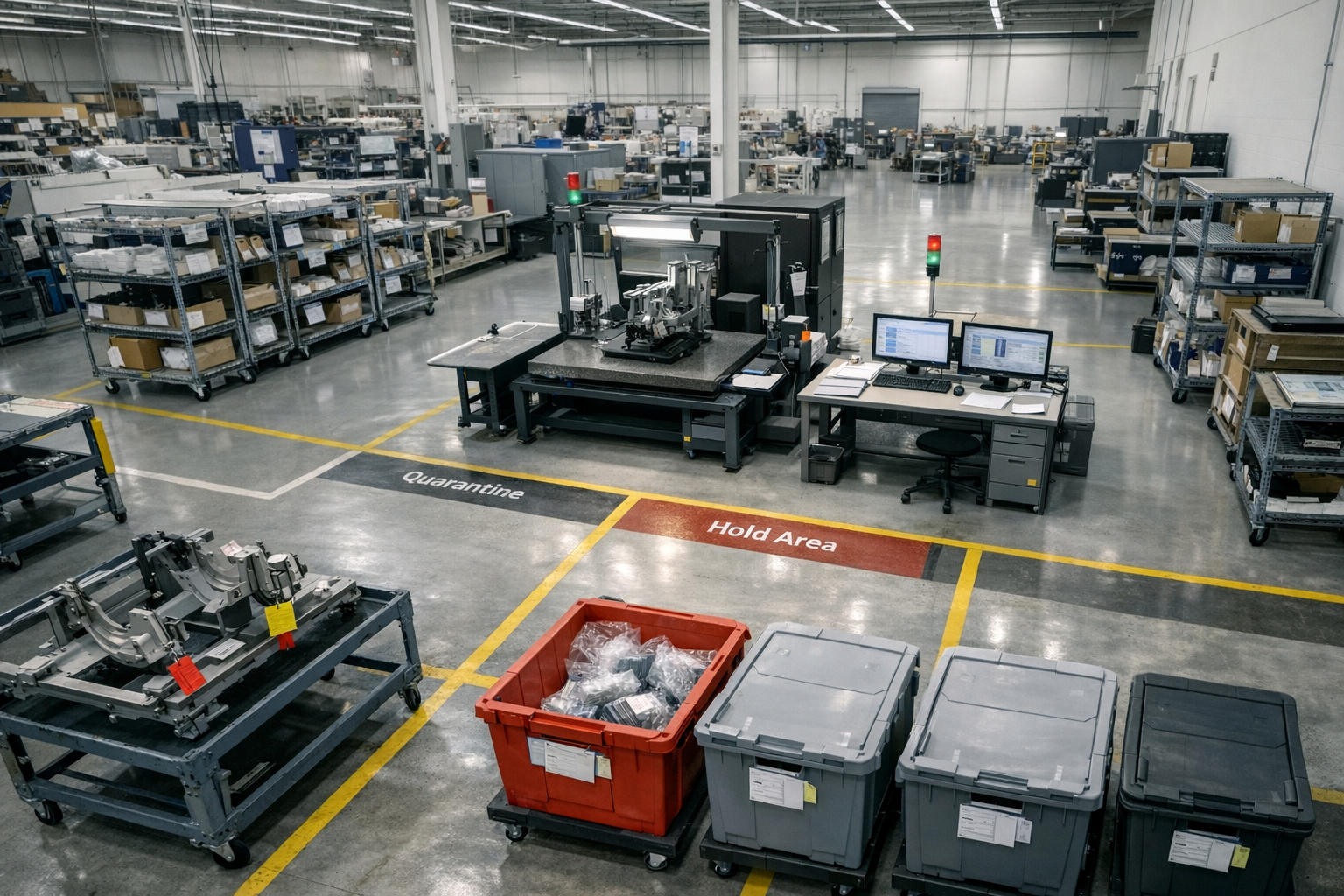
– Initiates segregation and labeling of nonconforming material or product
– Connects to material status and inventory controls (e.g., movement to a quality hold location)
– Drives formal disposition decisions by quality, engineering, or authorized roles
– Feeds data into corrective and preventive action (CAPA) or problem-solving processes
– Provides records required for audits, customer reporting, and regulatory inspections
In regulated industries (such as pharmaceuticals, medical devices, aerospace, food and beverage), NCRs are often tightly linked to batch records, device history records, or other mandatory documentation.
What an NCR is and is not
**Included:**
– Documentation of actual or suspected nonconforming product, materials, components, or processes
– Records related to internal production, incoming inspection, or customer returns
– Information used for traceability, trend analysis, and risk assessments
**Typically not included:**
– The full root cause analysis and long-term corrective actions (these are usually handled in CAPA or separate problem-solving records)
– Routine process monitoring data where no limits are exceeded
– Change control records for planned changes (managed through separate change management processes)
An NCR may **reference** related investigations, risk assessments, and CAPA records, but it is not itself a complete investigation report.
Common workflow connections
In integrated OT/IT and quality environments, NCRs often interact with:
– **MES**: automatic NCR creation from failed inspections, SPC violations, or machine events
– **ERP**: material status updates (blocked/hold), stock adjustments, and supplier returns
– **QMS**: linkage to CAPA, audit findings, deviation records, and customer complaint handling
– **LIMS or lab systems**: lab test failures that trigger NCRs for affected lots or batches
This integration supports consistent material control, traceability, and data for reliability and quality analytics.
Common confusion and related terms
– **NCR vs CAPA**: An NCR documents the occurrence and disposition of a nonconformance. CAPA focuses on investigating causes and implementing and verifying long-term corrective or preventive actions. An NCR can be an input to a CAPA.
– **NCR vs deviation**: Some organizations use *deviation* for any departure from a procedure or expected condition, and reserve *NCR* for product or material nonconformance. Others treat them as equivalent. Usage is organization- and sector-specific.
– **NCR vs defect log**: A defect log may collect issues at a summary level. NCRs are typically formal, controlled records with defined approval and disposition workflows.
Clear definition in site or company procedures is important to avoid overlap and gaps between NCRs, deviations, and CAPA processes.
Site context application
Within industrial operations and manufacturing systems, an NCR is treated as a structured quality record that:
– Controls nonconforming items to prevent unintended use or shipment
– Provides traceable documentation for audits and regulatory review
– Supplies data for continuous improvement, risk management, and reliability analysis
Digital NCR workflows in MES, QMS, and ERP systems are commonly used to standardize how nonconformances are captured, reviewed, and resolved across sites and production lines.


Related Blog Articles


Related FAQ
Related Glossary
Ready to See How C-981 Can Accelerate Your Factory’s Digital Transformation?

