non conformance
A non conformance is any product, process, or system condition that does not meet specified requirements or standards.


A non conformance is any instance where a product, material, process, service, or system does not meet a defined requirement. In industrial and regulated manufacturing environments, it commonly refers to a documented deviation from specifications, standards, procedures, or contractual or regulatory requirements.
Non conformances can relate to:
- Product characteristics that fall outside of defined tolerances or specifications
- Process steps that are not executed according to approved work instructions or recipes
- Use of unapproved materials, equipment, or software versions
- Documentation errors or missing records required by quality or regulatory systems
- Supplier parts or services that fail incoming inspection or qualification
Operational meaning in manufacturing systems
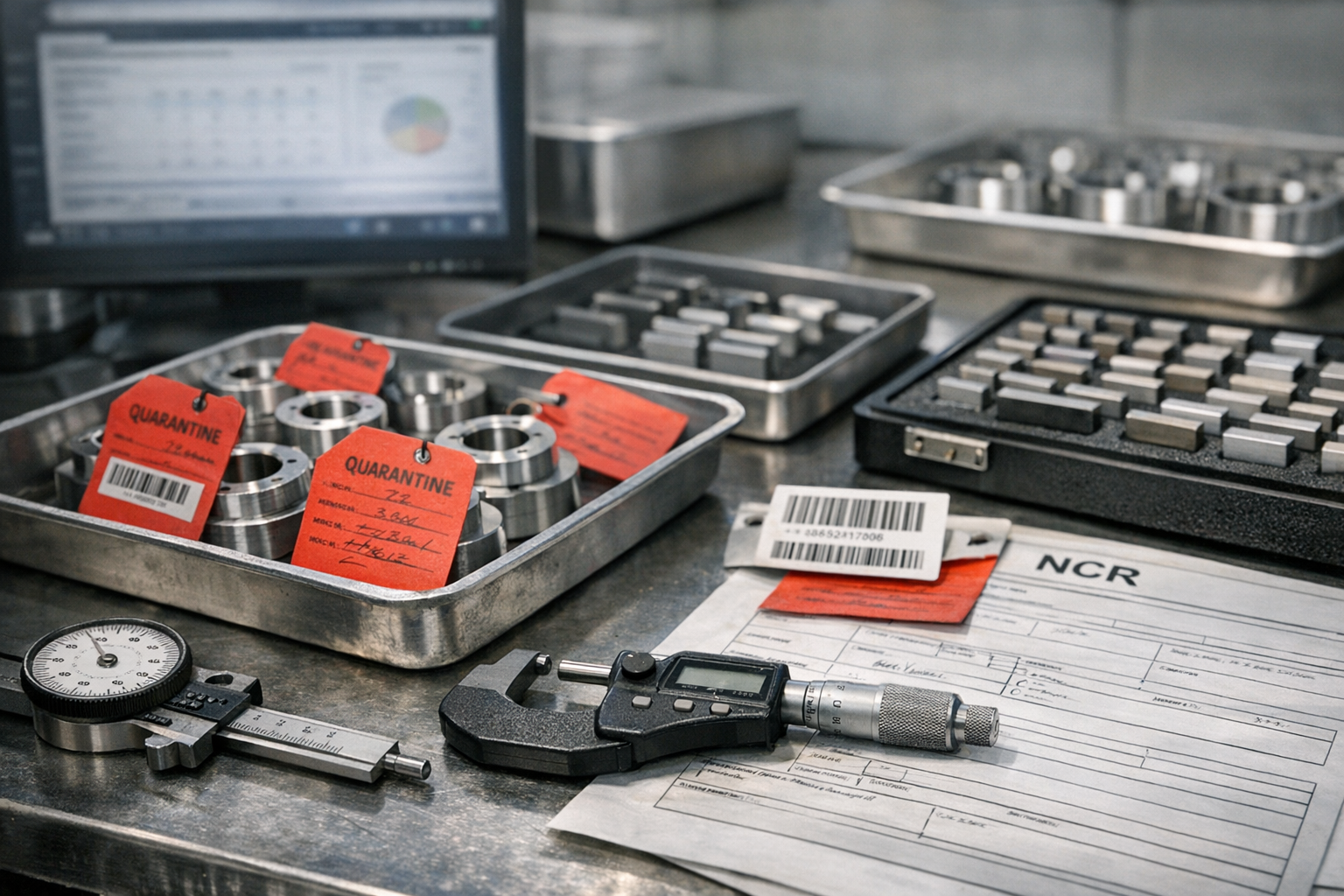
Operationally, a non conformance is often initiated as a formal record in a quality or manufacturing system when an issue is detected on the shop floor, during inspection, in the field, or at a supplier. Typical elements of a non conformance record include:
- Description of the deviation and affected items (lots, serial numbers, orders)
- Reference to the specific requirement that was not met
- Classification (e.g., critical, major, minor; internal vs. external)
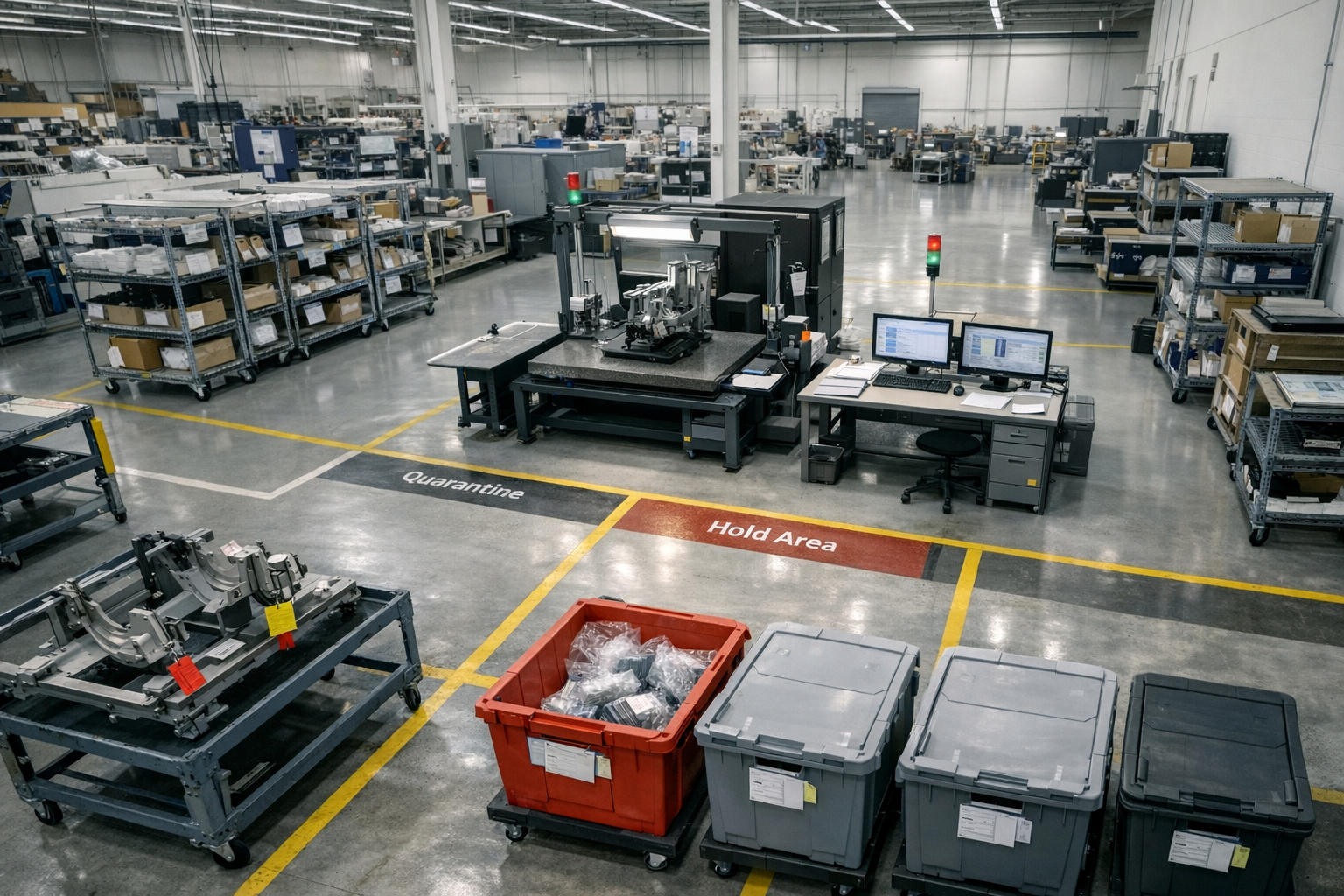
- Immediate containment actions (e.g., hold, quarantine, rework, scrap)
- Disposition decision (use as is, rework, repair, return to supplier, scrap)
- Links to related CAPA, change controls, or risk assessments if applicable
In integrated MES, ERP, and quality systems, non conformance records may trigger holds on work orders or inventory, adjust yield and cost of poor quality metrics, and provide evidence for audits and regulatory inspections.
Relationship to CAPA and quality management
A non conformance is an observation or event, not the corrective action itself. Many organizations use non conformance data as input to:
- Corrective and preventive actions (CAPA) when root cause analysis is required
- Trend analysis to identify recurring issues across products, lines, or sites
- Risk assessments for processes, suppliers, and changes
- Continuous improvement and standardization of work instructions and controls
Cost of a non conformance
The cost of a non conformance commonly refers to all resources consumed and impacts created by a specific deviation. This can include direct costs such as scrap, rework, concessions, and additional testing, as well as indirect costs such as downtime, delays, investigations, customer returns, and potential regulatory exposure. In practice, these costs are often modeled within cost of poor quality frameworks and may depend on the maturity of data capture and system integration.
Common confusion
- Non conformance vs. defect: A defect usually describes a specific flaw in a product unit. A non conformance is broader and can include process, documentation, or system deviations even when no discrete product defect is visible.
- Non conformance vs. CAPA: A non conformance is the documented deviation. CAPA refers to the structured investigation and actions taken to correct and prevent recurrence. Not all non conformances lead to a full CAPA, depending on risk and frequency.
- Non conformance vs. deviation: In some regulated sectors, a deviation is any departure from a procedure, while a non conformance is reserved for departures that violate a formal requirement or specification. Usage varies by organization, so local definitions and SOPs should be consulted.


Related Blog Articles


Related FAQ
Related Glossary
Ready to See How C-981 Can Accelerate Your Factory’s Digital Transformation?

