non-conformance
A documented departure from an approved requirement, such as a specification, procedure, drawing, or regulatory or contract condition.


Non-conformance commonly refers to any documented departure from an approved requirement. In industrial and regulated manufacturing environments, it is used as a formal quality term for situations where a product, process, service, document, software function, or data set does not meet one or more specified criteria.
What a non-conformance includes
In practice, a non-conformance may involve:
- Product or material: Dimensions out of tolerance, incorrect material grade, missing features, contamination, or failed test results.
- Process or operation: Steps not followed as written, skipped in-process checks, unapproved tools or fixtures, or operation outside validated ranges.
- Documentation: Using obsolete work instructions, incomplete batch records, missing signatures, or inconsistent logbook entries.
- Software and data: Use of unvalidated software versions, incorrect master data in MES/ERP, or misconfigured recipes and parameters.
- Regulatory or contractual requirements: Not meeting labeling rules, traceability requirements, environmental controls, or specific customer contract terms.
Non-conformances can be identified at any stage of the lifecycle: incoming inspection, in-process manufacturing, testing, release, installation, or in the field (e.g., customer complaints revealing a deviation from requirements).
How non-conformance is handled operationally
Non-conformances are typically managed through a formal quality process, often supported by QMS, MES, or ERP systems. Common elements include:
- Detection and reporting: Recording the issue with details such as lot, work order, equipment, operator, and time.
- Classification: Categorizing the type (e.g., product, process, documentation) and severity (critical, major, minor) based on internal criteria.
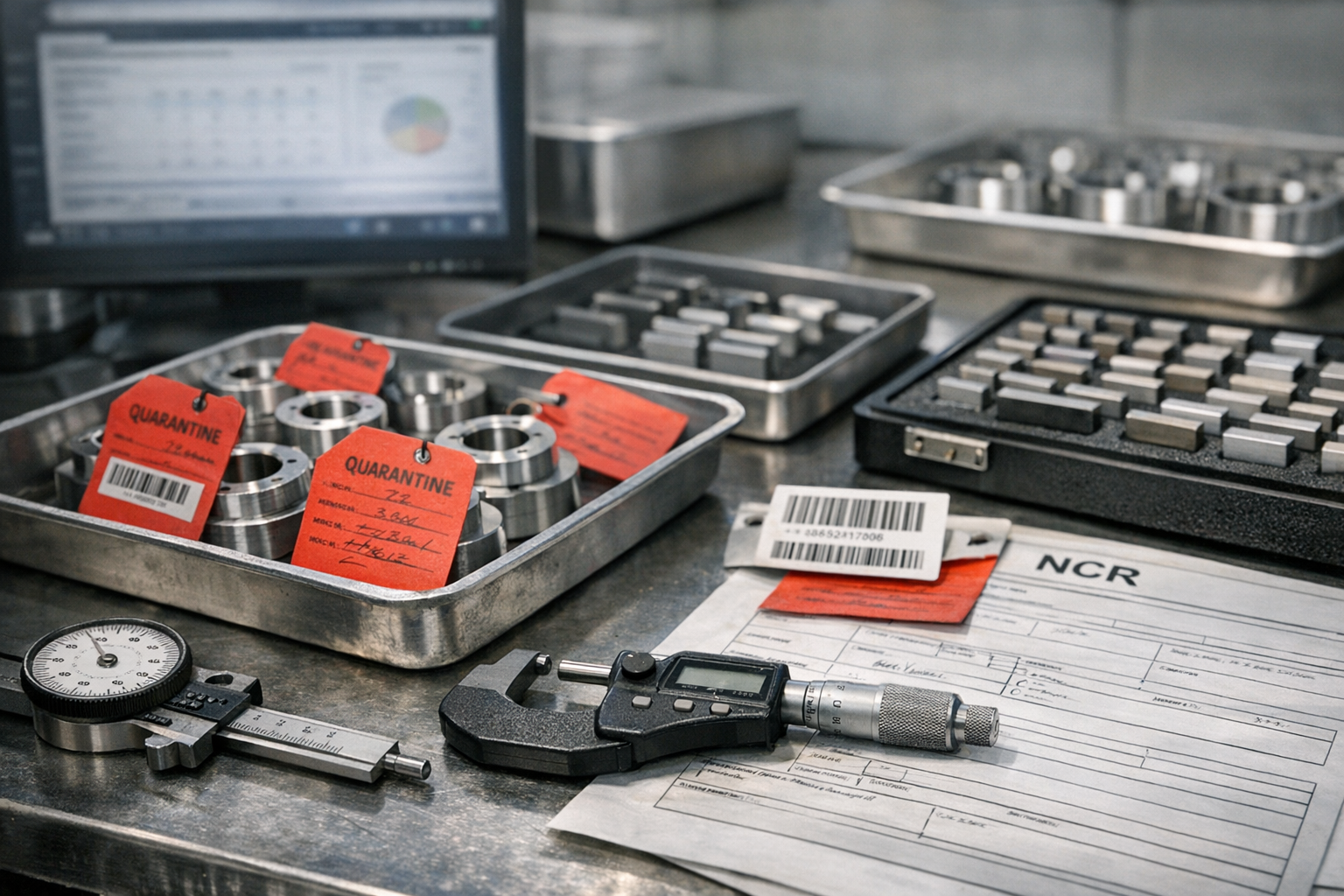
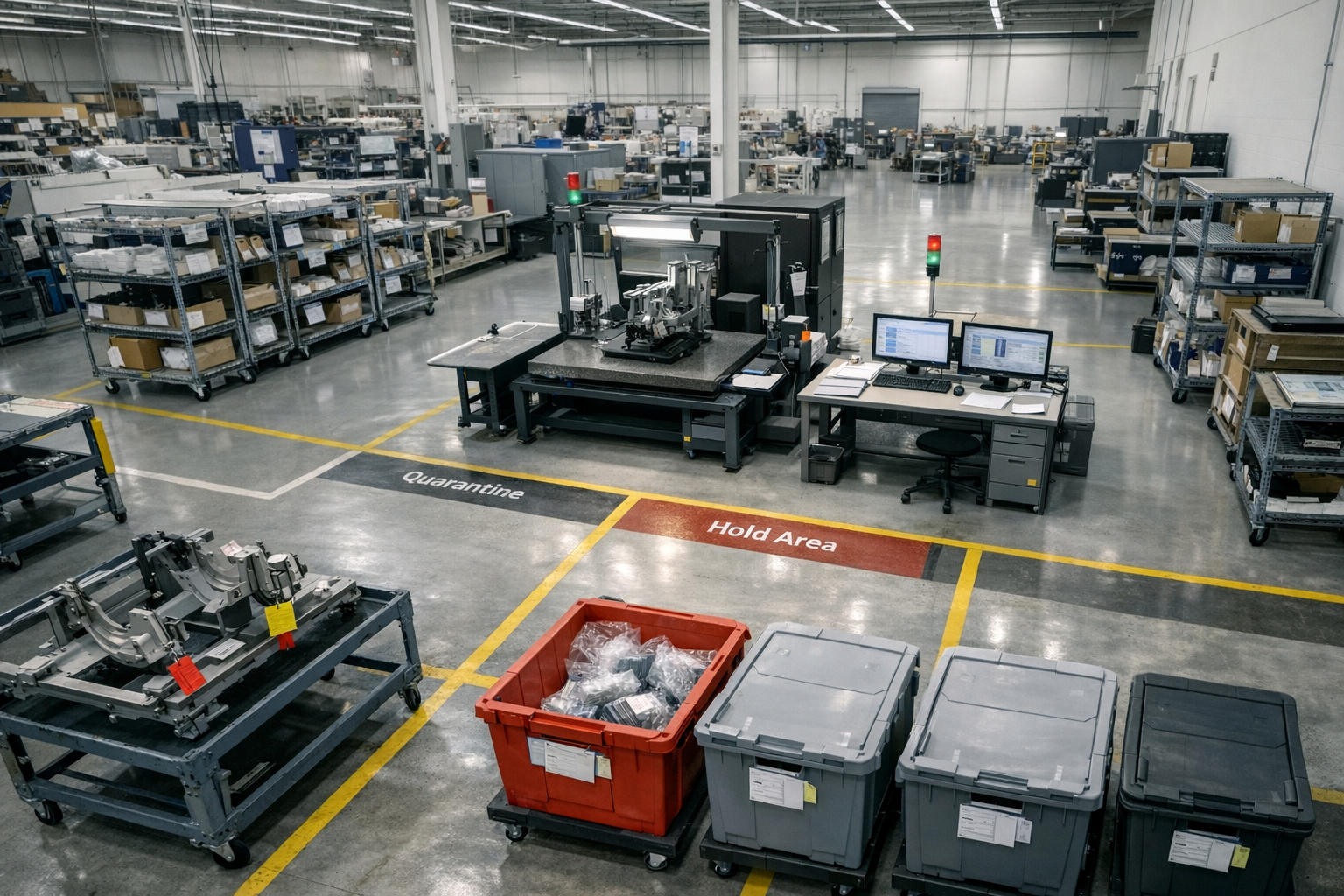
- Segregation and control: Placing affected items on hold or in quarantine to prevent unintended use or shipment.
- Disposition: Deciding whether to scrap, rework, repair, use-as-is under deviation/waiver, or return to supplier, following defined procedures and approvals.
- Investigation and follow-up: When appropriate, performing root cause analysis and linking the non-conformance to corrective and preventive actions (CAPA).
Common confusion
- Non-conformance vs defect: A defect usually refers to a specific flaw in a product. A non-conformance is broader and includes process, documentation, software, and data deviations, even if no physical defect is visible.
- Non-conformance vs deviation: In some organizations, a deviation is a pre-approved, temporary departure from a requirement, while a non-conformance is an unplanned or undesired failure to meet requirements. Usage varies by company and sector.
- Non-conformance vs CAPA: A non-conformance is the event or condition. CAPA refers to the structured actions taken to address causes of non-conformances or other quality issues.
Context in regulated manufacturing
In regulated industries, non-conformances are typically subject to documented procedures, record-keeping, traceability, and review. Validated systems, change control, and document control practices define what counts as the approved requirement and therefore what constitutes a non-conformance when not followed.


Related Blog Articles


Related FAQ
Related Glossary
Ready to See How C-981 Can Accelerate Your Factory’s Digital Transformation?

