nonconformity
A nonconformity is a documented instance where a product, process, or system does not meet a specified requirement or standard.


A nonconformity is a documented situation where a product, process, service, or management system does not meet a defined requirement. In industrial and regulated manufacturing environments, those requirements usually come from standards (such as ISO 9001 or AS9100), internal procedures, customer specifications, engineering documents, or regulatory obligations.
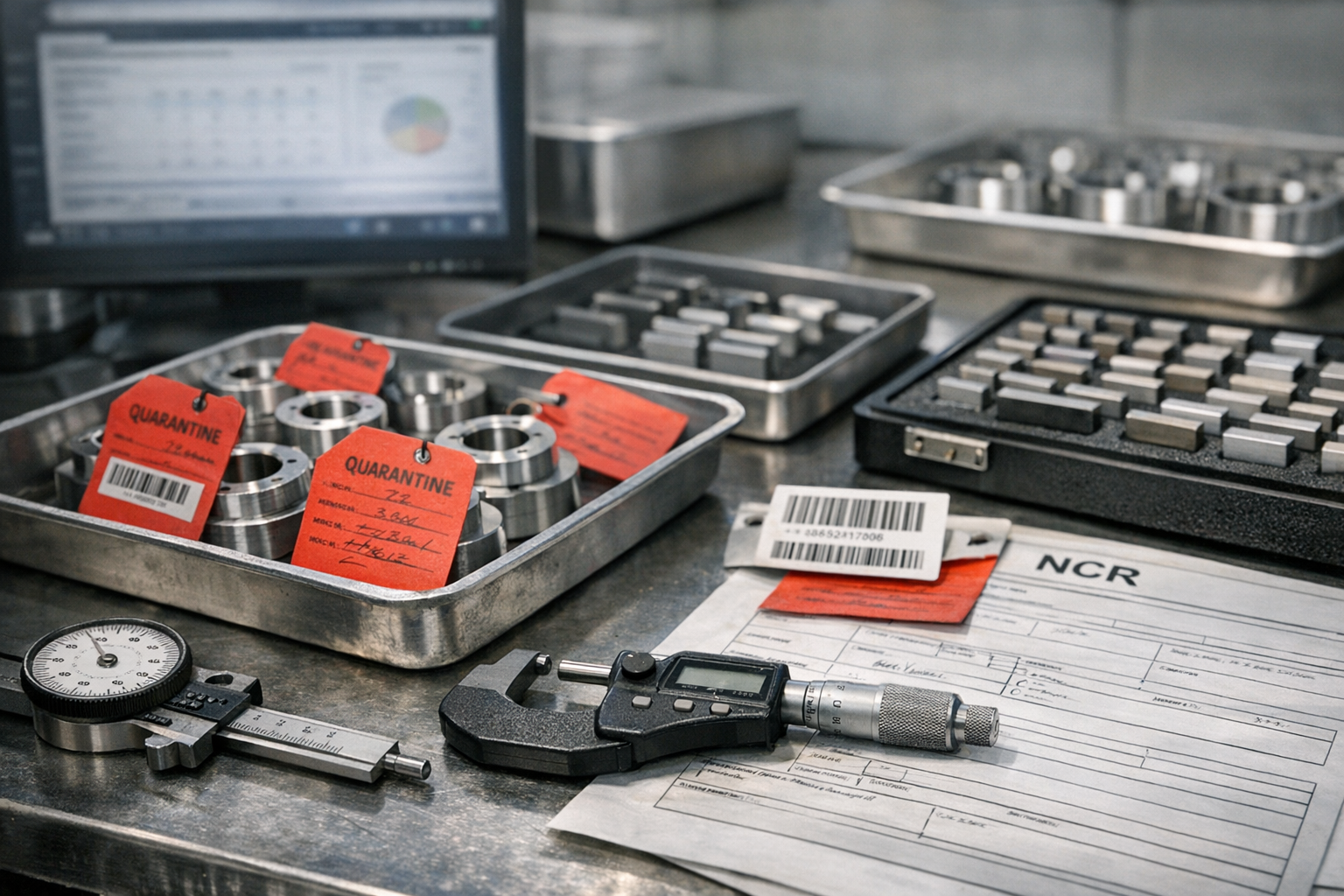
Nonconformity is typically identified through inspections, in-process checks, testing, audits, or system monitoring. Each nonconformity is recorded and evaluated so that the organization can decide how to address the immediate issue and whether longer-term corrective or preventive actions are needed.
What a nonconformity includes
In an operational and quality management context, nonconformity commonly refers to:
- Product characteristics outside specified limits (for example, a dimension out of tolerance or an incorrect material lot)
- Process deviations (for example, a step skipped in a work instruction or an unauthorized process change)
- System or QMS gaps (for example, missing required records, uncontrolled documents, or incomplete training against a procedure)
- Supplier issues (for example, received parts that do not match purchase order or drawing requirements)
Nonconformities can be classified in different ways, such as major or minor, based on their potential impact on safety, compliance, or fitness for use.
What a nonconformity is not
- It is not necessarily a defect in the customer-delivered product, although product defects are one type of nonconformity.
- It is not the same as the root cause. The nonconformity describes what requirement was not met; root cause analysis explains why it occurred.
- It is not, by itself, a corrective action. Corrective and preventive actions are follow-up activities taken in response to a nonconformity or risk.
Operational use in manufacturing systems
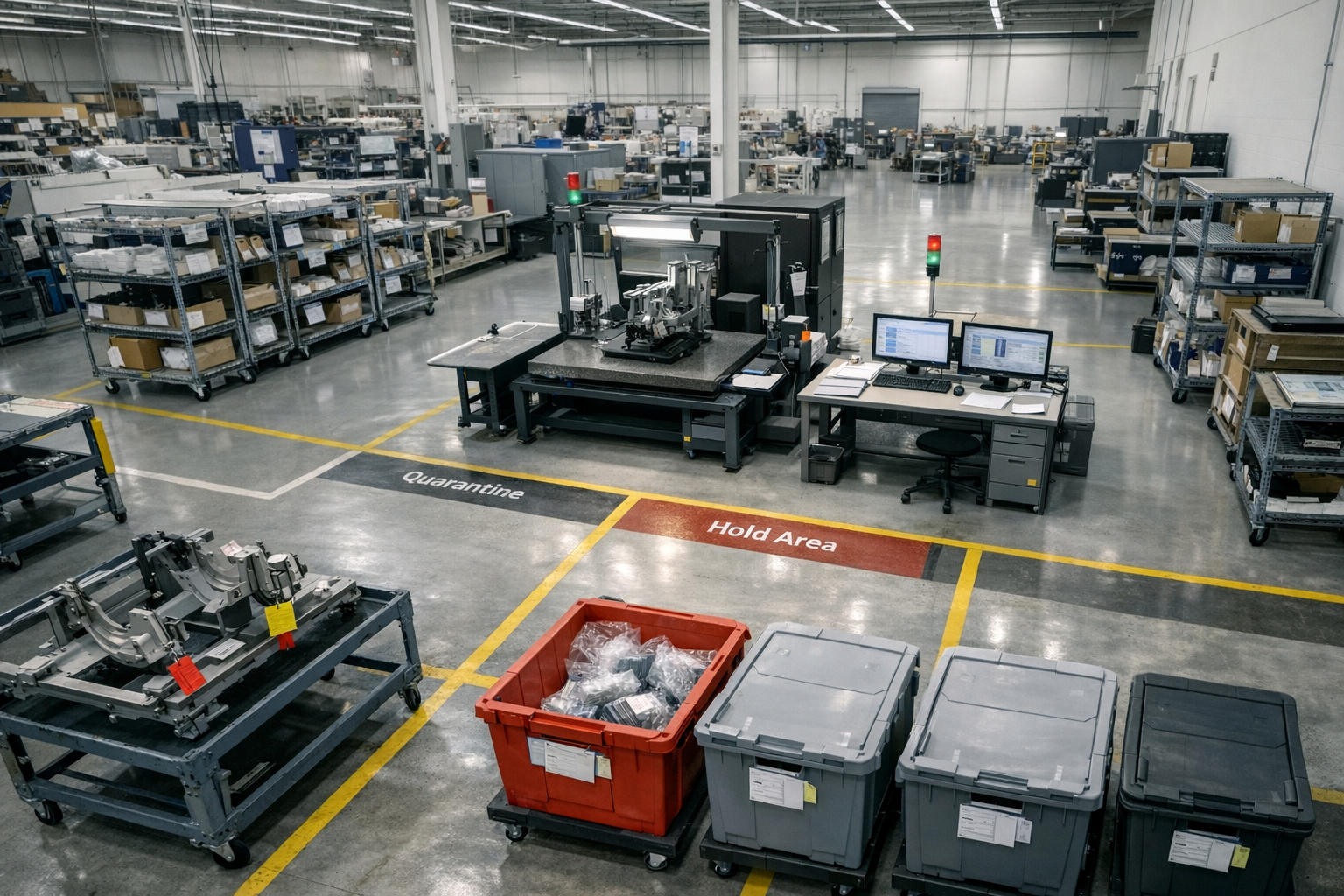
In manufacturing, nonconformities are usually tracked within quality systems, MES, ERP, or dedicated nonconformance management tools. Common elements include:
- Reference to the violated requirement (standard clause, specification, drawing, or procedure)
- Description of the issue and objective evidence (measurements, photos, records, system logs)
- Classification and risk or severity assessment
- Disposition decision (for example, rework, use-as-is under concession, scrap, return to supplier)
- Links to corrective and preventive action (CAPA) records if a systemic issue is suspected
In standards-based QMS environments, such as those aligned with ISO 9001 or AS9100, nonconformities can apply to both operational processes and the management system itself. For example, an internal audit might raise a nonconformity when a documented procedure is not followed or when required records are missing or incomplete.
Common confusion
- Nonconformity vs. noncompliance: “Nonconformity” is typically used in quality and QMS contexts to mean not meeting a specified requirement, which may be internal, customer, or standard-based. “Noncompliance” often refers more specifically to not meeting a legal or regulatory requirement. In practice, the terms are sometimes used interchangeably, but they may carry different implications in regulated industries.
- Nonconformity vs. defect: A defect usually refers to a product that does not meet fitness-for-use or customer expectations. A nonconformity is broader and also covers process and system issues that may not yet have produced a defective item.
Relation to aerospace and AS9100
In aerospace and other highly regulated sectors, AS9100 and similar standards use the concept of nonconformity to structure how organizations identify, document, and control deviations from requirements. This typically includes controls for nonconforming product, requirements for documenting nonconformities found in audits, and expectations for linking significant or repeated nonconformities to formal corrective action processes.


Related Blog Articles


Related FAQ
Related Glossary
Ready to See How C-981 Can Accelerate Your Factory’s Digital Transformation?

