Why is it important to link nonconformance reports directly to specific work orders and operations?
Linking nonconformance reports to specific work orders and operations improves traceability, root cause analysis, CAPA effectiveness, and compliance.


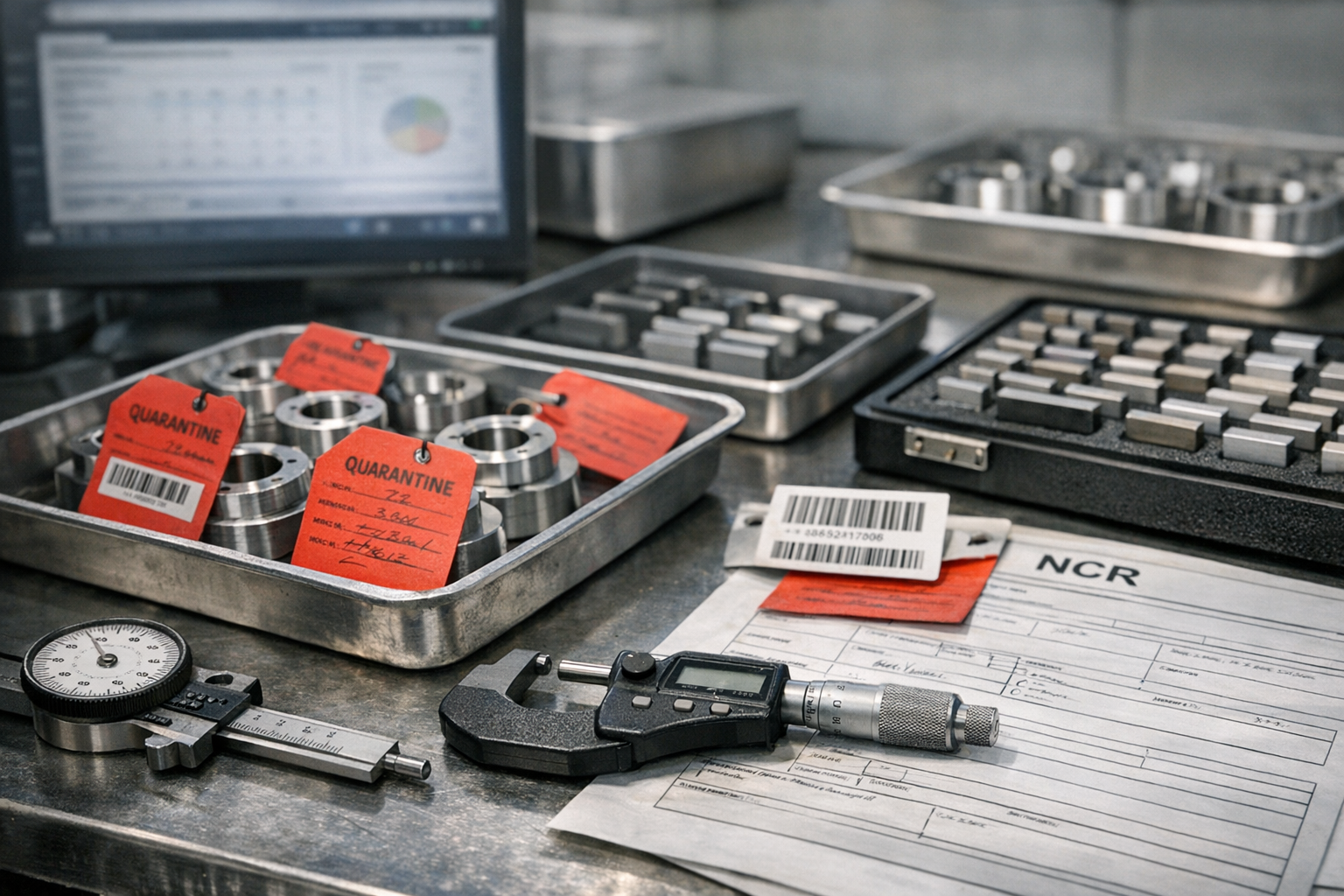
Linking nonconformance reports (NCRs) directly to specific work orders and operations connects each quality issue to the exact place in the manufacturing process where it occurred. This linkage typically includes the work order, operation or routing step, equipment or line, material batch or lot, and operator or team.
Key reasons this linkage matters
- Full traceability and genealogy
Connecting NCRs to work orders and operations creates a clear chain from requirements and materials through to finished goods. This supports product genealogy, makes it easier to identify affected lots or serial numbers, and reduces the risk of missing impacted product during containment or recall actions. - Stronger root cause analysis
When an NCR is tied to a specific operation, you can analyze patterns by operation, machine, shift, or routing step. This allows more precise identification of process weaknesses, such as a particular operation, tool, or work instruction step that is driving defects. - More effective CAPA and process improvement
Corrective and preventive actions can be targeted to the exact process step where the nonconformance occurred. This improves the likelihood that changes to methods, parameters, training, or tooling actually remove the cause rather than treating symptoms. - Reliable production and quality metrics
Linkage enables accurate calculation of defect rates per operation, scrap and rework by work center, and cost of poor quality by product or routing step. These metrics are essential for prioritizing improvement work and evaluating the impact of process changes. - Better containment and risk assessment
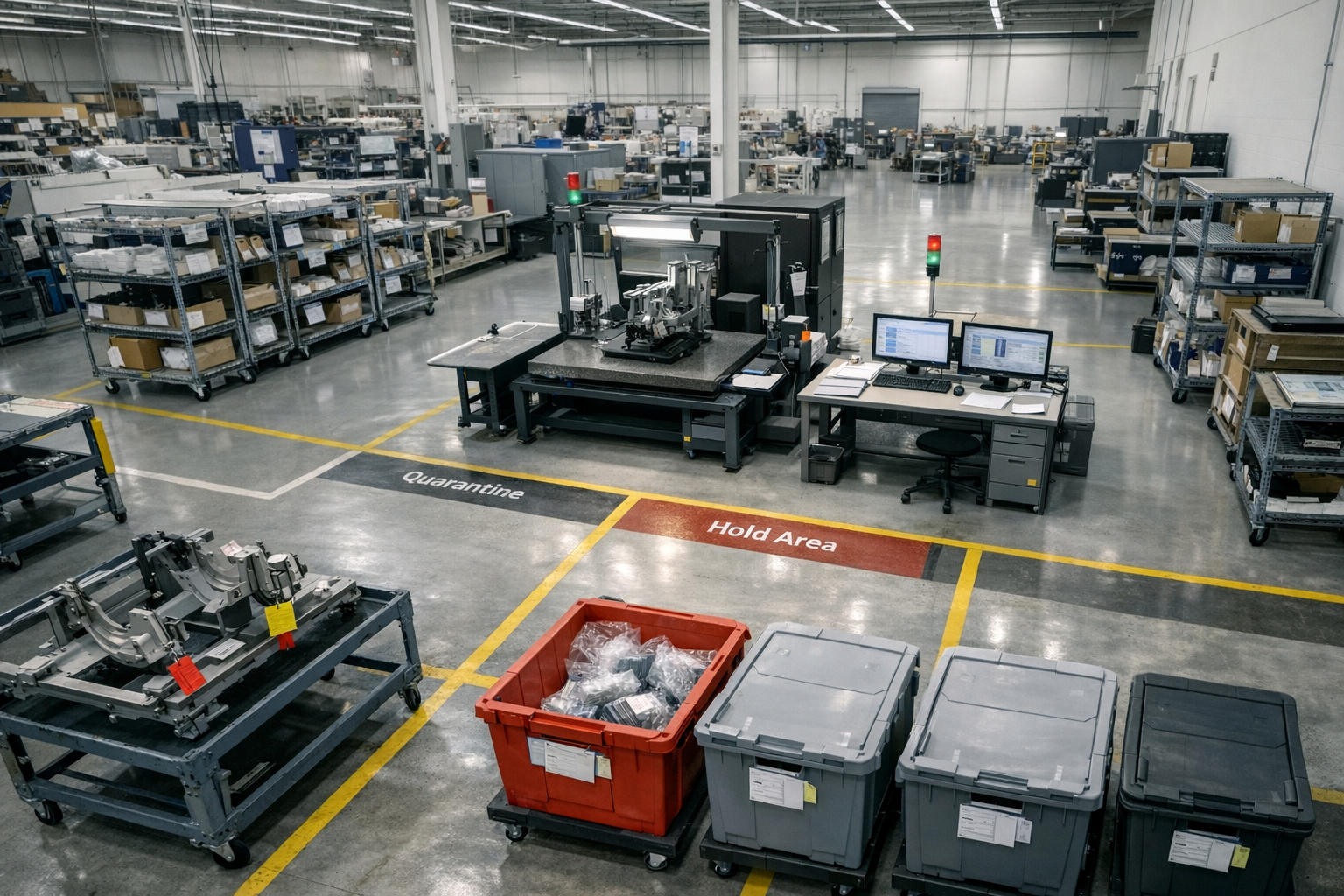
When an issue is found, linking to work orders and operations makes it possible to quickly identify all parts processed under the same conditions. This helps define the scope of impact, decide what must be quarantined, and avoid over- or under-containment. - Support for regulated and audited environments
In regulated industries, auditors often expect clear linkage between nonconformances, production records, and disposition decisions. Direct ties to work orders and operations provide objective evidence of how issues were found, evaluated, and addressed. - Alignment between MES, ERP, and QMS
Creating a common reference (work order and operation ID) for NCRs allows manufacturing execution systems (MES), enterprise resource planning (ERP), and quality management systems (QMS) to share consistent data. This reduces manual data entry, errors, and gaps between production and quality records.
Example in a manufacturing context
If a nonconforming dimension is detected at final inspection, linking the NCR to the original machining operation on a specific work order allows the team to:
- Identify all other parts run on that machine and operation under similar settings.
- Review the work instruction and setup parameters for that operation.
- Update the routing, inspection plan, or training for that step as part of a CAPA.
Without this linkage, investigations rely heavily on informal knowledge and manual record searches, which can be slow, incomplete, and harder to defend during audits.


Related Blog Articles


Related FAQ
Related Glossary
Ready to See How C-981 Can Accelerate Your Factory’s Digital Transformation?

